 11
11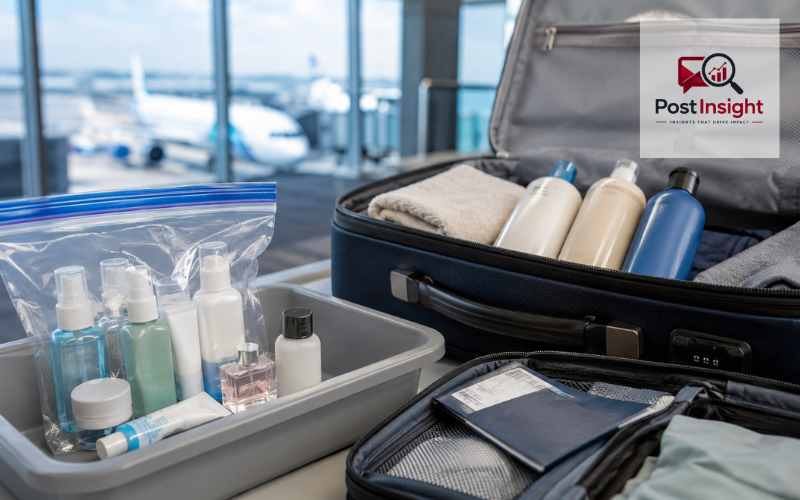
If you are packing for a flight, one of the most common questions is: how many ounces can you take on a plane? The answer depends on whether the item is going in your carry-on bag or your checked baggage. This matters most for liquids, gels, creams, pastes, and aerosols because airport security has special rules for these items.
For carry-on bags, the limit is much stricter because your bag goes through the security checkpoint with you. For checked baggage, you can usually pack larger bottles, but some items still have safety limits. This is why a bottle of shampoo may be allowed in checked luggage but not in your carry-on if it is too large.
The rules also depend on what you are packing. Toothpaste, lotion, perfume, mouthwash, shaving cream, sunscreen, and spray deodorant may all fall under liquid rules. Your destination can also matter, especially on international flights where airport and country rules may be slightly different.
This guide explains the ounce limits in simple language so you can pack with more confidence and avoid losing items at security.
| Item / Bag Type | Allowed Ounces | Simple Explanation |
| Carry-on liquids | 3.4 oz / 100 ml per container | Must fit in one clear quart-size bag |
| Checked baggage liquids | Usually full-size allowed | Best for shampoo, lotion, body wash, and larger toiletries |
| Toothpaste in carry-on | 3.4 oz / 100 ml max | Counts as a paste under liquid rules |
| Lotion in carry-on | 3.4 oz / 100 ml max | Larger lotion should go in checked baggage |
| Aerosols in checked bags | Limited by item type and size | Toiletry aerosols are usually allowed within safety limits |
| International flights | Often 100 ml carry-on limit | Rules may vary by country, airport, and airline |
The simple answer is that you can take liquids in your carry-on bag if each container is 3.4 ounces, or 100 milliliters, or less. These containers must fit inside one clear, quart-sized, zip-top plastic bag. Each traveler is allowed one of these liquids bags.
This rule applies to liquids, gels, aerosols, creams, and pastes. It does not matter if the bottle is half empty. What matters is the size printed on the container. If the container is larger than 3.4 ounces, it usually cannot go through security in your carry-on bag.
Checked baggage is different. In most cases, you can pack full-sized bottles of shampoo, conditioner, lotion, body wash, and similar personal-care products in your checked luggage. However, some items, such as aerosols, alcohol, flammable products, and certain sprays, may have extra limits.
So, when someone asks how many ounces can you take on a plane, the best short answer is this: 3.4 ounces per container in a carry-on, and larger containers are usually fine in checked baggage unless the item has special restrictions.
The TSA carry-on liquid rule is often called the 3-1-1 rule. This name helps travelers remember the main packing limits. The “3” means each liquid container must be 3.4 ounces or less. The first “1” means all those containers must fit inside one quart-sized clear bag. The second “1” means one liquids bag is allowed per passenger.
This rule applies before you pass through airport security. Once you are past the checkpoint, drinks and other liquids bought inside the secure area can usually be taken onto the plane. For example, if you buy a bottle of water or coffee after security, you can carry it to your gate and onto the aircraft.
The 3-1-1 rule is mainly about screening carry-on bags quickly and safely. Security officers need to see your small liquid containers clearly, which is why the clear quart-sized bag is important. If your liquids are loose in your backpack or packed in large bottles, your bag may be pulled aside for extra screening.
To make the process easier, place your liquids bag where you can reach it quickly. Some airports may allow it to stay inside your bag, but it is still smart to pack it neatly.
Many travelers think the liquid rule only applies to water, shampoo, or perfume, but the rule covers much more. Common bathroom items like shampoo, conditioner, lotion, toothpaste, mouthwash, sunscreen, shaving cream, hair gel, and liquid makeup usually count. Perfume, cologne, body spray, and spray deodorant also fall under these limits.
Creams and pastes are often treated like liquids because they can spread, smear, or squeeze out of a container. That means toothpaste is not treated like a solid item, even though it is thicker than water. The same idea applies to face cream, hand lotion, body butter, and similar products.
Some food items also count as liquids or gels. Peanut butter, jam, jelly, yogurt, honey, sauces, dips, and similar spreadable foods may need to follow the 3.4-ounce carry-on limit. Solid snacks are usually easier to carry, but anything creamy, runny, or spreadable can cause problems at security.
A simple way to think about it is this: if you can pour it, spray it, squeeze it, smear it, or spread it, it probably needs to follow the carry-on liquid rule.
The maximum liquid carry-on airplane rule is based on container size, not the amount left inside. This is one of the biggest points travelers miss. A 6-ounce bottle with only 2 ounces of shampoo left inside is still considered too large for a carry-on because the container itself is bigger than 3.4 ounces.
For this reason, travel-size bottles are the safest choice. If you want to bring your favorite shampoo, face wash, lotion, or conditioner in your carry-on, pour a small amount into a travel bottle that is clearly 3.4 ounces or less. Make sure the cap closes tightly and place it inside your quart-sized bag.
You should also avoid overpacking the liquids bag. The containers must fit comfortably, and the bag should be able to close. If you force too many bottles into the bag, security may ask you to remove some items.
For short trips, you may not need full-size products at all. A few travel-size containers are usually enough for a weekend or business trip. For longer trips, pack larger items in checked luggage or plan to buy them after arrival.
If you are wondering how much liquid can you take on a plane in checked baggage, the answer is usually much more than in a carry-on. Most regular toiletries can be packed in larger bottles inside checked luggage. This includes shampoo, conditioner, lotion, body wash, liquid soap, sunscreen, hair products, and similar personal-care items.
Checked baggage does not go through the same passenger checkpoint process as your carry-on bag, so the 3.4-ounce rule does not apply to most normal liquids in checked luggage. That means full-size bottles are usually allowed as long as the product itself is not restricted or dangerous.
Still, packing liquids in checked baggage requires care. Bottles can leak because of pressure changes, rough handling, or loose caps. To avoid a mess, tighten each lid, place plastic wrap under the cap if possible, and pack bottles inside sealed plastic bags. You can also place them between soft clothing for extra protection.
There are some exceptions. Alcohol, flammable liquids, strong chemicals, and certain aerosols may have special rules. If the item is not a normal toiletry or household travel product, check the airline or official security guidance before packing it.
Aerosols are allowed in some cases, but they need more attention than regular liquids. Many travelers ask, can you take aerosols on a plane in checked baggage? For common toiletry aerosols, the answer is usually yes, but there are limits.
Toiletry aerosols include items like hairspray, spray deodorant, shaving cream, and some spray sunscreens. These are usually allowed because they are meant for personal use. However, aerosol containers should have a cap or another way to stop accidental spraying while inside your bag.
FAA guidance places quantity limits on medicinal and toiletry aerosols. The total amount of these items should not be more than 70 ounces, or 2 kilograms, per person. Each container should not be larger than 18 ounces, or 500 milliliters. This limit includes similar toiletry and medicinal items together, not separately.
Not every aerosol is allowed. Products like spray paint, many flammable sprays, cooking spray, and industrial aerosols may be banned from both carry-on and checked baggage. If the aerosol is not used on your body as a normal toiletry or medicine, do not assume it is safe to pack.
Yes, you can bring lotion on a plane in checked baggage in most normal travel situations. Full-size lotion bottles are usually allowed in checked luggage because the carry-on 3.4-ounce rule does not apply there. This makes checked baggage the better option if you want to bring a large bottle of body lotion, hand cream, or moisturizer.
In a carry-on bag, lotion is treated as a cream or liquid. That means it must be in a container that is 3.4 ounces or less and must fit inside your quart-sized liquids bag. A large pump bottle of lotion will not be allowed through security in a carry-on, even if it is only partly full.
For simple packing, use travel-size lotion in your carry-on and full-size lotion in your checked bag. If your skin gets dry during flights, keep a small tube of hand lotion with you. Put the larger bottle in checked luggage and seal it in a plastic bag to prevent leaks.
The phrase can you bring lotion on a plane checked baggage has a simple answer: yes, usually, as long as it is a normal personal-care product and packed securely.
Toothpaste is one of the most common items removed at airport security because many travelers forget it counts as a paste. If you are asking what size toothpaste can you carry-on airplane, the answer is 3.4 ounces, or 100 milliliters, or less.
A regular large toothpaste tube is often bigger than the carry-on limit. Even if the tube is almost empty, security looks at the size of the tube, not how much toothpaste remains inside. To avoid trouble, choose a travel-size toothpaste tube for your carry-on bag.
If you prefer a larger toothpaste tube, pack it in checked baggage. That is usually the easiest option for longer trips or family travel. You can also buy toothpaste after you arrive, especially if you are trying to save space in your liquids bag.
Toothpaste should go inside the same clear quart-sized bag as your other carry-on liquids, gels, creams, and pastes. Keeping it with your other small containers makes screening easier and helps you avoid delays.
If you are flying internationally, you may wonder how many ounces can you take on a plane international. When departing from a U.S. airport, TSA rules apply at the security checkpoint, so the carry-on liquid limit is still 3.4 ounces, or 100 milliliters, per container.
Many international airports use similar liquid limits. In many countries, the common carry-on liquid limit is 100 milliliters per container, with all containers fitting inside a clear resealable plastic bag. This is close to the U.S. 3.4-ounce rule.
However, international travel can be more complicated because rules may vary by country, airport, and airline. A product that passes one checkpoint may still be questioned during a connecting flight in another country. This is especially important if you have duty-free liquids, alcohol, perfumes, or sealed items bought at an airport.
For international travel, it is safest to pack only small liquids in your carry-on and place larger bottles in checked baggage. If you have a connection, keep receipts and sealed duty-free bags when required, and always check your airline’s guidance before travel.
Many travelers also ask, how much liquid can I carry in international flight in checked baggage? For normal toiletries, checked baggage usually allows larger containers, even on international flights. You can often pack full-size shampoo, lotion, conditioner, body wash, and other personal-care liquids in your checked suitcase.
But international checked baggage rules may include extra limits for alcohol, aerosols, medicines, and restricted products. Customs rules at your destination may also matter. For example, some countries may have rules about food, alcohol, chemicals, perfumes, or certain medicines.
Aerosols need special care because some are allowed as toiletries while others are restricted or banned. Alcohol also has its own rules based on strength, amount, airline policy, and destination laws. Medicines should stay in original packaging when possible, especially for international travel.
The safest approach is to pack normal toiletries in checked baggage, keep them sealed against leaks, and check the rules for anything unusual. If the liquid is expensive, medically important, or hard to replace, consider carrying a small allowed amount in your carry-on and packing the rest carefully in checked luggage.
If you are flying with United Airlines and asking how many ounces can you take on a plane United, the carry-on answer is still based on TSA rules when you are departing from a U.S. airport. United passengers go through the same airport security screening as other travelers, so carry-on liquids must be in containers of 3.4 ounces, or 100 milliliters, or less.
All your small liquid containers should fit inside one clear quart-sized bag. This includes items like lotion, toothpaste, perfume, hair gel, mouthwash, shaving cream, and spray deodorant. If the container is larger than the limit, put it in checked baggage instead.
For checked bags on United flights, most regular liquids can be packed in larger containers, but the rules still depend on the item. Toiletries are usually fine, while aerosols, alcohol, and restricted materials may have special limits. International United flights may also involve destination-country rules.
So the airline name does not usually change the basic liquid limit at U.S. security. Whether you fly United or another airline, the security checkpoint rule is the main thing to follow for carry-on liquids.
The most common mistake is packing a large bottle in a carry-on bag and thinking it is allowed because it is not full. Security checks the container size, not the liquid amount inside. A large bottle with a small amount left can still be removed.
Another mistake is forgetting the quart-sized bag. Travelers sometimes place small liquids in different pockets of a backpack or suitcase. Even if each bottle is under 3.4 ounces, they should still fit together in one clear liquids bag.
Oversized toothpaste, lotion, perfume, sunscreen, and mouthwash are also common problems. These items feel normal to pack, but they can easily be larger than the carry-on limit. Always check the label before placing them in your carry-on.
Some travelers also confuse checked baggage rules with carry-on rules. A full-size shampoo bottle may be fine in checked luggage but not in your hand luggage. Before you leave home, separate your liquids into two groups: small items for the carry-on and larger items for the checked bag.
Knowing how many ounces can you take on a plane makes packing much easier. For carry-on luggage, the key rule is simple: each liquid, gel, cream, paste, or aerosol container must be 3.4 ounces, or 100 milliliters, or less. Those containers should fit inside one clear quart-sized bag, and each passenger gets one bag.
For checked baggage, you can usually pack larger bottles of regular toiletries such as shampoo, lotion, body wash, and conditioner. This is the best place for full-size liquids, especially on longer trips. Just remember that aerosols, alcohol, flammable products, and some international items may have special restrictions.
If you want a stress-free airport experience, pack travel-size containers in your carry-on and put larger liquids in checked luggage. Check labels before you leave home, seal bottles carefully, and keep important exceptions like medicine or baby items easy to remove for inspection.
With a little planning, you can avoid delays, protect your belongings from leaks, and get through security with fewer problems.
You can take liquids in containers of 3.4 ounces or 100 ml each. All containers must fit inside one clear quart-size bag per passenger.
A 4 oz liquid bottle is usually not allowed in a carry-on because the container is over the limit. Pack it in checked baggage instead.
Most regular liquids can be packed in full-size containers in checked baggage. This includes shampoo, lotion, conditioner, and body wash, unless the item has special restrictions.
Toothpaste must be 3.4 ounces or 100 ml or less in a carry-on bag. Larger toothpaste tubes should go in checked baggage.
Many toiletry aerosols, such as hairspray, shaving cream, and deodorant, are allowed in checked baggage, but they must follow airline and safety quantity limits.
Disclaimer: This article is for general travel information only. Airport security rules, airline policies, and international baggage regulations can change or vary by location. Always check the latest TSA, airline, airport, and destination-country guidance before your flight.