 11
11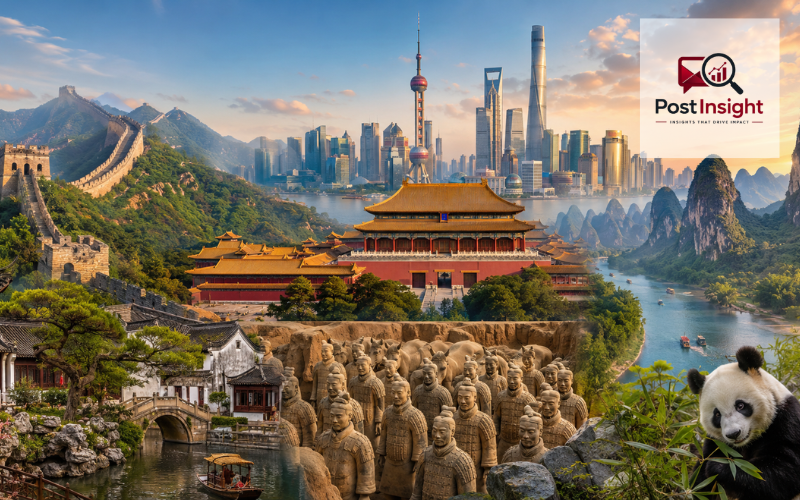
China offers an unusual mix of experiences within one country. A single trip can include imperial palaces, ancient city walls, modern skylines, quiet canals, mountain trails, regional food, and centuries-old traditions that remain part of daily life.
For first-time visitors, Beijing, Xi’an, and Shanghai form a practical route often called China’s “Golden Triangle.” Beijing introduces the country’s imperial history, Xi’an reveals its ancient Silk Road connections, and Shanghai shows its modern, international side. China’s large high-speed rail network also makes travel between major cities more manageable, with official train information and electronic tickets available through China Railway’s 12306 service.
However, the best places to visit in China depend on more than popularity. Your ideal route will be shaped by how many days you have, the season, your budget, your interests, and whether you are travelling alone, as a couple, or with children.
This guide covers ten leading destinations, including historic capitals, modern cities, family-friendly attractions, food destinations, and some of the best places to visit in China for nature. It also includes practical advice for American visitors and travellers planning a winter trip.
Quick Guide to the Best Places to Visit in China
| Destination | Best For | Recommended Stay | Best Time to Visit |
| Beijing | Great Wall and imperial history | 3–4 days | Spring and autumn |
| Xi’an | Terracotta Warriors and Silk Road history | 2–3 days | Spring and autumn |
| Shanghai | Skyline, food, and modern city life | 3–4 days | March–May, September–November |
| Zhangjiajie | Mountains, hiking, and sandstone pillars | 2–3 days | April–October |
| Guilin and Yangshuo | Rivers, karst peaks, and countryside | 3–4 days | April–October |
| Chengdu | Giant pandas and Sichuan food | 2–3 days | March–June, September–November |
| Suzhou | Classical gardens and canals | 1–2 days | Spring and autumn |
| Jiuzhaigou Valley | Alpine lakes, waterfalls, and forests | 2–3 days | September–October |
| Lijiang | Naxi culture and mountain scenery | 2–3 days | March–May, September–November |
| Hong Kong | Food, skyline views, hiking, and family attractions | 3–4 days | October–December |
Trying to include all ten destinations in one short holiday would create a tiring trip. Most visitors will have a better experience by selecting three or four places that work well together.
Beijing deserves a place on almost every first-time China itinerary. The city brings together major historic landmarks, lively modern districts, traditional neighborhoods, and convenient transport links to other parts of the country.
The Forbidden City, now home to the Palace Museum, is its most important imperial attraction. Its courtyards, halls, gates, and collections offer an introduction to the Ming and Qing dynasties. Visitors currently need a real-name reservation, same-day tickets are not sold, and general bookings open seven days before the visit. The museum is normally closed on Mondays except during statutory holidays, so planning ahead is essential.
Other important sites include the Temple of Heaven, where emperors once performed ceremonial rituals, and the Summer Palace, known for its lakeside setting, gardens, pavilions, and long corridors. These locations, along with Beijing’s imperial palace complex, form part of China’s extensive collection of UNESCO World Heritage properties.
Allow time to walk through a hutong area as well. These older lanes provide a smaller-scale view of Beijing beyond its grand monuments, although many neighborhoods now contain a mix of homes, cafés, shops, and restored buildings.
A Great Wall visit usually requires most of a day. Badaling is well developed and straightforward to reach, making it practical for visitors who value convenience. Mutianyu combines restored walls, watchtowers, mountain scenery, and visitor facilities, so it is often comfortable for families and first-time travellers. More demanding sections may suit experienced hikers, but transport and trail conditions should be checked carefully. Official Beijing tourism information confirms that Mutianyu follows mountain ridges and contains closely spaced watchtowers.
Four full days is a sensible minimum for Beijing. Spring and autumn usually offer more comfortable sightseeing weather, while summer can be hot and crowded and winter can be cold, dry, and windy.
Xi’an is one of the best places to visit in China for travellers interested in archaeology and imperial history. Once known as Chang’an, the city served as a capital during several dynasties and was closely connected with the eastern end of the historic Silk Road.
Its best-known attraction is the Emperor Qinshihuang’s Mausoleum Site Museum, home to the Terracotta Warriors. The wider archaeological property contains numerous pits, burial sites, architectural remains, life-size soldiers, horses, chariots, and weapons. UNESCO describes it as a large complex covering hundreds of associated sites rather than a single excavation hall.
The museum lies outside central Xi’an, so visitors should reserve at least half a day. Arriving early can make the large exhibition halls easier to explore before the busiest period.
Back in the city, Xi’an City Wall offers a clear view of the historic center. Visitors can walk along sections of the wall, while cycling may be available depending on current rules and weather. The Muslim Quarter is known for busy lanes, food stalls, shops, and the city’s long history of cultural exchange. It is worth exploring slowly rather than treating it as only a place to buy snacks.
Two or three days is usually enough for Xi’an. It fits naturally between Beijing and Shanghai because high-speed trains and domestic flights connect all three cities. A classic first trip could include four days in Beijing, two or three days in Xi’an, and three or four days in Shanghai.
Shanghai is a strong choice for travellers who enjoy architecture, museums, shopping, restaurants, and energetic city life. Its main appeal comes from the contrast between historic streets and the towers of Pudong.
The Bund is the city’s most famous waterfront walk. From here, visitors can look across the Huangpu River toward Pudong’s modern skyline while standing beside buildings connected with Shanghai’s international commercial past. A renovated tourist information center on the Bund reopened in 2026 and provides multilingual materials for exploring the surrounding Huangpu district.
Across the river, Lujiazui is home to observation decks, shopping centers, and some of the country’s most recognizable skyscrapers. The area is especially impressive around sunset, when daylight views gradually change into a brightly lit night skyline.
Yu Garden and the surrounding old-city district offer a different atmosphere through traditional-style buildings, ponds, rockeries, bridges, and narrow shopping lanes. Visitors should distinguish the historic garden itself from the larger commercial area around it. Former concession neighborhoods, including streets around the Hengfu Historical Conservation Zone, provide shaded roads, older villas, cafés, and smaller cultural sites.
Three or four days gives visitors enough time to see Shanghai without rushing. Suzhou and Zhujiajiao are possible day trips, but Shanghai itself deserves more than a brief stop. It is particularly suitable for couples, food-focused travellers, architecture lovers, and visitors who prefer cities to long hiking days.
Zhangjiajie is among the most unique places to visit in China. Its forested rock formations rise in narrow columns, creating views that can appear almost unreal in misty weather.
Zhangjiajie National Forest Park forms part of the wider Wulingyuan Scenic and Historic Interest Area. UNESCO records more than 3,000 narrow quartz sandstone pillars and peaks in the protected landscape, with many rising more than 200 meters. Ravines, streams, caves, natural bridges, and waterfalls add to the scenery.
Popular parts of the park include Yuanjiajie and Tianzi Mountain. The Bailong Elevator provides fast access between different elevations, but queues can be long during busy periods. Although shuttle buses, cableways, and lifts reduce some of the climbing, visitors should still expect extensive walking, stairs, uneven surfaces, and changing weather.
Tianmen Mountain is a separate attraction closer to Zhangjiajie city. It is known for a long cable-car journey, high mountain paths, and the large natural opening called Tianmen Cave. It should not be confused with the national forest park, and fitting both into one day would feel rushed.
Plan at least two full sightseeing days, with a third day providing more flexibility. Fog can create beautiful views but can also hide the pillars completely. Comfortable footwear, rain protection, and a flexible schedule are therefore useful.
Guilin and Yangshuo are among the best places to visit in China for nature, especially for travellers who prefer peaceful landscapes to steep mountain trekking.
Guilin is the region’s main transport center and a convenient arrival point, but Yangshuo places visitors closer to rural scenery, cycling roads, small villages, and karst peaks. A balanced plan is to spend one night in Guilin before moving to Yangshuo for two or three nights.
The Li River cruise between Guilin and Yangshuo is the area’s signature experience. The route passes steep limestone formations, river settlements, and scenes often compared with traditional Chinese landscape paintings. The main scenic journey covers roughly 83 kilometers between Guilin and Yangshuo.
Around Yangshuo, visitors can cycle or use local transport to explore countryside routes near the Yulong River. Bamboo-style rafting trips are available on selected sections, although services may change because of rainfall, water levels, or safety restrictions.
Weather has a major effect on this region. Rain and mist can create a soft, atmospheric landscape, but heavy rain may reduce visibility or interrupt outdoor plans. Avoid scheduling only one rushed day. The area is more rewarding when there is time for a river trip, a countryside outing, and a slower evening in Yangshuo.
Chengdu combines wildlife, food, parks, and a relaxed local atmosphere, making it one of the most enjoyable stops on a longer China itinerary.
The city is widely associated with giant panda conservation and research. Panda facilities are normally best visited early in the day, when temperatures are cooler and the animals are often more active. Visitors should observe quietly, follow the facility’s rules, and avoid any experience that promises inappropriate handling or close physical contact.
Chengdu is also one of the best places to visit in China for food. Sichuan hot pot is the most famous meal, but the city’s food culture is much broader. Dan dan noodles, mapo tofu, wontons in chili oil, spicy rabbit dishes, and many small snacks allow visitors to try different levels of heat and numbing Sichuan pepper.
People’s Park and its teahouses offer a slower side of the city. Traditional neighborhoods and temple areas can also be explored between meals, while evening food tours are useful for visitors who are unsure what or where to order.
Travellers with extra time can take a day trip to the Leshan Giant Buddha or spend longer visiting Mount Qingcheng and the Dujiangyan area. Three days is comfortable for Chengdu itself, while four or five days allows for an excursion.
Suzhou is an easy addition to a Shanghai itinerary and provides a quieter contrast to the larger city. Fast trains make it possible to visit for a day, although staying one night allows more time after day-trip crowds leave.
The city is best known for its classical gardens. UNESCO recognizes the Classical Gardens of Suzhou for their carefully arranged relationship between buildings, water, rocks, plants, and changing views. Rather than trying to visit every garden, choose two with different styles and explore them patiently.
Pingjiang Road is one of the most pleasant areas for walking. Its canals, stone bridges, traditional buildings, shops, and side lanes give visitors a sense of Suzhou’s older urban form, although it can become busy during weekends and holidays.
Nearby water towns provide another option. Tongli is convenient from Suzhou, while Zhujiajiao is usually easier as a trip from Shanghai. Travellers with limited time do not need to see several similar canal towns. One well-chosen visit is normally enough.
Jiuzhaigou Valley is known for clear lakes in shades of blue, green, and turquoise, along with waterfalls, forests, and mountain scenery. Its high elevation and remote location mean it requires more planning than Beijing or Shanghai. Visitors should allow time for transfers and avoid placing the trip immediately between several fast-paced city stops.
Lijiang offers a different experience in Yunnan Province. Its old town includes canals, lanes, courtyards, and architectural traditions associated with the Naxi people. UNESCO places the town at an elevation of about 2,400 meters, so some travellers may notice mild altitude effects when walking quickly or carrying luggage.
Nearby attractions include Black Dragon Pool, villages around the Lijiang basin, and mountain areas toward Jade Dragon Snow Mountain. Travellers should check current access rules and weather before visiting higher elevations.
Other less-obvious choices include Mount Huangshan for granite peaks and cloud views, Pingyao for a historic walled-town atmosphere, and the Honghe Hani Rice Terraces for cultural landscapes in southern Yunnan. Mount Huangshan is especially noted for dramatic granite formations, ancient pine trees, mist, waterfalls, and high peaks.
These places are rewarding, but they add travel time. They are better suited to two- or three-week itineraries than a rushed first visit.
The best places to visit in China with family are usually those that offer varied activities and simple transport. Beijing, Shanghai, Chengdu, Guilin, and Hong Kong are among the strongest options.
Beijing gives children a memorable Great Wall experience, but long distances and large palace complexes can make each day tiring. Shanghai is easier to divide into shorter activities, including parks, museums, waterfront walks, observation decks, and family attractions. Chengdu works well for panda lovers and families that prefer a slower pace. Guilin and Yangshuo provide boat trips and countryside scenery, although young children may find long transfers difficult.
Hong Kong combines urban attractions with beaches, country parks, theme parks, ferries, and hiking. The Peak Tram and Victoria Peak provide some of its best-known skyline views, while family attractions include Ocean Park and Hong Kong Disneyland.
Families should avoid changing hotels every night. Three-night stays, a free afternoon after every few busy days, and one main attraction each morning can create a more comfortable trip. Strollers may be difficult on stairs, historic paving, and mountain routes, so a lightweight carrier can be useful for younger children.
For an American traveller, Beijing, Xi’an, and Shanghai remain the easiest starting combination. A one-week trip could focus on Beijing and Shanghai. Two weeks allows time for Beijing, Xi’an, Shanghai, and one additional destination such as Chengdu, Guilin, or Suzhou. With three weeks, travellers can add a nature-focused region without making every day a transfer day.
Entry rules must be checked carefully. As of July 2026, U.S. citizens generally need a visa before entering mainland China unless they qualify for a specific exception. Eligible American passengers may use China’s 240-hour visa-free transit policy when travelling through approved ports to a third country or region with confirmed onward arrangements, but the route and permitted travel area must meet official conditions.
Hong Kong has separate immigration arrangements, and entry into mainland China from Hong Kong requires travellers to meet mainland entry requirements.
Before departure, check passport validity, visa details, travel insurance, hotel bookings, and attraction reservations. Set up translation and map tools that will work during the trip. Mobile payments are widely used, and China has continued expanding support for overseas bank cards and international digital payment services. Carrying some cash and more than one payment method remains sensible.
For trains, use the official 12306 platform or a trusted booking service, and enter passport details exactly as shown on the document. Allow extra time at large stations because security checks and walking distances can be significant.
Simple cultural courtesy goes a long way. Speak calmly, queue where directed, ask before photographing individuals, and follow posted rules at temples, museums, villages, and protected natural sites.
December can be a good month for travellers who accept cold weather and want to avoid some peak-season crowds.
Beijing and Xi’an are usually cold and dry, but their major historic attractions remain worthwhile. Clear winter days can be excellent for photography, although wind makes the Great Wall feel considerably colder than central Beijing. Warm layers, gloves, and shoes with good grip are important.
Harbin is the leading choice for a true winter trip. Its seasonal ice and snow attractions normally depend on sustained freezing weather, so opening dates should be confirmed rather than assumed. Travellers should prepare for much colder conditions than in Beijing.
Hong Kong offers milder weather and is often comfortable for walking, skyline viewpoints, and outdoor trails. Yunnan can also be appealing, although temperatures vary greatly between cities, valleys, and high mountain areas.
Jiuzhaigou and Zhangjiajie may provide beautiful winter scenery, but cold conditions, snow, ice, fog, or maintenance can affect individual routes. Guilin and Yangshuo are less severe than northern China but may feel damp and chilly. December travellers should keep some flexibility and verify park notices, cable-car operations, and transport before setting out.
The best places to visit in China depend on the experience you want most. Beijing and Xi’an are the strongest choices for imperial and archaeological history. Shanghai and Hong Kong suit travellers drawn to modern cities, food, shopping, and skyline views. Chengdu stands out for pandas and Sichuan cuisine, while Zhangjiajie, Guilin, Yangshuo, and Jiuzhaigou are leading choices for natural scenery.
For first-time visitors, the Beijing–Xi’an–Shanghai Golden Triangle provides a balanced introduction. It combines famous landmarks, different periods of history, modern city life, and manageable transport connections. Families may prefer to add Chengdu or Hong Kong, while outdoor travellers can replace one large city with Guilin or Zhangjiajie.
China is too large to experience fully in one trip. Choosing fewer destinations and allowing enough time in each place usually creates better memories than rushing through a long checklist. Before travelling, confirm current opening hours, ticket rules, train schedules, park conditions, and entry requirements through official sources, as these details can change.
Beijing, Xi’an, and Shanghai are ideal for first-time visitors. Together, they provide a balanced introduction to imperial history, ancient culture, modern architecture, regional food, and convenient transport connections.
Zhangjiajie, Guilin, Yangshuo, Jiuzhaigou Valley, and Huangshan are excellent for natural scenery. Visitors can experience sandstone pillars, karst mountains, clear lakes, waterfalls, forests, and dramatic mountain viewpoints.
Beijing, Shanghai, Chengdu, Guilin, and Hong Kong are good family destinations. They offer varied attractions, convenient transport, wildlife experiences, boat trips, museums, parks, and activities suitable for different age groups.
Ten to fourteen days is suitable for a first visit. This allows enough time to explore Beijing, Xi’an, Shanghai, and one additional destination without spending most of the holiday travelling.
December can be a good time for smaller crowds and winter scenery. Beijing and Xi’an are cold, Hong Kong and southern China are milder, while Harbin offers seasonal snow and ice attractions.
Disclaimer: This article is provided for general travel-planning and informational purposes only. Opening hours, ticket rules, visa requirements, weather conditions, transport schedules, prices, and attraction access may change. Always confirm current information through official government, transport, immigration, and attraction websites before booking or travelling.