 11
11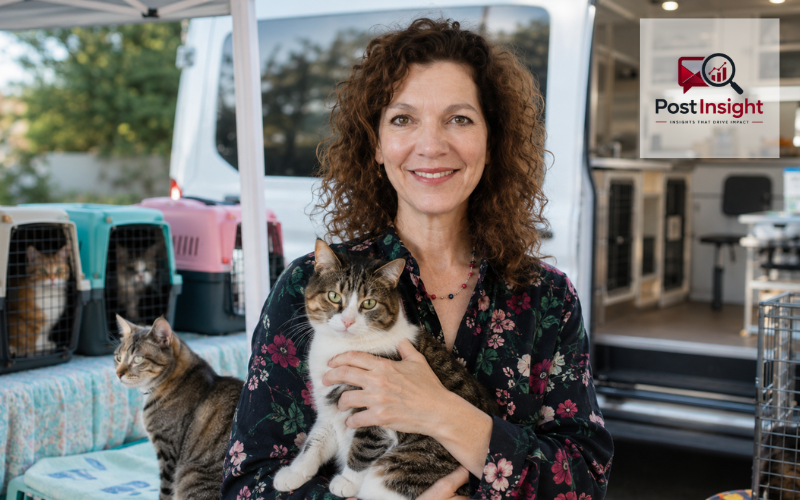
The name Donna Sicuranza can lead to confusing search results because it belongs to more than one person. Some pages refer to a Connecticut nonprofit leader involved in animal welfare, while others point to an obituary for a New York banking professional. These records describe different individuals and should not be combined.
The main subject of this article is Donna Sicuranza Marconi, who is publicly listed as the Executive Director of Tait’s Every Animal Matters. The organization is commonly known as TEAM and is based in Westbrook, Connecticut. It operates a mobile clinic that provides spay, neuter and vaccination services for cats across the state.
Donna Sicuranza’s public importance comes mainly from her long association with this nonprofit program. Her work has been connected with making basic veterinary services more affordable and accessible for people who care for domestic, stray and feral cats.
Because several people share the same or a similar name, this article focuses on information supported by TEAM’s official website, its published materials, a professional profile and an established obituary record.
| Topic | Verified information |
| Publicly used name | Donna Sicuranza Marconi |
| Current role | Executive Director of Tait’s Every Animal Matters |
| Professional focus | Nonprofit leadership, feline welfare, and accessible veterinary services |
| Organization | Tait’s Every Animal Matters, commonly known as TEAM |
| Location | TEAM is based in Westbrook, Connecticut |
| Main program | Mobile spay, neuter, and vaccination clinic for domestic and feral cats |
| Clinic launch | The mobile clinic began operating in March 1997 |
| Documented impact | TEAM reports sterilizing and vaccinating more than 225,000 cats since 1997 |
| Important clarification | Donna Sicuranza Marconi is not Donna Marie Sicuranza, the New York banking professional who died in 2017 |
Donna Sicuranza Marconi is currently identified on TEAM’s official staff page as the organization’s Executive Director. Earlier TEAM publications also refer to her as Donna Sicuranza or Donna J. Sicuranza. These variations appear to describe the same nonprofit executive, but the full name now used by the organization is Donna Sicuranza Marconi.
Her professional work is centered on nonprofit leadership and feline welfare. TEAM’s public contact information places the organization in Westbrook, while its mobile clinic regularly travels to communities throughout Connecticut. The program accepts domestic and feral cats belonging to or cared for by Connecticut residents.
She is not presented by TEAM as a veterinarian. Her documented role is administrative and organizational. Medical procedures are performed by the organization’s veterinary staff, including its medical director and veterinary technicians.
This difference matters because TEAM’s results come from the combined efforts of administrators, veterinary workers, office staff, donors, maintenance workers and the people who bring cats to the clinic.
Tait’s Every Animal Matters is a nonprofit organization focused on reducing feline overpopulation in Connecticut. Its best-known program is the TEAM Mobile Feline Spay/Neuter Clinic, which also provides vaccinations and selected related services.
Donna Sicuranza leads the administrative side of this organization as Executive Director. TEAM’s public materials do not provide a detailed daily job description, so it would be unwise to make claims about every task she personally performs. However, her documented involvement in the organization’s history, newsletters, community communication and fundraising activities shows that her work extends beyond holding a title.
An executive director in a small nonprofit usually helps guide operations, communicate the organization’s purpose, support fundraising and coordinate staff and programs. TEAM’s own newsletter identifies Donna Sicuranza as both Executive Director and editor, and it includes messages written directly by her to supporters and readers.
Her public role therefore appears to combine leadership, communication and program support. The available sources focus on these professional responsibilities rather than her private or family life.
TEAM’s mobile clinic did not begin as a large statewide operation. According to the organization’s historical account, plans for the clinic took shape in 1996 under the direction of veterinarian John A. Caltabiano and Executive Director Donna Sicuranza.
The idea was practical but unusual for the time. Many cat owners and people caring for homeless cats had limited access to affordable spay and neuter services. TEAM believed that preventing unwanted litters was one of the most direct ways to reduce abandonment, illness and pressure on local shelters.
The clinic began operating on March 1, 1997. TEAM describes it as Connecticut’s first mobile spay, neuter and vaccination clinic created specifically for cats.
TEAM’s historical materials contain a minor difference about the exact number of cats treated on the first day. One official history page says ten cats were sterilized and vaccinated, while a 2019 newsletter reports twelve. Both sources agree that the operation started on a small vehicle with limited space and quickly grew as demand increased.
The purpose of the mobile clinic was to take affordable veterinary services closer to the people who needed them. Rather than requiring every cat owner or caretaker to travel to one permanent hospital, TEAM could bring its specially equipped vehicle to different Connecticut communities.
Launching such a service was not simple. TEAM’s history says that some veterinarians questioned whether surgery could be performed safely in a mobile setting. Others were concerned that lower-cost services might take customers away from traditional clinics.
Despite those doubts, demand grew quickly. TEAM reports that it had sterilized thousands of cats during its first year and soon needed a larger vehicle. The program eventually operated through custom-built mobile clinics that offered more space for cats, medical workers and equipment.
Donna Sicuranza was involved in this development from the planning stage. Still, TEAM’s own publications repeatedly describe its progress as a group effort. In a 2019 newsletter, she credited veterinary staff, office workers, donors, maintenance workers and cat caretakers for making the program possible.
That description gives a balanced view of her contribution: she helped guide the organization, but the clinic’s growth depended on many people working together.
The cost of veterinary care can stop some people from having a cat spayed or neutered, especially when they are living on a fixed income or caring for several animals. The challenge can be even greater for people who take responsibility for stray cats or outdoor colonies without formally owning them.
TEAM was designed to reduce some of those barriers. Its mobile clinic travels to different locations, allowing residents to find services closer to their communities. The program welcomes both domestic and feral cats, which means it serves household pets as well as animals living outdoors.
Mobility alone does not solve every access problem, but it can make scheduling and transportation easier. A lower-cost service may also help people act before one unsterilized cat produces a litter that they are unable to care for.
Donna Sicuranza’s leadership has remained connected to this accessibility-focused approach. TEAM’s historical account says the clinic was created to make spay, neuter and vaccination services affordable, while its current website continues to present affordability and access as central parts of its mission.
Feline overpopulation occurs when more kittens are born than homes and communities can safely support. This can result in overcrowded shelters, abandoned animals and unmanaged outdoor cat populations.
Spaying a female cat prevents future litters, while neutering a male cat prevents him from reproducing. Vaccination can also help protect individual cats and lower the risk of certain infectious diseases spreading among animals.
TEAM’s stated goal is to sterilize as many cats as possible before they reproduce. The organization believes that prevention is a humane and practical response to unwanted litters.
Its work is not limited to owned pets. TEAM also serves people caring for feral and stray cats. Its published material has discussed programs linked with the humane trapping, sterilization and return of outdoor cats, including support for caretakers who bring feral cats to the mobile clinic.
Donna Sicuranza’s contribution lies in helping sustain the organization behind these services. She is part of a wider system in which veterinarians perform surgeries, technicians prepare and monitor cats, administrative workers manage appointments, and donors help support the nonprofit’s work.
TEAM’s current website states that its veterinarians have sterilized and vaccinated more than 225,000 cats since 1997. It also says that the clinic regularly visits communities across Connecticut and welcomes any Connecticut cat, whether domestic or feral.
This is the latest impact figure publicly displayed by the organization. Older TEAM materials naturally contain lower totals. For example, a 2019 newsletter celebrated the clinic’s 200,000th sterilization surgery, while a later historical page referred to more than 206,000 cats. Those numbers were accurate for the periods in which they were published, but the current total of more than 225,000 is the most suitable figure when discussing TEAM today.
The organization also emphasizes the long service of its staff. Its current team page says that most of the group has been involved with the program from near the beginning. Donna Sicuranza is one of the people most closely connected with that continuity.
The number of cats served shows the scale of the program, but it should not be treated as her individual achievement. It reflects thousands of appointments and the combined work of medical staff, administrators, volunteers, supporters and cat caretakers over several decades.
Running an animal-welfare nonprofit requires more than arranging medical procedures. Clear communication is necessary because staff members must explain appointment rules, surgery preparation, aftercare and the special handling needs of feral cats.
Administrative workers also need to communicate with donors, community partners and residents seeking help. A mobile clinic must coordinate travel, staffing, equipment and changing service locations while continuing to meet medical and safety needs.
Donna Sicuranza’s background appears especially relevant to the communication side of this work. TEAM’s 2019 newsletter identifies her as its editor and includes messages in which she explains the organization’s programs, thanks supporters and invites readers to ask questions or offer suggestions.
Public education is important because some cat owners may not fully understand when animals should be sterilized, how to prepare them for surgery or why outdoor cats may need different handling. A nonprofit can increase its impact by making such information clear and practical.
Donna’s documented writing and editorial work suggests that communication has been an important part of her leadership, alongside the broader administrative needs of the organization.
Donna Sicuranza’s public professional profile lists her education at Trinity College in Hartford. Search information connected with that profile describes a master’s degree in English Language and Literature, completed between 1989 and 1992. Because this information comes from a professional networking profile rather than an official college record, it is best described as publicly self-reported.
An academic background in English may be useful in nonprofit work because executive leaders often need to write grant materials, prepare newsletters, communicate with supporters and explain programs to the public. It can also support careful editing and clear storytelling.
TEAM’s own publications provide visible examples of Donna Sicuranza using those skills. She is credited as an editor and contributor, and her writing explains the organization’s history and recognizes the people involved in its work.
Little dependable public information is available about her earlier employment or complete career history. For that reason, claims about previous jobs, private business interests or unlisted qualifications should not be added without stronger evidence.
Accessible spay and neuter services can have effects beyond a single appointment. Preventing one unplanned litter means fewer kittens may later need homes, shelter space or emergency care.
For communities, this can reduce some of the pressure placed on animal shelters and rescue groups. It can also support people who are trying to care responsibly for stray or feral cats but cannot afford full-price private veterinary services.
TEAM’s long presence in Connecticut is important because animal overpopulation is not usually solved through one short campaign. It requires continued access to services, public education and cooperation between residents, veterinary workers and nonprofit organizations.
Donna Sicuranza’s significance comes from her connection to that long-term effort. TEAM’s official history links her to the clinic’s planning in 1996, and the organization still lists her as Executive Director in 2026.
Her work should not be described with exaggerated or unsupported praise. The verified record is meaningful on its own: she helped lead an organization that developed a small mobile clinic into a long-running statewide service reporting more than 225,000 cats sterilized and vaccinated.
Searchers may also find information about Donna Marie Sicuranza, who was born in 1942 and died in 2017. She was a different person from Donna Sicuranza Marconi of TEAM.
According to her obituary, Donna Marie Sicuranza had connections to Mount Vernon, New Rochelle and Pelham, New York. She attended St. Catherine’s School and Good Counsel Academy. She worked at Walker Studios before spending more than 20 years at the Bank of New York in Bronxville, where she retired as an Assistant Manager in 2007.
The obituary also states that she was married to Angelo Sicuranza and had three daughters and ten grandchildren. These family and career details belong to the woman described in the 2017 obituary. They should not be attached to the Connecticut animal-welfare executive.
There is no reliable evidence showing that Donna Marie Sicuranza was the founder, director or employee of Tait’s Every Animal Matters. Combining the two biographies would create an inaccurate account.
A shared name is not enough to prove that two online records concern the same person. Locations, middle names, dates, employers and organizational affiliations should all be checked before information is added to a biography.
For Donna Sicuranza Marconi, the strongest sources are TEAM’s official staff page, its program history and its published newsletter. These sources support her current role, her involvement in the mobile clinic and her public communication work.
For Donna Marie Sicuranza, the Pelham Funeral Home obituary is the clearest source for her dates, employment and family information.
Personal social media pages and people-search databases should not be used to fill gaps in either biography. Such pages can be outdated, copied from other websites or connected to the wrong individual. Responsible research means accepting that some personal details are not publicly confirmed rather than guessing.
Donna Sicuranza Marconi is best known publicly for her long association with Tait’s Every Animal Matters in Westbrook, Connecticut. TEAM currently lists her as Executive Director, and its history places her among the people who developed the mobile feline clinic in the 1990s.
Under the wider organization’s work, the clinic has made spay, neuter and vaccination services available to domestic and feral cats across Connecticut. TEAM now reports that more than 225,000 cats have been sterilized and vaccinated since the program began in 1997.
Donna Sicuranza’s role is part of a collective achievement involving veterinarians, veterinary technicians, administrative staff, donors, maintenance workers and the residents who bring animals for care. Her publicly documented legacy is therefore rooted in steady nonprofit leadership, communication and support for accessible feline care.
Readers should also remember that Donna Sicuranza Marconi is not the same person as Donna Marie Sicuranza named in the 2017 New York obituary. Keeping those identities separate is essential for presenting an accurate, respectful and genuinely useful account.
Donna Sicuranza Marconi is the publicly listed Executive Director of Tait’s Every Animal Matters, a Connecticut nonprofit operating a mobile spay, neuter, and vaccination clinic for cats.
TEAM, or Tait’s Every Animal Matters, is a Connecticut nonprofit that provides affordable mobile spay, neuter, and vaccination services for domestic and feral cats.
Official TEAM information identifies Donna Sicuranza as its Executive Director, not as a veterinarian. Medical procedures are carried out by the organization’s veterinary professionals.
TEAM currently reports that its veterinarians have sterilized and vaccinated more than 225,000 cats since the mobile clinic began operating in Connecticut in 1997.
No. Donna Sicuranza Marconi is associated with TEAM in Connecticut, while Donna Marie Sicuranza was a New York banking professional who died in 2017.
Disclaimer: This article is provided for general informational and educational purposes only. It is based on publicly available organizational pages, professional information, and established obituary records available at the time of writing. This website is not affiliated with Donna Sicuranza Marconi, Tait’s Every Animal Matters, Donna Marie Sicuranza, or their families. Roles, statistics, services, and organizational details may change over time, so readers should consult TEAM’s official website for the latest information.