 11
11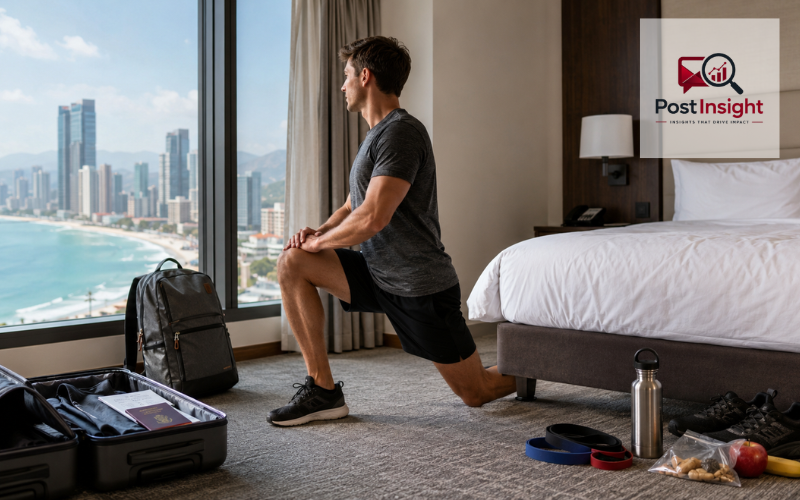
Learning how to stay fit while traveling does not mean forcing your normal gym routine into every trip. Travel changes your schedule, sleep, food choices, available space, and energy levels. Some days may involve long flights or meetings, while others may include hours of walking, swimming, hiking, or exploring. A useful travel fitness plan must be flexible enough to work around these changes.
For most travelers, the realistic goal is to maintain healthy habits and protect the progress they have already made. You may exercise for less time than you do at home, but that does not make the effort pointless. Short workouts, regular walking, balanced meals, enough water, and consistent sleep can help you feel stronger and more energetic throughout your trip.
Public health guidance also supports the idea that activity can be divided into smaller sessions. Adults are generally advised to aim for at least 150 minutes of moderate physical activity each week, along with muscle-strengthening activities on two days. However, this activity does not need to happen all at once. Your exact plan will depend on your health, fitness level, destination, and type of travel.
Quick Guide: How to Stay Fit While Traveling
| Travel Fitness Area | Simple Action | Why It Helps |
| Daily movement | Walk to nearby attractions and take the stairs | Adds activity without requiring a formal workout |
| Strength training | Complete a 10-to-20-minute bodyweight circuit | Helps maintain strength in limited space |
| Cardio | Choose walking tours, cycling, swimming, or hiking | Turns sightseeing into enjoyable exercise |
| Nutrition | Include protein, vegetables, and filling carbohydrates | Supports energy and helps control hunger |
| Snacks | Carry fruit, nuts, roasted chickpeas, or protein bars | Reduces impulsive food choices during busy days |
| Hydration | Carry a refillable water bottle | Helps prevent tiredness and dehydration |
| Recovery | Protect sleep and include light stretching | Supports energy, mobility, and muscle recovery |
| Planning | Keep a shorter backup workout ready | Makes it easier to stay consistent when plans change |
Start by deciding what success should look like during your particular trip. A short weekend away may only require a few walks and one bodyweight session. A two-week holiday may need a more regular plan. A business trip with early meetings may leave less time for exercise than a relaxed beach break.
Choose a simple goal, such as maintaining your current fitness, staying mobile after long travel days, or completing three short workouts during the week. A clear but flexible target is more helpful than promising yourself that you will exercise every day.
It is also important to reduce unnecessary pressure. Travel is not usually the ideal time to chase personal records, begin a demanding new program, or punish yourself for restaurant meals. Consistency matters more than intensity. Even a 15-minute session can be useful when the alternative is doing nothing because a full workout feels impossible.
Your goals should also match your current fitness level. Someone who already exercises regularly may be comfortable with several short strength sessions. A less active traveler may benefit more from regular walks, gentle stretching, and taking the stairs. The right plan is one that feels manageable and safe.
One of the easiest ways to stay active while traveling is to make movement part of the journey itself. Walking through a neighborhood, museum district, waterfront, or old town can help you explore more closely while adding useful activity to your day. Check the distance, weather, road conditions, and local safety guidance before choosing to walk.
Active experiences can also replace a formal cardio workout. Consider a guided walking tour, bicycle rental, swim, easy hike, kayaking session, or local dance class. Choose activities that match your ability, and use a qualified guide when the route, water, weather, altitude, or terrain may present risks.
Small choices can make a meaningful difference. Take the stairs when it is safe, walk around the airport terminal before boarding, or stretch your legs during a road-trip stop. The World Health Organization advises limiting long periods of sitting and replacing sedentary time with movement when possible.
You can also explore nearby restaurants, cafés, and attractions on foot rather than automatically taking a taxi. However, do not risk walking in poorly lit, isolated, or unfamiliar areas simply to increase your step count. Personal safety should always come before fitness goals.
A travel workout is more likely to happen when it has a realistic place in your day. Look at the next day’s plans each evening and identify one possible exercise window. This might be 20 minutes before breakfast, a walk after lunch, or a short hotel-room routine before getting ready for dinner.
Avoid building a schedule that depends on everything going perfectly. Flights run late, tours take longer than expected, weather changes, and work meetings can be moved. Create a main plan and a backup plan. For example, your main plan might be a 30-minute hotel-gym workout, while your backup is a 10-minute bodyweight circuit in your room.
It can also help to use a simple weekly target rather than a strict daily timetable. You might aim for two strength sessions, one longer active outing, and plenty of walking. This approach keeps fitness present without allowing it to control the trip.
On very busy days, divide movement into smaller periods. A 10-minute morning workout, a 15-minute walk at lunchtime, and a short evening stretch may be easier to manage than one long session. Physical activity can be spread throughout the week instead of being completed in one large block.
Good travel-friendly workouts do not require a large room or a complete gym. Basic movements such as squats, reverse lunges, wall or floor push-ups, glute bridges, calf raises, planks, and bird-dogs can train several major muscle groups in a small area.
Before starting, make sure the floor is dry, the furniture is stable, and there is enough room to move safely. Avoid jumping if you are staying above other guests or if the surface is slippery. You should also remove bags, shoes, chairs, and other items that could cause you to trip.
You can make most exercises easier by reducing the range of movement or using a wall or chair for support. To make them harder, slow down each repetition, add a pause, increase the number of repetitions, or reduce the resting time.
A 10-to-20-minute session may be enough to maintain the habit and give your muscles a useful challenge. It may not match your normal training volume, but the purpose of a travel workout is often maintenance rather than maximum performance.
Short workouts are also useful on days when you have already walked for several hours. Instead of completing another long cardio session, you can focus on a few strength and mobility exercises that balance the activity you have already done.
This travel calisthenics workout can be completed in a hotel room, rental apartment, or quiet outdoor area. Begin with three to five minutes of gentle movement, such as marching in place, arm circles, hip circles, ankle movements, and easy bodyweight squats.
Complete the following circuit two to four times:
Rest for around 30 to 60 seconds between exercises when needed and one to two minutes between rounds. Beginners can use a chair for squats, perform push-ups against a wall, and hold a plank from their knees.
More experienced travelers can use slower repetitions, longer pauses, split squats, decline push-ups, or an additional circuit. However, you do not need to make every session extremely difficult. Controlled movement and good form are more important than rushing through repetitions.
Finish with a few minutes of easy breathing and gentle stretching. Stop exercising if you experience sharp pain, dizziness, chest discomfort, or unusual shortness of breath. People with an injury, medical condition, or long period of inactivity should seek suitable professional advice before beginning a new workout routine.
A small amount of equipment can make travel workouts more varied, but only pack items you are likely to use. Resistance bands are one of the most practical choices because they are light and can support exercises such as rows, presses, lateral walks, curls, and assisted stretching.
A jump rope can provide a quick cardio session where the surface, ceiling height, noise level, and local rules allow it. Exercise sliders can make lunges and core exercises more challenging, although folded towels may work on a smooth floor.
A thin folding exercise mat can improve comfort during floor exercises, but it may not be worth the luggage space on every trip. If your hotel provides towels or the room has a suitable carpeted area, a separate mat may not be necessary.
Inspect your equipment before every use. Do not attach a resistance band to a door, railing, tree, bed frame, or outdoor fixture unless the anchor is completely secure and designed for that purpose. A simple bodyweight workout is safer than using an unstable anchor that could break or move.
The best equipment is not necessarily the most advanced item. It is the item that fits inside your luggage, suits your normal routine, and is simple enough to use regularly.
Check hotel facilities before arrival rather than assuming the gym will contain the equipment you need. Photos and facility descriptions can show whether there is a treadmill, basic weights, exercise machines, a pool, or enough open floor space.
Even when a hotel does not have a complete gym, a safe walking route, swimming pool, garden, or suitable stairway may offer useful opportunities for movement. Ask hotel staff about nearby parks, walking areas, or fitness centers if you are unfamiliar with the location.
Public parks, walking paths, outdoor gyms, and playground bars can also support a workout. Use them during appropriate hours, follow posted rules, and avoid taking over equipment intended for children. Choose well-lit areas with stable surfaces, and keep your phone and valuables secure.
Outdoor exercise requires extra judgment. Heat, humidity, cold temperatures, poor air quality, unfamiliar traffic, altitude, and uneven ground can change how difficult a normal workout feels. Reduce your intensity when conditions are demanding, and do not exercise alone in an isolated area simply to complete a fitness target.
Food is an important part of travel, and staying fit does not require avoiding every local dish. A balanced approach is to build most meals around a protein source, vegetables or fruit, a suitable carbohydrate, and some healthy fat while leaving room for foods that are special to the destination.
At a breakfast buffet, for example, you could choose eggs or yogurt, fruit, and whole-grain toast before adding a pastry you genuinely want to try. At dinner, you might share a rich starter, order a main meal containing vegetables and protein, and enjoy dessert without treating the decision as a failure.
Try to eat slowly and notice when you are comfortably satisfied. Restaurant portions can be large, so sharing a dish or saving part for later may be helpful where safe food storage is available.
You do not need to label foods as completely good or bad. A flexible approach allows you to enjoy special meals while still making choices that support your energy and comfort. The goal is not perfect eating. It is making enough supportive choices that you feel well while enjoying the culture and experience of the trip.
The popular 80/20 approach can be useful as a general idea. Most food choices can support your normal health goals, while some meals can simply be enjoyed for pleasure or cultural experience. This does not need to be measured exactly.
Protein-rich foods can make meals more satisfying and help support muscle maintenance, particularly when you are completing strength workouts. Useful options include eggs, Greek-style yogurt, milk, fish, lean meat, chicken, beans, lentils, tofu, and other soy foods.
Breakfast is often a useful time to include protein because travel days can become unpredictable. A filling breakfast may reduce the chance of reaching the afternoon extremely hungry and buying whatever food is immediately available.
Carry one or two practical snacks for flights, train journeys, road trips, or long tours. Nuts, roasted chickpeas, whole fruit, shelf-stable protein bars, and packaged jerky can be convenient where permitted.
Check allergy information, food-import rules, and storage requirements before packing food. Meat, fruit, seeds, and other products may be restricted when crossing international borders. Perishable snacks should not remain unrefrigerated for long periods.
Snacks should support your day rather than replace every proper meal. When possible, sit down for a balanced meal instead of continuously eating packaged foods between activities.
Travelers can easily forget to drink when they are rushing through airports, sitting on long journeys, or exploring in hot weather. Carry an empty reusable bottle through airport security where allowed, and refill it after the checkpoint. Drink regularly rather than waiting until you feel extremely thirsty.
Your fluid needs can increase with exercise, heat, humidity, altitude, illness, and long periods outdoors. Dark yellow urine, thirst, tiredness, dizziness, dry mouth, and urinating less frequently can be signs of dehydration.
Water is usually a practical main drink, although other drinks and water-rich foods can also contribute to fluid intake. Fruits, vegetables, soups, and milk-based drinks may provide additional fluids as part of your meals.
Caffeine and alcohol do not need to be completely forbidden, but you should not depend on them as your main sources of hydration. Alcohol can also disturb sleep, which may make jet lag and exercise recovery more difficult.
Travelers with medical conditions that require fluid restrictions should follow their clinician’s advice instead of general hydration recommendations.
Fitness is not only about exercise. Sleep and recovery affect your energy, mood, appetite, and the quality of your movement. Try to keep your bedtime and waking time reasonably consistent, especially during longer trips.
A dark, cool, and quiet room may make sleep easier. An eye mask and earplugs can be helpful in bright or noisy hotels. Reducing screen use and avoiding a heavy meal immediately before bed may also support a more comfortable sleep routine.
After a flight or long drive, spend a few minutes walking and gently moving your ankles, hips, shoulders, and upper back. Stretching should feel mild rather than painful. Regular movement breaks are usually more useful than one aggressive stretching session after many hours of sitting.
When crossing time zones, begin using the local schedule as your guide once you arrive. Daylight, correctly timed activity, and short daytime naps may help with adjustment. The CDC also advises drinking water, eating smaller meals, limiting alcohol, and carefully timing caffeine and exercise. Long or late naps may make nighttime sleep more difficult.
When you are exhausted, replace a hard workout with a walk, gentle swim, or mobility session. Rest is sometimes the healthiest choice, particularly after a long journey or several nights of poor sleep.
Different trips require different fitness plans. On a business trip, short morning sessions may work best because meetings and evening dinners can fill the rest of the day. During a road trip, focus on movement breaks, short walks, and simple exercises at overnight stops rather than sitting for the entire journey.
A beach holiday may naturally include swimming, walking, and water activities, while a city break may already involve a high number of daily steps. On a hiking trip, the hikes themselves may provide enough exercise, so additional hard leg workouts could make recovery more difficult.
During family travel, active games, park visits, and shared walks may be more realistic than leaving everyone to visit a gym alone. These activities still count as useful movement and may make the experience more enjoyable for the whole group.
Weather can also change your plans. Keep an indoor bodyweight routine ready for rain, extreme heat, cold weather, or poor air quality. The best fitness routine is not the most impressive one. It is the one that fits your environment and can be repeated safely.
A common mistake is trying to compensate for missed workouts or rich meals with excessive exercise. One large meal does not require punishment, and a few easier training days will not erase months of progress. Returning to your normal habits is more useful than reacting with extreme food restriction or overtraining.
Another mistake is ignoring warning signs. Pain, dizziness, illness, severe fatigue, dehydration, dangerous heat, unfamiliar surroundings, and poor sleep are valid reasons to change or skip a workout. Fitness should support your trip rather than create an avoidable injury or safety problem.
Avoid testing unfamiliar equipment without checking how it works. Hotel exercise machines may be different from the equipment you use at home. Begin with a light weight or resistance level and make sure the machine is stable before increasing the difficulty.
Do not become too focused on step counts, calorie numbers, or workout records. These tools may provide motivation, but they do not always reflect the full value of your activity or the needs of your body.
Finally, do not make the plan so strict that it removes the joy of traveling. Missing a workout because of a special excursion, family event, unexpected delay, or necessary rest day is not failure. A healthy routine should have room for real life.
Understanding how to stay fit while traveling is mainly about choosing small actions that work in changing conditions. Walk when it is practical, use short travel-friendly workouts, include protein and nourishing foods in most meals, drink regularly, and protect your sleep.
You do not need to repeat your complete home routine to maintain useful habits. A bodyweight circuit, active tour, balanced breakfast, recovery walk, or short stretching session can all contribute to the bigger picture. Some trips will naturally be more active than others, and your plan should reflect your schedule, health, and surroundings.
Focus on actions you can repeat rather than trying to make every day perfect. Ten minutes of movement is better than skipping exercise because you cannot complete an hour-long session. A balanced meal is still useful even when you also enjoy dessert or a local specialty.
Most importantly, let fitness improve your travel experience instead of competing with it. When your routine is simple, safe, and flexible, you can support your health while still enjoying the food, people, culture, and memorable moments that made the journey worth taking.
Use walking, stairs, active tours, and short bodyweight workouts. Squats, lunges, push-ups, glute bridges, and planks can provide a practical full-body session in a small space.
A 10-minute workout can help maintain consistency and provide useful movement, especially on busy days. Combining several short sessions with regular walking can support your fitness during a trip.
A simple circuit can include squats, push-ups, reverse lunges, glute bridges, planks, and bird-dogs. Complete two to four rounds while adjusting repetitions and rest to your fitness level.
Build most meals around protein, vegetables, fruit, and filling carbohydrates. Enjoy local specialties in comfortable portions instead of following strict rules or treating one indulgent meal as a failure.
Resistance bands, a jump rope, exercise sliders, or a thin mat are convenient options. Pack only lightweight equipment that suits your routine and that you will realistically use.
Disclaimer: This article provides general fitness, nutrition, hydration, and travel-wellness information for educational purposes only. It is not medical advice or a personalized exercise plan. Individual needs vary according to health, age, fitness level, destination, climate, and medical history. Consult a qualified healthcare or fitness professional before starting a new routine, especially if you have an injury, medical condition, or concerns about exercising while traveling.