
 11
11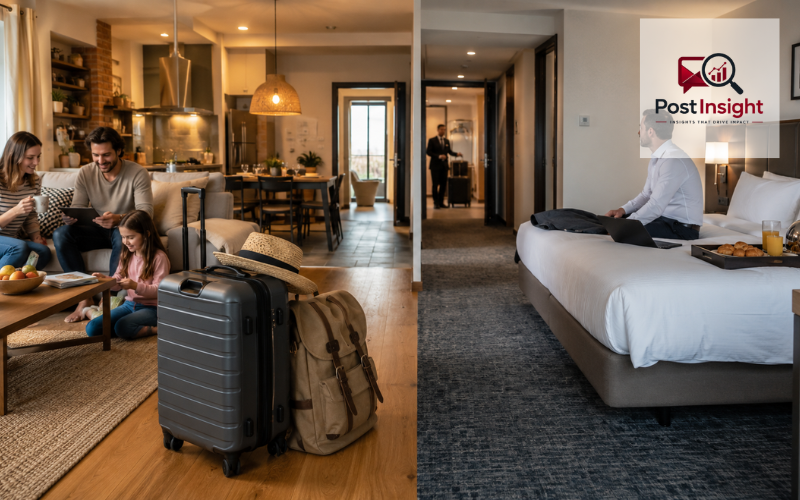
Choosing between Airbnb vs hotel is one of the most common decisions travelers face before booking a trip. Both options can offer a comfortable place to stay, but they are designed for different types of travel experiences. A hotel usually gives you predictable service, easy check-in, daily support, and familiar amenities. An Airbnb often gives you more space, a kitchen, laundry, privacy, and the feeling of staying in a local home or neighborhood.
The better choice depends on your trip. A solo traveler on a short city break may prefer a hotel because it is simple, safe, and convenient. A family staying for a week may prefer an Airbnb because they need bedrooms, a kitchen, and more living space. A business traveler may want hotel services, while a group of friends may care more about splitting the cost of a full apartment or house.
This guide compares Airbnb vs hotel in a clear and practical way. You will learn how they differ in cost, cleanliness, safety, comfort, privacy, amenities, service, and real traveler expectations. By the end, you should have a much clearer idea of which option fits your budget, travel style, and comfort level.
| Feature | Airbnb | Hotel |
| Best For | Families, groups, long stays, local-style travel | Solo travelers, short stays, business trips, convenience |
| Cost | Can be cheaper for groups and longer stays | Often cheaper for short stays after fees |
| Comfort | More space, kitchen, laundry, private living area | Consistent room quality, daily service, easy support |
| Cleanliness | Depends on host, reviews, and cleaning team | Usually follows brand or property cleaning standards |
| Convenience | Self-check-in, host communication, more planning | Front desk, luggage storage, housekeeping, room service |
The main difference between Airbnb and hotel stays comes down to service versus space. Hotels are usually better for short stays, business trips, solo travel, airport stays, and travelers who want predictable service. You arrive, check in at the front desk, get your room, and can usually ask staff for help at any time.
Airbnb is often better for longer stays, families, groups, remote workers, and travelers who want a more local experience. Instead of a single room, you may get an entire apartment, house, cabin, villa, or unique property. Many Airbnb stays include a kitchen, washer, dryer, dining area, and private living space.
Hotels focus on consistency. Airbnb focuses on flexibility. A hotel room in a trusted brand usually feels familiar from one city to another. An Airbnb can feel more personal and spacious, but the experience may vary more because each property and host is different. That is why comparing Airbnb vs hotel is not only about price. It is also about what kind of stay will make your trip easier and more enjoyable.
Many travelers search for “Airbnb vs hotel which is cheaper,” but the answer is not always simple. The cheaper option depends on the city, season, number of guests, length of stay, and total fees. A hotel may show a higher nightly rate at first, but it often includes cleaning, front desk support, and basic services. An Airbnb may show a lower nightly rate, but cleaning fees, service fees, taxes, and sometimes security deposits can increase the final cost.
For short stays, hotels are often more competitive than people expect. If you are staying only one or two nights, a hotel may be cheaper because there is no separate cleaning fee added by a host. Hotels can also be better value when breakfast, airport shuttle, parking, or loyalty points are included.
Airbnb may become cheaper for longer stays or larger groups. A family or group of friends can split the cost of a full home instead of booking multiple hotel rooms. A kitchen can also reduce food costs because you can cook breakfast, prepare snacks, or avoid eating every meal at restaurants. For trips of a week or longer, many Airbnb hosts offer weekly or monthly discounts, which can make a big difference.
The best way to compare is to look at the final checkout price, not just the nightly rate. Add up the full cost, including taxes, service fees, cleaning fees, parking, breakfast, and transportation. Only then can you see which option gives better value.
Both hotels and Airbnbs have clear advantages and disadvantages. Hotels are strong when it comes to convenience. You usually get a front desk, housekeeping, secure entry, maintenance help, luggage storage, and easy check-in. Many hotels also offer loyalty programs, which can help frequent travelers earn free nights, upgrades, or late checkout.
The downside is that hotel rooms can feel smaller and less private. If you are traveling with family or friends, you may need multiple rooms. Food costs can also rise because most hotel rooms do not have a full kitchen. Some hotels offer a microwave or mini fridge, but that is not the same as having a full home setup.
Airbnb has different strengths. You may get more space, a kitchen, laundry, private entrance, yard, balcony, or multiple bedrooms. This can make the trip feel more relaxed, especially for families and groups. However, Airbnb can be less predictable. Cleanliness, check-in, mattress comfort, noise levels, and host communication can vary from one listing to another. Extra fees can also make the final price higher than expected.
In simple terms, hotels are usually easier and more reliable. Airbnbs can offer better space and flexibility, but they require more careful checking before booking.
A hotel is usually the better choice for short trips, business travel, airport stays, and last-minute bookings. If you are arriving late at night or leaving early in the morning, a 24/7 front desk can make the trip much easier. You do not have to coordinate with a host, find a lockbox, or worry about confusing self-check-in instructions.
Hotels also work well when you want daily cleaning, fresh towels, room service, luggage storage, and quick help if something goes wrong. If the air conditioner stops working or the room has an issue, hotel staff can usually move you to another room or send maintenance quickly.
For travelers who prefer predictable standards, hotels can feel more comfortable. A well-known hotel brand usually follows clear service and cleanliness rules. This does not mean every hotel is perfect, but the experience is often more consistent than a private rental. If your trip is short and you want everything to be simple, a hotel is often the safer choice.
An Airbnb is often the better choice for longer vacations, family trips, group travel, and remote-work stays. If you are staying for several days or weeks, extra space can matter more than daily housekeeping. A separate bedroom, living room, kitchen, and laundry area can make the stay feel more like home.
Airbnb can also be helpful for travelers who want to stay outside the main tourist areas. Many rentals are located in residential neighborhoods, which can give you a different view of the destination. You may find quieter streets, local cafes, grocery stores, and a more relaxed environment.
Unique stays are another reason people choose Airbnb. Instead of a standard hotel room, you might book a cabin, beach house, loft, cottage, villa, tiny home, or countryside stay. This can make the accommodation part of the travel experience itself.
Airbnb is best when you are willing to read reviews carefully, compare total prices, and communicate with the host if needed. It can be a great option, but it rewards travelers who do a little extra research before booking.
Cleanliness is one of the biggest concerns in the Airbnb vs hotel debate. Hotels usually follow set cleaning routines, especially larger brands and well-managed properties. They also have staff on-site, which means guests can report problems quickly. Many hotels have security cameras, electronic key cards, front desk staff, and controlled building access.
Airbnb cleanliness depends more on the host, cleaning team, property manager, and previous guest reviews. Some Airbnbs are spotless and professionally managed. Others may not meet the same standard. This is why reviews are extremely important. Travelers should look for recent comments about cleanliness, bedding, bathrooms, odors, pests, and whether the listing matches the photos.
Safety also depends on the property and location. Before booking either option, check the neighborhood, entry method, cancellation policy, smoke detectors, locks, and guest reviews. For Airbnb, it is smart to choose listings with strong ratings, verified details, and a clear history of guest feedback. For hotels, check recent reviews too, because even known brands can vary by location.
For solo travelers, hotels often feel safer and easier. A hotel gives you a public lobby, front desk staff, secure elevators, and help nearby if you need it. This can be especially useful when arriving at night, visiting a new city, or traveling internationally. Hotels also remove many small worries, such as finding keys, contacting a host, or entering a private building alone.
That does not mean Airbnb is a bad choice for solo travel. A private Airbnb can work well if it is in a safe area, has excellent reviews, and offers simple self-check-in. Some solo travelers prefer Airbnb because it feels quieter, more private, and more local than a hotel.
Still, safety checks matter more when traveling alone. Look carefully at the location, host history, recent reviews, check-in process, cancellation terms, and whether the property is shared or private. If anything feels unclear, a hotel may be the better option. For first-time solo travelers, the predictable support of a hotel can bring extra peace of mind.
Families and groups often compare Airbnb vs hotel because space and cost become more important. A hotel room may work for one or two people, but it can feel tight for a family with children or a group of friends. Booking multiple hotel rooms can quickly become expensive.
Airbnb can solve this problem by offering multiple bedrooms, shared living areas, kitchens, dining tables, laundry, and sometimes outdoor space. This makes it easier for families to cook meals, wash clothes, relax together, and follow normal routines. For groups, splitting the cost of a large home can reduce the price per person.
However, hotels can still be better for some family trips. Resorts and family-friendly hotels may offer pools, breakfast, kids’ clubs, elevators, daily cleaning, restaurants, and connecting rooms. If parents want less housework and more service, a hotel may feel easier. The best choice depends on whether your group values space and self-catering more than service and convenience.
Amenities can change the entire travel experience. Hotels often provide services that make a trip smoother, such as front desk support, breakfast, gym access, pool, housekeeping, room service, maintenance, luggage storage, and sometimes airport shuttles. These features are helpful when you want comfort without planning every detail yourself.
Airbnb amenities are more home-based. A rental may include a full kitchen, washer and dryer, private parking, patio, balcony, workspace, extra bedrooms, and a living room. These features can be very useful for longer stays, families, digital workers, and travelers who prefer a slower pace.
The right choice depends on the purpose of your trip. If you are attending meetings, arriving late, or staying only two nights, hotel convenience may matter more. If you are cooking, working remotely, traveling with children, or staying for a week, Airbnb amenities may be more useful. Instead of asking which option is better overall, ask which amenities you will actually use.
Many travelers search “Airbnb vs hotel Reddit” because they want honest opinions from real people. Online discussions often focus on the same issues: hidden fees, cleaning rules, check-in problems, privacy, safety, location, and whether Airbnb still feels like good value. Some travelers say they moved back to hotels because hotel pricing feels clearer and service is easier. Others still prefer Airbnb because they want more space and a kitchen.
These opinions are useful, but they should not be treated as one-size-fits-all advice. A bad Airbnb experience in one city does not mean every Airbnb is bad. A poor hotel stay does not mean hotels are always worse. The quality depends on the specific property, host, hotel brand, neighborhood, price, and travel purpose.
The popular “Airbnb vs hotel meme” often jokes about cleaning fees, checkout chores, and strict house rules. While memes exaggerate the issue, they reflect a real concern: travelers want the final price and expectations to be clear. Before booking, always read the full listing or hotel policy, not just the headline price.
Current travel trends show that both hotels and short-term rentals remain important, but they serve different needs. Airbnb continues to attract travelers looking for flexible stays, local homes, unique properties, and longer trips. Recent company results show strong booking demand and growing guest spending, which suggests that short-term rentals are still a major part of modern travel.
Hotels are also holding their place, especially for business travel, events, city trips, luxury stays, and travelers who want reliable service. Hotel demand changes by region, season, and event calendar. In some markets, hotel room rates and occupancy remain steady, while in others major events, tourism recovery, and business travel can push prices higher.
For readers, the most useful takeaway is simple: the market is not moving in only one direction. Travelers are not choosing Airbnb or hotels forever. They are choosing based on the trip. A person may book a hotel for a two-night business trip, an Airbnb for a family vacation, and a hotel resort for a relaxing beach holiday. This flexible behavior is why both options continue to grow and compete.
The Airbnb vs hotel business model is very different, and that difference affects your stay. Hotels are hospitality businesses. They usually own or manage rooms in one building, employ staff, follow local rules, and provide repeated guest services. Their business depends on occupancy, room rates, brand trust, and customer service.
Airbnb works more like a marketplace. It connects guests with hosts who list private rooms, apartments, houses, and unique stays. Airbnb does not operate every property like a hotel. Instead, the host or property manager is responsible for the guest experience, while Airbnb provides the platform, payment system, reviews, and booking support.
This difference explains why hotels often feel more consistent and Airbnbs feel more varied. It also affects pricing. Hotels usually include service in the nightly rate, while Airbnb may separate the base price from cleaning and service fees. Cancellation rules also vary more on Airbnb because hosts can choose different policies. Understanding the business model helps travelers set the right expectations before booking.
The best choice in the Airbnb vs hotel debate depends on your trip, not on a universal rule. Choose a hotel if you want convenience, safety, predictable service, easy check-in, daily cleaning, and support at any time. Hotels are usually best for short stays, solo travel, business trips, airport stops, and travelers who do not want to manage the details of a home rental.
Choose an Airbnb if you want more space, a kitchen, laundry, privacy, multiple bedrooms, and a more local or home-style experience. Airbnb often works best for longer stays, families, groups, remote workers, and travelers who want to split costs or stay outside typical tourist areas.
The smartest approach is to compare the full price, not just the nightly rate. Read recent reviews, check the location, understand the cancellation policy, and think about what will actually make your trip easier. In the end, Airbnb vs hotel is not about which one is always better. It is about choosing the stay that fits your comfort, budget, group size, and travel purpose.
Airbnb can be cheaper for groups, families, and longer stays because guests can share space and cook meals. For short stays, hotels may cost less after Airbnb cleaning and service fees.
Hotels often feel safer because they have staff, cameras, front desks, and controlled access. Airbnb can also be safe, but travelers should check reviews, host history, location, and check-in details.
Hotels are usually better for solo travel because they offer easier check-in, staff support, and more predictable security. Airbnb can work well if the listing is private, well-reviewed, and in a safe area.
Many travelers prefer Airbnb because it offers more space, kitchens, laundry, private areas, and local neighborhood stays. It is especially useful for families, remote workers, and longer vacations.
Hotels are popular because they offer predictable service, daily cleaning, front desk help, luggage storage, loyalty rewards, and simple check-in. They are often easier for short trips and business travel.
Disclaimer: This article is for general travel information only. Prices, fees, rules, amenities, and guest experiences can vary by city, property, season, host, and hotel brand. Always check the latest booking details before making a reservation.