
 11
11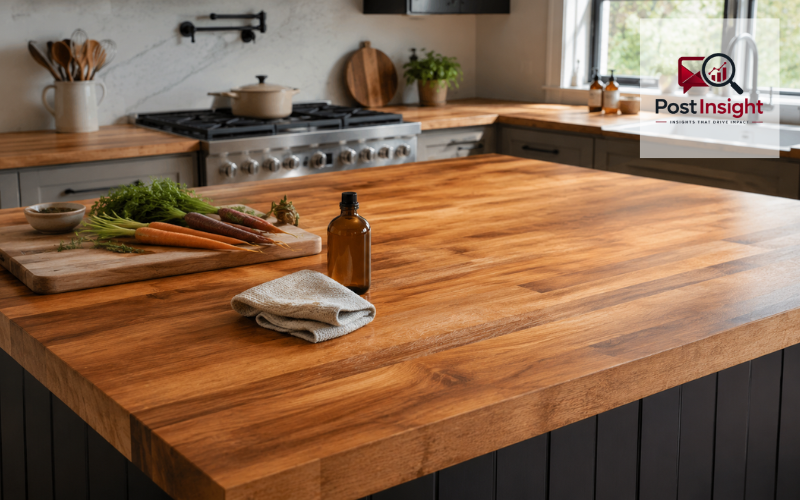
Butcher block countertops are kitchen surfaces made from real wood pieces that are joined together to create a strong, smooth worktop. Instead of using stone, laminate, or solid surface material, butcher block brings natural wood grain into the kitchen. This gives the space a warm, soft, and welcoming look that many homeowners love.
People often choose butcher block countertops because they feel more natural than many other countertop materials. They work well in full kitchens, small remodels, breakfast bars, and especially kitchen islands. A butcher block island can make a kitchen feel more relaxed while also giving you a practical place for meal prep, serving food, or casual seating.
Another reason these countertops are popular is cost. Butcher block countertops are often more budget-friendly than many stone options, although the final price depends on the wood type, thickness, grain style, finish, and installation. Current cost guides show butcher block commonly falling around the mid-range countertop category, with basic installed pricing often starting near the $70 per square foot range and total project costs depending heavily on kitchen size and labor needs.
Before choosing butcher block countertops, it is important to understand how they look, how they perform, how much care they need, and where they work best. This guide explains the main types, wood choices, costs, pros and cons, sealing options, maintenance needs, and buying tips so you can decide if this warm wood surface is right for your kitchen.
| Feature | Best Option | Why It Matters |
| Best for daily kitchen use | Edge-grain butcher block | Strong, affordable, and widely available |
| Best for chopping | End-grain butcher block | Handles knife marks better and hides cuts |
| Best decorative look | Face-grain butcher block | Shows more natural wood pattern |
| Best budget wood | Acacia | Durable, attractive, and often more affordable |
| Best classic wood | Hard maple | Dense, clean-looking, and long-lasting |
| Best protection | Finish based on use | Oil for food prep, hard sealer for general use |
The main thing that makes butcher block countertops different is the material itself. They are made from real wood strips, blocks, or planks that are bonded together to form a countertop surface. Because each piece of wood has its own grain pattern, color, and character, no two butcher block countertops look exactly the same.
Compared with stone or laminate, butcher block has a softer and warmer appearance. Granite, quartz, and marble can look elegant, but they often feel cool and hard. Laminate can be affordable and easy to clean, but it does not offer the same natural texture. Butcher block sits somewhere in the middle: it feels practical, homey, and visually rich without looking too formal.
These countertops are commonly used on kitchen islands, full counter runs, breakfast bars, pantry counters, laundry room counters, and food-prep areas. Some homeowners install butcher block throughout the whole kitchen, while others use it only on an island to create contrast with stone or quartz around the perimeter.
One important point is the difference between decorative use and direct food-prep use. If you want to chop food directly on the wood, the surface needs a food-safe finish such as mineral oil or a suitable wax blend. If you only want the countertop for general kitchen use, a harder sealer may protect it better from spills, but it may not be suitable for direct cutting.
Butcher block countertops come in several grain styles, and the grain style affects both appearance and performance. The three most common types are edge-grain, end-grain, and face-grain butcher block.
Edge-grain butcher block is the most common choice for kitchen countertops. It is made by placing long boards on their narrow edge and bonding them together. This creates a clean, striped look that feels simple and timeless. Edge-grain butcher block is usually more affordable than end-grain and is strong enough for most everyday kitchen use.
End-grain butcher block has a very different look. It is made from small blocks of wood placed with the cut ends facing up. This creates a checkerboard pattern. End-grain surfaces are often used for serious chopping because the wood fibers can absorb knife impact better than many other layouts. They can also hide knife marks well, but they are usually more expensive and require careful maintenance.
Face-grain butcher block, sometimes called plank-style butcher block, shows the wide face of the wood boards. This style highlights the natural grain beautifully, so it is often chosen for decorative impact. However, it can dent and scratch more easily than edge-grain or end-grain, so it is usually better for light-use areas, islands, or spaces where appearance matters more than heavy cutting.
For daily kitchen use, edge-grain butcher block is often the most balanced option. It offers a good mix of strength, beauty, price, and availability.
The wood species you choose has a big effect on how your butcher block countertops look and perform. Some woods are lighter and more classic, while others are darker, bolder, or more rustic.
Hard maple is one of the most traditional choices. It has a light cream to pale yellow color and a clean appearance that works well in many kitchen styles. Maple is dense and durable, which is why it has long been used for cutting boards and work surfaces. It is a good choice if you want a bright, classic kitchen surface that does not feel too busy.
Walnut is popular for homeowners who want a richer, darker look. It usually has a deep brown tone that can make a kitchen feel more refined and high-end. Walnut butcher block countertops look especially beautiful with white cabinets, black cabinets, brass hardware, or modern lighting. They may cost more than some lighter woods, but many people choose walnut for its warm luxury feel.
Acacia is another common option, especially for budget-conscious remodels. It often has golden, medium brown, or varied streaks that create a lively grain pattern. Acacia can be hard and attractive, making it a good choice for homeowners who want natural character without always choosing the most expensive wood.
Oak has a warm tan color and a bold grain. It works well in traditional, farmhouse, transitional, and rustic kitchens. Oak is strong and familiar, but its grain can be more noticeable than maple, so it is best for people who like visible wood texture.
Black butcher block countertops are also becoming popular in modern kitchen designs. These may be made from dark-stained wood, dark walnut, or wood treated with a black finish. They can look dramatic with white cabinets or sleek with dark cabinetry, but they may show dust, scratches, or water spots more easily depending on the finish.
Butcher block countertops cost less than many premium stone countertops, but they are not always the cheapest option. The price depends on the wood species, slab thickness, grain layout, finish, edge detail, cutouts, and whether the countertop is ready-made or custom-built.
As a general guide, installed butcher block countertop pricing can often fall somewhere around $70 to $150 per square foot, although basic installation estimates may be lower or higher depending on location and project details. Homewyse lists a basic May 2026 installation range around $67.08 to $94.27 per square foot, while other cost guides show broader total project costs based on kitchen size, labor, removal, sealing, and cutouts.
Ready-made slabs from big-box stores are usually more affordable than custom butcher block countertops. They come in standard sizes and are often used for islands, small kitchens, desks, laundry rooms, or DIY projects. Custom butcher block costs more because it can be made to fit exact measurements, special shapes, sink openings, corners, and unique kitchen layouts.
The grain style also affects price. Edge-grain is usually the most budget-friendly. End-grain is often more expensive because it requires more labor and creates a thicker, more complex surface. Face-grain can vary in price depending on the wood species and plank quality.
Budget options make sense when you are updating a small kitchen, building an island, or trying to create a warm look without spending too much. Premium wood may be worth it if the countertop will be a major design feature or if you want a thicker, longer-lasting surface.
Butcher block countertops have many benefits, but they also need more care than some other kitchen surfaces. Understanding both sides will help you avoid disappointment later.
The biggest advantage is appearance. Butcher block adds warmth, texture, and natural beauty to a kitchen. It can soften the look of white cabinets, balance dark cabinets, and create contrast against stone, tile, or metal. It also works with many styles, from farmhouse to modern.
Another benefit is repairability. If butcher block gets scratched, stained, or lightly burned, it can often be sanded and refinished. This makes it different from many laminate countertops, where deep damage is harder to fix. Wood also feels quieter than stone when you place dishes, pots, or utensils on it.
Butcher block can also be friendly to knives when it is finished properly for food prep. It is softer than stone, so it is less likely to dull knife edges quickly. Still, many homeowners prefer using a cutting board to protect the countertop and reduce maintenance.
The main downside is water sensitivity. Wood is porous, so standing water can cause staining, swelling, splitting, mold, or dark marks, especially around sinks. Heat is another concern. Hot pans can scorch the surface and damage the finish. Regular maintenance is also required, especially if the countertop is oiled rather than sealed with a hard protective coating.
Butcher block countertops perform best in kitchens where the homeowner is willing to wipe spills quickly, use trivets, avoid standing water, and refresh the finish when needed. If you want a nearly maintenance-free countertop, quartz, solid surface, or laminate may be easier choices.
Engineered butcher block countertops are designed to give the look of wood while improving stability and sometimes lowering cost. Instead of being made from solid wood all the way through, they may use a wood veneer or thick wood layer over a core material.
This is common in ready-made countertop options. For example, IKEA explains that its butcher block-style countertops use a thick wood veneer over particleboard, which helps improve stability and makes the countertops less likely to split or crack compared with solid wood. IKEA also notes that this construction uses less raw wood than solid countertops.
Solid wood butcher block is made from real hardwood throughout the full thickness of the slab. It can often be sanded more deeply and refinished many times over its life. It may also feel more traditional and durable to people who want a true hardwood surface.
Engineered butcher block can be a good choice for budget projects, DIY installations, and homeowners who want a stable ready-made slab. It may be easier to find in standard sizes and easier to install than custom solid wood. However, it may have limits when it comes to deep sanding, heavy damage repair, and long-term refinishing. If the veneer layer is thin or damaged too deeply, it may not be repairable in the same way as solid wood.
The right choice depends on your budget, how heavily you use the kitchen, and how long you expect the countertop to last.
Butcher block countertops are especially popular for kitchen islands because they create a warm center point in the room. Even when the rest of the kitchen uses quartz, granite, or laminate, a wood island top can make the space feel more inviting.
A butcher block island works well for casual dining, baking, serving, and meal prep. It also helps break up kitchens that have many hard surfaces. For example, white cabinets with stone counters can sometimes feel cold, but adding a wood island top brings balance and warmth.
Thickness matters for island countertops. A thicker butcher block slab often looks more substantial and can handle daily use better. Many ready-made island tops are around 1 1/2 inches thick, while custom options may be thicker depending on the design. Wider islands also need proper support, especially if there is seating or an overhang.
The wood style should match the purpose of the island. If the island will be used mostly for serving, homework, or seating, a decorative face-grain or walnut top may be beautiful. If it will be used for frequent cooking tasks, edge-grain maple or oak may be more practical. If you plan to chop directly on the island, choose a food-safe finish and understand that regular oiling will be part of the care routine.
The finish is one of the most important choices for butcher block countertops. A good finish helps protect the wood from water, stains, and drying. The best option depends on how you plan to use the surface.
If you want to chop food directly on the countertop, a food-safe oil or wax finish is usually the better choice. Food-grade mineral oil is commonly used because it soaks into the wood and helps keep it from drying out. Some people also use beeswax and oil blends to add more water resistance on the surface. These finishes need to be reapplied regularly because they do not create a permanent hard coating.
For countertops that will not be used as cutting surfaces, a harder sealer may be more practical. Water-based polyurethane, hard wax oils, and similar finishes can create stronger protection against spills and daily wear. These finishes are often better for sink areas, coffee stations, and general kitchen counters where water and stains are a concern.
The simple difference is this: oiling feeds and protects the wood from within, while sealing creates more of a barrier on top. Waterproofing is a stronger claim and depends on the product, the application, and the care routine. Even sealed butcher block should not be treated like stone. Spills should still be wiped up quickly.
The finish should always match your real kitchen habits. A beautiful countertop can fail early if it is sealed for the wrong type of use.
Maintaining butcher block countertops is not difficult, but it does require consistency. The most important habit is keeping the surface clean and dry. Wipe spills as soon as possible, especially around sinks, dish racks, coffee makers, and areas where water often sits.
For daily cleaning, use a soft cloth or sponge with mild soap and water. Avoid soaking the surface. After cleaning, dry it with a towel instead of letting it air-dry with water sitting on top. Harsh cleaners, bleach-heavy mixtures, and abrasive pads can damage the finish or dry out the wood.
If your countertop has an oil finish, it will need re-oiling. Many homeowners oil food-prep butcher block every few weeks or whenever the wood looks dry. A simple test is to watch how water behaves on the surface. If water soaks in quickly instead of beading up, the wood may need more oil or protection.
To prevent stains and damage, use trivets under hot pans, cutting boards for messy foods, and mats under appliances that may leak or create moisture. Pay special attention to the sink area, because this is where many butcher block problems begin.
One of the best things about butcher block is that it can often be renewed. Light scratches, stains, and surface marks can usually be sanded away, then the countertop can be refinished. This gives butcher block a second life when properly cared for.
When searching for butcher block countertops near me, it is helpful to compare both local and national options. Local countertop suppliers, lumber shops, cabinet makers, and woodworkers may offer custom slabs with better wood choices and exact sizing. Big-box stores may offer ready-made slabs at lower prices and faster availability.
Before buying, check the wood species, thickness, grain style, finish, and construction. Ask whether the countertop is solid wood or engineered with a veneer. Also check whether it is unfinished, pre-oiled, sealed, or ready for installation. This matters because an unfinished slab will need sanding, sealing, or oiling before use.
Look closely at seams, knots, cracks, warping, and color variation. Some variation is normal with real wood, but large defects may become a problem later. If the countertop will be installed near a sink, ask about water protection and the best finish for that area.
If you are hiring a professional installer, ask about experience with wood countertops specifically. Butcher block needs room for natural movement, proper support, careful sink cutouts, and sealed edges. A good installer should understand how to protect the underside, edges, and cut areas, not just the top surface.
Also ask about warranty coverage. Some warranties may not cover water damage, poor sealing, DIY mistakes, or improper installation. Reading the details before purchase can save stress later.
Many homeowners consider butcher block countertops IKEA options because they are accessible, stylish, and often more affordable than custom slabs. IKEA offers wood-look and butcher block-style countertops in standard sizes, including options made with thick veneer over a particleboard core. Their current countertop category explains that these products are designed to provide natural wood color and grain while improving stability compared with solid wood.
Ready-made slabs are useful for DIY projects because they come in set lengths and widths. They can work well for kitchen islands, small counter runs, laundry rooms, desks, pantry counters, and budget remodels. Some IKEA KARLBY options, for example, are listed in oak or walnut veneer and standard sizes, with island-specific versions also available in some markets.
The main benefit of ready-made butcher block countertops is convenience. You can often buy them faster than custom countertops, and they may cost less. They are also easier to plan around if your project fits standard measurements.
The limitations are also important. Ready-made slabs may not offer the exact size, thickness, wood species, grain layout, or finish you want. If they use veneer construction, they may not allow deep sanding like solid wood. They may also need careful edge finishing after cutting.
Ready-made options are best when your layout is simple, your budget is limited, and you are comfortable with standard sizes. For complex kitchens, custom solid wood may be the better long-term choice.
Homeowner opinions about butcher block countertops are often mixed, which is why it is helpful to look at real experiences with balance. In online discussions, including butcher block countertops Reddit threads, many people praise the look, warmth, and affordability of wood counters. They often like that scratches can be sanded out and that the kitchen feels less cold than it might with stone.
At the same time, common complaints are easy to find. Some homeowners mention water marks, dark stains, scratches, sink-area damage, and the need for regular oiling or sealing. These problems often happen when the countertop is not sealed well, when water sits too long, or when the owner expected the surface to behave like quartz or granite.
The best way to use homeowner feedback is to look for patterns rather than relying on one strong opinion. A person who uses butcher block only on a dry island may love it for years. Someone who installs it around a busy sink without good sealing may regret it quickly. Both experiences can be true because use and maintenance matter so much.
In general, homeowners who are happiest with butcher block understand what they are buying. They know it will age, develop marks, need care, and sometimes require refinishing. People who want a perfect, no-maintenance surface may be less satisfied.
Butcher block countertops can be worth it if you want a kitchen surface that feels warm, natural, and inviting. They bring real wood character into the kitchen and can make even a simple remodel feel more personal. They are also repairable, often more affordable than premium stone, and especially beautiful on kitchen islands.
However, butcher block is not the right choice for everyone. It needs regular care, quick cleanup, protection from heat, and the right finish for the way you plan to use it. Water damage is the biggest risk, especially near sinks, so sealing and daily habits matter.
The best results come from choosing the right wood, the right grain layout, and the right finish. Edge-grain maple or oak may be practical for everyday use, walnut can create a richer design statement, acacia can offer a budget-friendly natural look, and black butcher block countertops can suit modern kitchens when maintained properly.
If you enjoy the look of real wood and do not mind simple upkeep, butcher block countertops can be a beautiful and practical kitchen upgrade. If you want a surface that needs almost no attention, another countertop material may be a better fit. The key is to choose based on your lifestyle, not just the appearance.
Yes, butcher block countertops are a good choice if you like natural wood, warm kitchen style, and repairable surfaces. They work best when sealed properly and cleaned regularly.
Butcher block countertops usually cost less than many stone options, but prices vary by wood type, thickness, grain style, finish, and installation. Custom countertops cost more than ready-made slabs.
You can cut directly on butcher block if it has a food-safe oil or wax finish. However, using a cutting board helps reduce marks and keeps the surface easier to maintain.
Yes, butcher block countertops need sealing or oiling. Without protection, wood can absorb water, stain, crack, or warp, especially around sinks and wet prep areas.
They are not difficult to maintain, but they need consistent care. Wipe spills quickly, avoid hot pans, keep the surface dry, and refresh the finish when needed.
Disclaimer: This article is for general home improvement information only. Countertop prices, product quality, installation needs, and maintenance results can vary by location, supplier, wood type, and finish. Always follow manufacturer instructions and consult a qualified installer for your specific kitchen project.


