
 11
11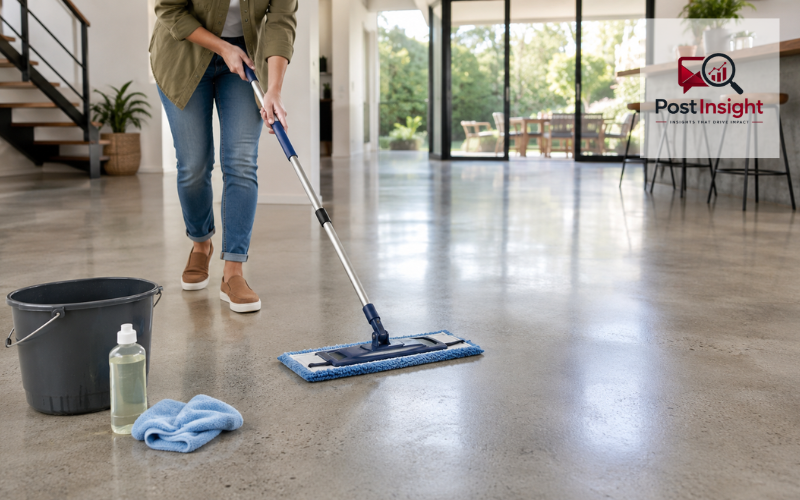
Concrete floors are strong, practical, and long-lasting, but they still need the right cleaning method. The best way to clean concrete floors depends on where the floor is located and what type of finish it has. A polished concrete floor inside a home should not be cleaned the same way as an unfinished garage floor or an outdoor patio.
Concrete may look solid and tough, but it can be porous. This means it can absorb water, oil, soap, and stains if it is not sealed properly. Using the wrong cleaner can leave dull patches, streaks, residue, or even damage the surface. Harsh products may also affect the shine of polished concrete or weaken painted and sealed finishes.
This guide explains how to clean concrete floors indoors, outdoors, in apartments, in basements, and after messy situations like stains or flooding. You will also learn how to choose a safe concrete floor cleaner, how to clean unfinished concrete floors, and how to remove common cement floor stains without making the problem worse.
| Concrete Floor Type | Best Cleaning Method | What to Avoid |
| Polished concrete | Use a pH-neutral cleaner and microfiber mop | Vinegar, bleach, ammonia, rough pads |
| Sealed concrete | Damp mop with mild soap or concrete-safe cleaner | Too much water and harsh chemicals |
| Painted concrete | Clean gently with minimal moisture | Scrubbing hard or leaving puddles |
| Unfinished concrete | Sweep, scrub stains, rinse well, then dry | Metal brushes and weak rinsing |
| Outdoor concrete | Use hose, degreaser, nylon broom, or careful pressure washing | High pressure on weak surfaces |
Before you start cleaning, take a moment to understand what type of concrete floor you have. This step is important because each surface reacts differently to water, soap, scrubbing, and stain removers.
Polished concrete floors usually have a smooth, shiny surface. They are common in modern homes, apartments, shops, and offices. These floors need gentle cleaning because harsh products can reduce the shine. A pH-neutral cleaner and a microfiber mop are usually the safest choices.
Sealed concrete floors have a protective coating that helps block moisture and stains. They are easier to clean than bare concrete, but too much water or strong chemicals can still wear down the sealer over time. Painted concrete floors need extra care because standing water and rough scrubbing can cause peeling or dull spots.
Unfinished or unsealed concrete floors are more absorbent. They are often found in garages, older basements, workshops, and storage areas. Dirt, oil, and moisture can sink into the surface more easily, so these floors may need deeper cleaning.
A simple water droplet test can help you check the surface. Place a few drops of water on the concrete. If the water beads on top, the floor is likely sealed or polished. If the water darkens the concrete and absorbs quickly, the floor is probably unfinished or unsealed.
You do not need expensive equipment for routine cleaning. Most concrete floors can be cleaned with simple tools and the right cleaner. Start with a soft-bristle broom or a vacuum made for hard floors. This removes dust, grit, and small particles before mopping.
A microfiber mop is a good choice for indoor concrete floors because it cleans without scratching the surface. You will also need a bucket, warm water, and either a pH-neutral concrete floor cleaner or a small amount of mild dish soap. For polished or sealed concrete, a gentle cleaner is usually better than strong chemicals.
For stains, keep a nylon brush nearby. Nylon is firm enough to scrub dirt but safer than metal brushes. Metal bristles can scratch some surfaces and may leave tiny fragments behind, which can rust later. Microfiber cloths are also useful for drying the floor after cleaning.
If you are using stronger stain treatments, wear safety gloves. This is especially important when cleaning garage floors, outdoor concrete, mildew, or areas exposed to floodwater.
The best concrete floor cleaner depends on the finish. For indoor polished or sealed floors, choose a pH-neutral cleaner. This type of cleaner is gentle and helps protect the surface from dullness. It is usually the best indoor concrete floor cleaner for regular maintenance.
For basic cleaning on sealed concrete, warm water with a few drops of mild dish soap can work well. The key is to use only a small amount of soap. Too much soap can leave a film that makes the floor look cloudy or streaky.
For unfinished garage floors or oil-stained concrete, a concrete-safe degreaser may be needed. Degreasers help break down oil and grease that plain water cannot remove. However, they should be used carefully and rinsed well so they do not leave residue behind.
Avoid bleach, vinegar, ammonia, and harsh solvents on polished or finished concrete unless the product label clearly says it is safe for that surface. Acidic cleaners like vinegar can dull polished concrete. Strong chemicals may damage sealers, painted surfaces, or decorative finishes.
To clean concrete floors indoors, first remove furniture, rugs, shoes, toys, and other loose items from the area. This gives you a clear space to work and prevents dirt from spreading while you clean.
Next, sweep or vacuum the floor thoroughly. This step should not be skipped. Dust and grit can act like sandpaper when dragged across the floor by a mop. Over time, this can cause tiny scratches, especially on polished or sealed concrete.
Mix warm water with a pH-neutral cleaner or a few drops of mild dish soap. Dip your microfiber mop into the solution, then wring it out well. The mop should be damp, not soaking wet. Mop the floor in small sections so the cleaner does not dry before you can wipe it evenly.
If the floor feels slippery or looks cloudy after mopping, go over it again with clean water. This helps remove leftover soap. Finally, dry the floor with clean microfiber cloths or allow good airflow while making sure no puddles remain. Drying helps prevent streaks, water marks, and dull patches.
Cleaning concrete floors in an apartment requires a light and careful approach. Apartments often have less ventilation, shared walls, and nearby furniture, so strong smells and large amounts of water should be avoided.
Use a low-moisture method whenever possible. A well-wrung microfiber mop is better than a wet mop. Choose an odor-free or low-scent concrete floor cleaner, especially if the space is small or if children, pets, or sensitive people are nearby.
Avoid harsh chemicals in enclosed rooms. Strong fumes can linger, and some products may not be safe for finished concrete. Protect baseboards, walls, and furniture legs by keeping the mop damp instead of wet. If water splashes onto painted trim or wood furniture, wipe it quickly.
For regular apartment cleaning, sweep or vacuum often and mop only when needed. This keeps dust under control without overwetting the floor. If the concrete is polished, use a cleaner made for finished hard floors and dry the surface well to keep it looking clean and even.
Basement concrete floors often collect dust, moisture, cobwebs, and musty smells. Before cleaning, check the floor for damp spots, mildew, water stains, or signs of leaks. If moisture keeps coming back, cleaning alone may not solve the problem.
Start by sweeping the entire floor, including corners and edges. A shop vacuum can be helpful if the basement has a lot of dust or debris. After removing loose dirt, mop with warm water and a mild concrete-safe cleaner.
If the basement smells musty, improve airflow while cleaning. Open windows if possible, use fans, and avoid leaving the floor wet. Concrete basement floors can hold moisture, so drying is just as important as washing.
For older stains, use a nylon brush and a suitable cleaner before mopping the full floor. If you notice repeated water stains, cracks, or damp walls, check for drainage problems or leaks before doing a deep clean. Otherwise, the floor may become dirty or musty again soon after cleaning.
Cleaning a concrete basement floor after a flood requires extra care. Before entering the basement, make sure it is safe. Do not walk into standing water if there is any chance of electrical danger. If the floodwater may contain sewage, chemicals, or unknown contamination, use protective gear and consider calling a professional.
Once the area is safe, remove standing water and loose debris. Damaged rugs, cardboard boxes, and soft materials may need to be thrown away if they absorbed contaminated water. Concrete is easier to clean than carpet, but dirt and germs can still settle into pores and cracks.
Wash the floor with an appropriate cleaner for concrete. Scrub dirty areas with a nylon brush, then rinse well. Disinfection may be needed after floodwater, but it should be done carefully. Make sure the disinfecting product is suitable for the floor type and that the space is well ventilated.
After washing, dry the basement completely. Use fans, open windows, and a dehumidifier if available. If the basement remains damp, mold and odor can return. Professional cleanup may be needed if the flooding was severe, if sewage was involved, or if mold has already spread.
Unfinished concrete floors absorb dirt and stains more easily than sealed floors. This is why learning how to clean unfinished concrete floors is different from cleaning polished or sealed surfaces. Bare concrete usually needs more scrubbing, but it should still be cleaned with care.
Start by sweeping or vacuuming the floor to remove loose dust and grit. If the floor is very dirty, use warm water with a concrete-safe cleaner. For greasy areas, a degreaser may be needed, especially in garages or workshops.
Scrub stains with a nylon brush or stiff nylon broom. Avoid metal brushes because they can leave marks or tiny metal pieces that later rust. After scrubbing, rinse the area well so cleaner does not remain in the pores.
Because unfinished concrete stains easily, consider sealing the floor after a deep clean. A sealer can make future cleaning easier and help protect the surface from spills, dust, and moisture.
Outdoor concrete floors include patios, porches, walkways, driveways, and garage areas. These surfaces collect leaves, mud, oil, tire marks, algae, and weather-related grime. The best way to clean concrete floor outside is to start with dry debris first.
Sweep away leaves, dirt, and loose material with a broom. Then pre-rinse the surface with a garden hose. This helps loosen soil before you apply a cleaner. For normal dirt, a concrete-safe outdoor cleaner may be enough. For oil or grease, use a degreaser made for concrete.
Scrub stained areas with a stiff nylon broom. Let the cleaner sit for the time recommended on the label, but do not let it dry completely on the surface. Rinse thoroughly with clean water.
A pressure washer can be useful for outdoor concrete, but it should be used carefully. Too much pressure can damage weak concrete, old surfaces, or decorative finishes. Start with a lower setting and keep the nozzle moving. Avoid metal brushes because they may leave rust stains later.
Stains should usually be treated before cleaning the entire floor. If you mop first, you may spread the stain or push it deeper into the concrete. The right method depends on the type of stain.
For oil and grease stains, absorb fresh spills quickly with kitty litter, cornstarch, or baking soda. Let the absorbent material sit, then sweep it away. For older grease stains, apply a concrete-safe degreaser or a paste made from heavy-duty laundry detergent and water. Scrub gently with a nylon brush and rinse well.
Rust stains may need a cleaner made specifically for rust on concrete. Avoid using random acidic products on polished or sealed floors because they may damage the finish. Food and drink stains can often be cleaned with mild soap, warm water, and light scrubbing.
For mold and mildew, improve ventilation first. Use a cleaner suitable for the area and wear gloves. Paint, adhesive residue, and tire marks may need special removers, but always test a small hidden area before applying them widely.
One of the biggest mistakes is using too much water. This is especially risky on painted concrete, sealed floors with worn areas, and indoor spaces with poor ventilation. Too much water can leave streaks, cause peeling, or increase moisture problems.
Another common mistake is skipping the sweeping step. Mopping over dust and grit can scratch the surface and create muddy residue. Always remove loose debris first.
Avoid acidic cleaners on polished concrete unless the product is approved for that surface. Vinegar is often used for household cleaning, but it is not always safe for concrete finishes. Bleach, ammonia, and harsh solvents can also cause problems on some floors.
Do not leave soap residue behind. If the floor looks cloudy, sticky, or streaky, rinse it with clean water and dry it again. Also avoid abrasive pads, metal brushes, and letting puddles air-dry. Most importantly, do not use one cleaning method for every concrete surface. The finish and location should guide your cleaning plan.
Regular maintenance makes deep cleaning easier. Dust mop or sweep concrete floors often, especially in busy areas. Small dirt particles can wear down the surface over time, so removing them early helps protect the finish.
Clean spills quickly. Oil, coffee, wine, food, and muddy water can leave stains if they sit too long. Use mats near entrances to reduce dirt and moisture from shoes. In garages, place absorbent mats under vehicles or tools that may drip oil.
Avoid dragging heavy furniture across indoor concrete. Use furniture pads to prevent scratches. For sealed concrete, watch for signs that the sealer is wearing down, such as dull areas or water absorbing into the surface. Reapplying sealer when needed can help protect the floor.
Outdoor concrete should be kept clear of leaves, oil drips, and standing water. Leaves can leave dark marks, and oil can soak into unsealed areas. Schedule deep cleaning based on how much traffic the floor gets and how dirty it becomes.
The safest way to clean concrete floors is to match your cleaning method to the floor type. Polished, sealed, painted, unfinished, indoor, outdoor, apartment, and basement concrete all need slightly different care. Once you know the finish, it becomes much easier to choose the right cleaner and avoid damage.
For most routine cleaning, the basic process is simple: sweep or vacuum first, use a gentle concrete floor cleaner, mop lightly, rinse if needed, and dry the floor fully. This helps prevent streaks, residue, dullness, and water marks.
Treat stains early, especially oil, grease, rust, mildew, and food spills. Avoid harsh chemicals unless you are sure they are safe for your specific floor. With the right approach, concrete floors can stay clean, fresh, and attractive for years without damaging the finish.
The best cleaner depends on the floor type. For indoor polished or sealed concrete, use a pH-neutral cleaner. For unfinished garage floors, use a concrete-safe degreaser when oil or grease is present.
Vinegar is not recommended for polished or sealed concrete because it is acidic and may dull or damage the finish. A mild soap or pH-neutral cleaner is usually a safer choice.
Sweep or vacuum first, then scrub with warm water and a concrete-safe cleaner. Use a nylon brush for stains, rinse well, and dry the surface to reduce residue and moisture problems.
Treat stains before mopping the full floor. Use absorbent powder for fresh oil, degreaser for old grease, mild soap for food stains, and a suitable rust remover for rust marks.
Indoor concrete floors can be swept several times a week and mopped as needed. Outdoor, garage, and basement floors may need deeper cleaning based on dirt, stains, moisture, and foot traffic.
Disclaimer: This article is for general cleaning guidance only. Always test any cleaner on a small hidden area first, follow product label instructions, and contact a professional for severe stains, flood damage, mold, or damaged concrete surfaces.


