 11
11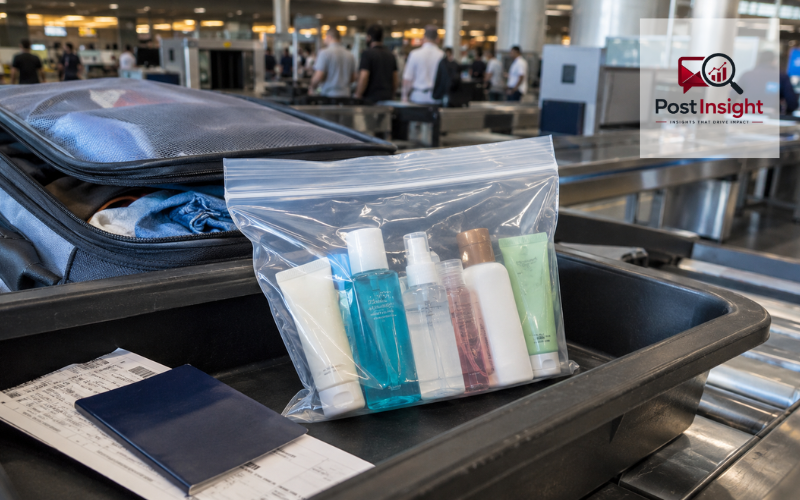
The TSA liquid limit is one of the most important rules to understand before packing your carry-on bag for a flight. In simple words, it controls how much liquid, gel, cream, paste, or aerosol you can bring through airport security in your hand luggage. This rule is used at TSA checkpoints in the United States and helps security officers screen bags more quickly and safely.
Most travelers know this rule as the 3-1-1 rule. It means each liquid container must be 3.4 ounces, or 100 milliliters, or smaller. All of those containers must fit inside one clear quart-sized resealable bag. Each passenger is allowed one of these liquids bags in their carry-on.
Understanding the TSA liquid limit before you pack can save you time, stress, and money at the airport. Many people lose full-size toiletries, perfumes, lotions, or toothpaste tubes simply because they did not know the container rule. This guide explains what the rule means, what counts as a liquid, what is allowed in checked baggage, and which items may be exempt from the limit.
| Item / Rule | What It Means |
| Carry-on liquid size | Each container must be 3.4 oz / 100 ml or smaller |
| Liquids bag | All liquid containers must fit in one clear quart-sized resealable bag |
| Per passenger rule | Each traveler is allowed one liquids bag |
| Checked baggage | Full-size liquids can usually go in checked luggage |
| Exempt items | Medicines, baby formula, breast milk, baby food, and contact lens solution may be allowed in larger amounts |
| Common liquid items | Shampoo, toothpaste, lotion, perfume, sunscreen, gels, creams, sprays, and pastes |
The tsa liquid limit is the rule that controls liquids in carry-on luggage when you go through airport security. It does not only apply to water or drinks. It also includes many everyday travel items such as shampoo, conditioner, toothpaste, sunscreen, lotion, perfume, gel, shaving cream, and spray deodorant.
The rule applies at TSA security checkpoints before you enter the secure area of the airport. If an item is larger than the allowed size and does not qualify for an exemption, TSA officers may not allow it through in your carry-on bag. This is why packing correctly before leaving home is much better than trying to fix the problem at the checkpoint.
The main idea is simple: small travel-size liquid containers are allowed in carry-on luggage, but larger liquid containers usually need to go in checked baggage. Even if a bottle is almost empty, TSA looks at the size printed on the container, not the amount of liquid left inside.
The TSA 3-1-1 rule is the easiest way to remember the carry-on liquid limit. The first “3” refers to 3.4 ounces, which is equal to 100 milliliters. Every liquid container in your carry-on must be this size or smaller.
The first “1” means all your travel-size liquids must fit inside one quart-sized clear plastic resealable bag. The second “1” means each passenger is allowed only one liquids bag. This rule applies to liquids, gels, aerosols, creams, and pastes.
Container size is one of the most common reasons people lose items at security. For example, if you bring a 6-ounce toothpaste tube that has only a little toothpaste left inside, it may still be rejected because the container itself is larger than 3.4 ounces. TSA checks the container capacity, not how full it feels.
A good way to avoid problems is to use labeled travel-size bottles and keep them together in one clear bag. This makes screening easier and helps you quickly see whether you packed too much.
The maximum liquid carry-on airplane rule is not based on one large total amount. Instead, it depends on two things: each container must be 3.4 ounces or smaller, and all containers must fit comfortably inside one quart-sized bag.
This means you can usually bring several small travel-size bottles, but you cannot bring unlimited items. If the bag is overfilled, cannot close, or looks packed too tightly, you may be asked to remove some items. The liquids bag should close properly without forcing it shut.
Common items that travelers pack in this bag include shampoo, conditioner, body wash, lotion, toothpaste, perfume, sunscreen, face wash, hair gel, mouthwash, and small makeup products. If you use refillable travel bottles, make sure they are 3.4 ounces or smaller and tightly closed to prevent leaks.
For short trips, travel-size containers are usually enough. For longer trips, it is often better to pack full-size bottles in checked baggage or buy larger products after arriving at your destination.
Many travelers think the TSA liquid limit only applies to obvious liquids, but the rule is broader than that. TSA treats many items as liquids if they can spill, spread, smear, spray, pump, or pour.
This includes liquids such as shampoo, mouthwash, perfume, and drinks. It also includes gels like hair gel and aloe vera gel, aerosols like spray deodorant and shaving cream, creams like lotion or moisturizer, and pastes like toothpaste.
Spreadable foods may also count. Peanut butter, hummus, yogurt, jam, cream cheese, and similar items are usually treated like liquids or gels for carry-on screening. Some makeup and personal care products can also fall under the rule, including mascara, liquid foundation, lip gloss, and some deodorants.
Solid items are usually easier to pack. For example, a solid bar of soap is not treated the same as liquid body wash. A solid stick deodorant is usually simpler than spray or gel deodorant. When in doubt, ask whether the item can spread, squeeze, spray, or pour. If yes, pack it according to the liquids rule.
The tsa liquid limit checked baggage rules are different from carry-on rules. The 3.4-ounce limit is mainly for carry-on bags going through the security checkpoint. In checked baggage, you can usually pack larger bottles of shampoo, lotion, sunscreen, perfume, and other everyday liquids.
This makes checked baggage a better place for full-size toiletries. If you want to bring a large bottle of conditioner, a full-size sunscreen, or a big container of body wash, packing it in your checked suitcase is usually the safer choice.
However, checked baggage does not mean everything is allowed. Some liquids can still be restricted or prohibited because they are flammable, dangerous, or regulated. Alcohol, chemicals, fuel, certain sprays, and other hazardous items may have special rules. Always check official guidance if you are packing anything unusual.
A simple packing rule is this: keep small daily-use liquids in your carry-on and pack larger, non-essential liquid items in checked baggage. This helps you move through security with fewer issues.
For domestic flights inside the United States, the TSA liquid limit applies when you pass through airport security before boarding. Whether you are flying from New York to Los Angeles, Chicago to Miami, or Dallas to Seattle, the same basic carry-on liquid rule is used at TSA checkpoints.
This means your carry-on liquids should follow the 3-1-1 rule: containers of 3.4 ounces or less, packed inside one quart-sized clear resealable bag, with one bag per passenger.
Domestic travelers often pack items like toothpaste, deodorant, sunscreen, makeup, hand sanitizer, lotion, and small hair products. These items are fine in carry-on luggage as long as they meet the size and bag requirements.
Even on a short domestic flight, you should not assume airport security will ignore a larger liquid container. The rules apply before boarding, no matter how short the flight is. If you do not need a full-size item during the trip, place it in checked baggage or leave it at home.
The tsa liquid limit international rules are important for travelers flying out of U.S. airports to another country. When you depart from a U.S. airport, TSA screening rules apply before your international flight. This means your carry-on liquids still need to follow the 3-1-1 rule.
Other countries often have similar liquid rules, but they may not be exactly the same. If you have a connecting flight outside the United States, your bag may be screened again at another airport. That airport may follow its own rules, so it is smart to keep your liquids packed neatly and within common international limits.
Duty-free liquids can also cause confusion. If you buy liquids such as perfume, alcohol, or cosmetics at a duty-free shop, they may be allowed under certain conditions, especially when sealed in a secure tamper-evident bag with proof of purchase. However, rules can be different during connections, so do not open sealed duty-free bags before you finish your journey.
For international travel, the safest approach is to keep essential liquids small, pack full-size items in checked baggage, and check the rules for every airport where you will pass through security.
Many travelers search for tsa liquid limit new rules because they hear that airport scanners are changing. The important thing to know is that the main 3-1-1 rule has not been removed for regular carry-on liquids. The 3.4-ounce or 100 ml container limit still matters.
Some airports use advanced CT scanners. These scanners can give security officers a clearer view inside bags. In some lanes, travelers may be told they can leave their travel-size liquids inside their carry-on instead of removing the quart-sized bag. This can make the screening process feel easier.
However, this does not mean you can bring full-size liquids through security. Scanner technology may change how your bag is screened, but it does not automatically change the allowed size of your liquid containers. You should still pack according to the 3-1-1 rule unless TSA gives different instructions at the checkpoint.
For unusual items, the best step is to check TSA’s official “What Can I Bring?” tool before travel. This is especially helpful for food, medical items, sprays, gels, and products that are not clearly liquid or solid.
The TSA liquid limit is usually shown as 3.4 ounces or 100 milliliters. These are volume measurements. They describe how much space the liquid container can hold.
Some travelers search for the TSA liquid limit in grams, but grams measure weight, not liquid volume. This can be confusing because different liquids can have different weights. For example, 100 ml of one product may not weigh exactly the same as 100 ml of another product.
When packing liquids for air travel, focus on the label that shows ounces or milliliters. If a bottle says 100 ml, it is usually within the carry-on liquid limit. If it says more than 100 ml, it should not go in your carry-on liquids bag unless it qualifies for an exemption.
A simple rule is to look for travel containers marked 3.4 oz, 100 ml, or smaller. If the label is unclear, choose a smaller container to avoid problems at security.
Some items are exempt from the regular 3.4-ounce limit because they are considered necessary for health, medical, or child-care reasons. These items may be allowed in larger amounts, but they should be declared to TSA officers before screening begins.
Medically necessary liquids can include prescription liquid medicine, over-the-counter liquid medicine, and other needed medical liquids. Contact lens solution may also be treated as medically necessary. You do not have to place these items inside your regular quart-sized liquids bag, but they may need extra screening.
Infant and child-related items may also be allowed in larger amounts. These can include baby formula, breast milk, toddler drinks, baby food, and puree pouches. TSA guidance also says your child does not always need to be present for you to bring breast milk or formula.
Even though these items are exempt from the normal size limit, it is still helpful to pack them in a way that is easy to inspect. Use clear containers when possible, keep labels visible, and tell the officer before your bag goes through screening.
One of the most common mistakes is packing a container that is too large, even if it is almost empty. A half-used 8-ounce lotion bottle is still considered an 8-ounce container. It does not meet the carry-on liquid limit.
Another mistake is forgetting the quart-sized bag. Loose travel bottles scattered inside a carry-on may slow down screening and make it harder to show that everything follows the rule. Keeping all liquids together in one clear resealable bag is much easier.
Travelers also sometimes bring too many items. Even if each bottle is under 3.4 ounces, all of them must still fit comfortably in one quart-sized bag. If your bag is bulging or will not close, you have packed too much.
Some people also assume gels, creams, pastes, or spreadable foods do not count. Toothpaste, peanut butter, mascara, and cream products can create problems if they are larger than allowed.
Medical liquids can also cause confusion. If you bring medically necessary liquids, keep them separate and declare them before screening so officers can handle them correctly.
Many people search for tsa liquid limit reddit because they want real traveler experiences. Reddit can be useful for seeing what other passengers have gone through, but it should not be your only source for packing decisions.
Airport experiences can vary. One traveler may say their liquids were not checked closely, while another may say TSA removed an item from their bag. This does not always mean the rule changed. It may simply mean the situation, airport, lane, or officer decision was different.
TSA officers make the final decision at the checkpoint. Even if someone online says they carried a larger item without a problem, that does not guarantee the same thing will happen to you.
Use Reddit and forums for general travel tips, but rely on official TSA guidance for rules. If you are unsure about a product, check the official TSA website or use the “What Can I Bring?” search tool before packing.
Packing liquids correctly does not have to be difficult. Start by choosing travel-size containers that are clearly marked 3.4 ounces or 100 ml. Refillable bottles are useful, but make sure they are not larger than the allowed size.
Keep your quart-sized liquids bag near the top of your carry-on or in an outside pocket. This makes it easier to remove if the security lane requires it. Even if you are using a CT scanner lane where liquids can stay inside the bag, easy access is still helpful.
Pack full-size liquids in checked baggage whenever possible. Place them in sealed plastic bags to protect your clothes from leaks. For extra safety, tighten caps and avoid overfilling refillable bottles.
Label medical liquids clearly and keep them separate from regular toiletries. If you are traveling with baby formula, breast milk, or medication, tell the TSA officer before screening begins.
Before leaving for the airport, review your liquids bag. Remove anything too large, check that the bag closes, and move full-size items to checked luggage. This simple habit can prevent delays and help your trip start smoothly.
The TSA liquid limit is simple once you understand the basic rule. For carry-on luggage, most liquids, gels, aerosols, creams, and pastes must be in containers of 3.4 ounces or 100 ml or smaller. These containers must fit inside one clear quart-sized resealable bag, and each passenger is allowed one liquids bag.
Checked baggage is usually the best place for full-size toiletries and larger liquid products. Domestic and international travelers should both follow the rule when departing from U.S. airports, and international passengers should also think about connecting airport rules.
Some items, such as medically necessary liquids, baby formula, breast milk, baby food, and contact lens solution, may be allowed in larger amounts, but they should be declared before screening. New scanner technology may make screening easier in some airports, but it does not remove the basic 3.4-ounce liquid limit.
Before every trip, check your carry-on liquids carefully and review official TSA guidance for any item you are unsure about. Packing liquids the right way can save time, reduce stress, and help you move through airport security with confidence.
The TSA liquid limit allows containers of 3.4 oz / 100 ml or less in carry-on bags. All containers must fit inside one clear quart-sized resealable bag.
Yes, most full-size liquids can go in checked baggage. However, dangerous, flammable, or restricted liquids may still have special rules, so always check before packing unusual items.
TSA may allow larger amounts of medically necessary liquids, baby formula, breast milk, baby food, and contact lens solution. These items should be declared before security screening.
Yes, toothpaste is treated as a paste, so it follows the TSA liquid limit. The tube must be 3.4 oz / 100 ml or smaller for carry-on bags.
The main 3-1-1 rule has not changed. Some airports use newer scanners, but the 3.4 oz / 100 ml container limit still applies to regular carry-on liquids.
Disclaimer: This article is for general travel information only. TSA rules may change, and final decisions are made by TSA officers at the airport. Always check the official TSA website before traveling.