
 11
11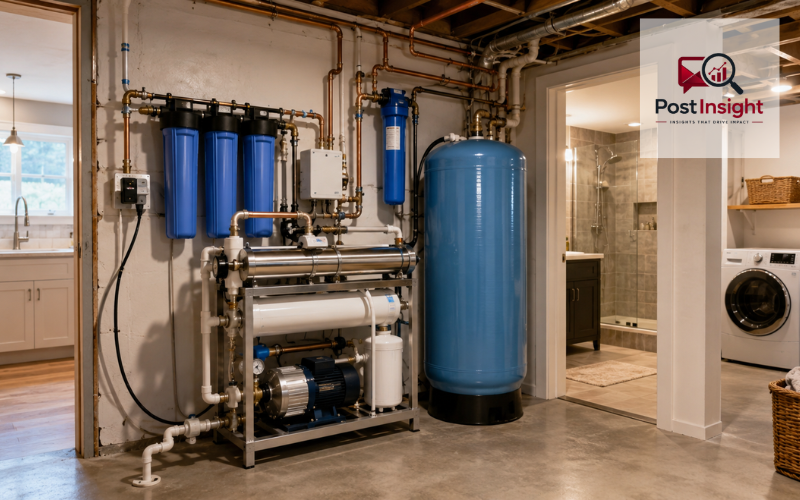
A whole house reverse osmosis system is a water treatment setup that filters water before it spreads through the rest of your home. Instead of cleaning water at only one faucet, it is installed near the main water line so it can treat the water used for drinking, cooking, showers, laundry, toilets, and appliances.
This type of system is different from an under-sink reverse osmosis filter. An under-sink RO system usually treats only the water from one drinking faucet. A whole house reverse osmosis system, on the other hand, is designed to handle a much larger water demand. It must supply enough treated water for multiple bathrooms, kitchen use, washing machines, water heaters, and other daily household needs.
Reverse osmosis is often used when water has serious quality concerns, such as high total dissolved solids, salty taste, nitrates, arsenic, certain metals, or other dissolved contaminants. The U.S. Environmental Protection Agency notes that reverse osmosis can remove many inorganics, dissolved solids, radionuclides, and synthetic organic chemicals from water.
Still, a whole house RO system is not a simple plug-and-play filter. It needs space, proper plumbing, a storage tank, water pressure support, wastewater drainage, and regular maintenance. For many homes, it can be a powerful solution. For others, a smaller under-sink system or a different whole-house filter may be more practical.
| Key Point | What Readers Should Know |
| Main Purpose | Filters water for the entire home, not just one faucet |
| Best For | High TDS, salty water, well water, nitrates, arsenic, or serious water-quality issues |
| Not Always Needed For | Simple chlorine taste, mild hardness, or only drinking-water concerns |
| Main Setup Parts | Pre-filters, RO membrane, storage tank, pump, and post-filter/remineralizer |
| Important Add-On | Remineralization helps improve taste and protect plumbing |
| Cost Factor | Price depends on water quality, system size, installation, and pretreatment |
| First Step | Always test your water before buying a system |
A whole house reverse osmosis system is a point-of-entry water filtration system. “Point of entry” means the system treats water where it first enters the home. Once the water passes through the system, it moves through the plumbing lines and reaches every tap and appliance.
The main job of this system is to reduce dissolved substances that basic filters may not remove well. These can include total dissolved solids, salts, some metals, nitrates, arsenic, and certain chemical contaminants. Many systems also include sediment and carbon filters before the RO membrane to remove dirt, rust, chlorine, and odor-causing compounds.
This kind of setup is usually considered when the home’s water has problems that affect more than just drinking water. For example, if the water leaves white scale, tastes salty, stains fixtures, damages appliances, or causes concern because of lab test results, whole-home treatment may make sense.
However, it is important to understand that RO is not always the first or only answer. If the main problem is chlorine taste from city water, a carbon filtration system may be enough. If the main issue is hardness, a water softener may be the better first step. A whole house reverse osmosis system is most useful when dissolved contaminants are the main concern and the homeowner wants treated water throughout the entire home.
A whole house RO system works in several stages. The first stage is usually pre-filtration. This may include a sediment filter to catch sand, dirt, rust, and other visible particles. A carbon filter may also be used to reduce chlorine, chemical taste, and odors. This step is important because chlorine and sediment can damage or shorten the life of the RO membrane.
The next stage may include a water softener, iron filter, or other pretreatment system. This depends on the water test results. Hard water, iron, manganese, and sulfur can create problems for the RO membrane if they are not handled first. This is why a water test is one of the most important steps before buying any whole-home RO system.
After pretreatment, water is pushed through the RO membrane. The membrane allows water molecules to pass while rejecting many dissolved substances. This is the stage that makes reverse osmosis different from many standard filters.
Because RO filtration is slower than normal household water flow, whole-house systems usually need a storage tank. The system filters water over time and stores it so the home has enough treated water when needed. Many homes also need a delivery pump or booster pump to move the treated water from the tank to faucets and appliances with steady pressure.
Finally, the water may pass through a post-filter or remineralization stage. This can improve taste, raise pH, and help make the water less aggressive toward plumbing materials.
The biggest benefit of a whole house reverse osmosis system is that it improves water quality throughout the home. Instead of having clean water at only one faucet, treated water is available from the kitchen, bathrooms, laundry area, and showers.
This can be especially helpful in homes with high TDS, salty water, or specific contaminants found through testing. It may also reduce scale buildup on fixtures, glass shower doors, faucets, and appliances. When water contains fewer dissolved solids, water heaters, washing machines, dishwashers, and coffee makers may experience less mineral buildup over time.
Another benefit is comfort. Some homeowners notice that treated water feels better on skin and hair, especially when the original water is very hard or has unpleasant odor. Laundry may also feel cleaner when water problems are properly corrected.
A whole house reverse osmosis system may also offer peace of mind for people using private wells. If testing shows contaminants that RO can reduce, treating the water at the entry point may be more useful than relying only on bottled water or a single drinking-water filter.
That said, benefits depend heavily on the original water quality and system design. A properly sized system with the right pretreatment can perform well. A poorly matched system may create pressure problems, maintenance headaches, or unnecessary costs.
A whole house reverse osmosis system has real advantages, but it also comes with important drawbacks. The first is cost. These systems are larger and more complex than under-sink RO units. They often need professional installation, storage tanks, pumps, drains, pretreatment, and post-treatment.
Space is another major consideration. A complete whole-house setup may need room for filters, a softener or iron filter, an RO unit, a large storage tank, and a pump. This can be difficult in small utility rooms, apartments, or homes without a basement, garage, or equipment area.
Wastewater is also part of the RO process. As the membrane separates treated water from rejected contaminants, some water is sent to drain. Modern systems can be more efficient than older ones, but wastewater management still needs to be planned carefully.
Another issue is water chemistry after RO. Reverse osmosis removes many dissolved minerals. This can make the water taste flat and may make it more aggressive toward some plumbing materials, especially copper. In many homes, remineralization is recommended to improve taste, balance pH, and help protect plumbing.
Maintenance is also necessary. Filters need replacement, membranes eventually wear out, tanks may need cleaning, and pumps must keep working properly. A whole house reverse osmosis system is not something to install and forget.
The cost of a whole house reverse osmosis system can vary widely because every home has different water conditions and plumbing needs. A basic installed system may cost a few thousand dollars, while a more complex setup with pretreatment, storage tanks, pumps, and professional labor can cost much more. Angi’s 2026 cost guide places professional reverse osmosis installation for point-of-use or whole-house systems between about $1,000 and $4,800, while some professional water treatment companies report whole-house RO projects ranging from around $2,000 to $8,000 or more depending on complexity.
The equipment itself is only one part of the total cost. Homeowners may also need a water test, sediment filters, carbon filters, a water softener, an iron filter, a storage tank, a delivery pump, and a remineralization filter. Labor can also be significant because the system connects to the main water line and must be set up safely.
Long-term costs should also be considered. Sediment and carbon filters may need replacement several times per year depending on water quality. RO membranes usually last longer, but their life depends on the amount of water used and how well the water is pretreated. Pumps, tanks, valves, and other parts can also need service over time.
The best way to estimate whole house reverse osmosis system cost is not by looking at equipment price alone. A proper estimate should include water testing, system design, installation, drainage, pretreatment, post-treatment, and future maintenance.
A whole house RO system for well water can be useful, but it should never be chosen without testing the water first. Well water can change from one property to another, even within the same area. One home may have high iron, another may have bacteria, and another may have high TDS or nitrates.
The CDC recommends testing private well water at least once a year for total coliform bacteria, nitrates, total dissolved solids, and pH. The EPA gives similar guidance and also suggests testing for other contaminants if they are suspected in the local area.
Common well water issues include hardness, iron, sulfur odor, sediment, bacteria, manganese, nitrates, arsenic, and high TDS. Not all of these are handled the same way. For example, bacteria may require disinfection, iron may require an iron filter, and hardness may require a softener before the RO membrane.
A whole house reverse osmosis system makes the most sense for well water when dissolved contaminants are confirmed through lab testing and affect the whole home. If the problem is only sediment or odor, another type of filter may be more affordable and easier to maintain.
A whole house reverse osmosis system with water softener is common in homes with hard water. Hard water contains calcium and magnesium minerals that can form scale. If hard water goes directly into an RO membrane, scale can build up and reduce performance.
A water softener is often installed before the RO system to protect the membrane. It helps reduce hardness so the RO membrane can work more efficiently and last longer. This is especially important in areas where water leaves white spots on dishes, buildup on faucets, or scale inside water heaters.
It is also important to understand the difference between softening water and using reverse osmosis. A water softener mainly handles hardness minerals. It does not remove total dissolved solids in the same way RO does. Reverse osmosis reduces many dissolved substances, including salts and certain contaminants, but it can be damaged if hard water is not treated first.
For homes with both hardness and high TDS, a softener and RO system may work together. The softener protects the RO membrane, while the RO membrane reduces dissolved solids that the softener does not remove.
A whole house reverse osmosis system with remineralization is often recommended because RO water has very low mineral content. When water has most minerals removed, it may taste flat and may become slightly acidic depending on the original water chemistry.
Remineralization adds selected minerals back into the water after RO treatment. This can improve taste and help balance pH. It may also reduce the risk of the water becoming aggressive toward plumbing materials.
This matters because very low-mineral water can interact with pipes and fixtures. In homes with copper plumbing, untreated RO water may increase the risk of corrosion over time. A remineralization stage can help make the water more stable before it travels through the home.
Remineralization is strongly recommended when the home has copper plumbing, low pH water, or a full point-of-entry RO system that supplies the entire house. It is also useful when homeowners want better-tasting water from every tap.
The best whole house reverse osmosis system is not always the most expensive one or the one with the longest list of features. The best system is the one that matches your water test results, household size, plumbing setup, and water use.
A family of five will need a different system than a small household with one bathroom. The system must be able to produce enough treated water per day and store enough water for peak demand. If the storage tank is too small or the pump is weak, the home may experience low pressure or slow recovery.
Important features include strong pre-filtration, proper membrane capacity, a reliable storage tank, good pump performance, and easy access to replacement filters. Serviceability matters because whole-house systems need regular maintenance.
It is also smart to look for products tested to recognized standards when possible. NSF explains that voluntary standards and certifications exist for residential water treatment systems, and NSF/ANSI 58 is the main standard for point-of-use reverse osmosis drinking water systems. While whole-house systems may be designed differently, certification and third-party testing still help buyers understand whether claims have been checked.
The safest approach is to choose based on water testing and professional sizing, not advertising claims alone.
Whole house reverse osmosis system reviews can be helpful because they show how systems perform in real homes. Reviews may mention water pressure, filter life, installation difficulty, noise from pumps, tank size, and maintenance costs.
Reddit opinions can also be useful, especially when homeowners share detailed experiences. A whole house reverse osmosis system Reddit discussion may reveal practical issues that product pages do not always explain, such as how much space the system takes, how often filters need changing, or whether the system affected water pressure.
However, reviews and Reddit comments should not be treated as universal advice. Water quality is local. A system that works well for one home may not be right for another home with different TDS, hardness, iron, pH, or water demand.
The best way to use reviews is to look for patterns. If many users mention poor support, expensive replacement filters, or weak water pressure, that is worth noting. But the final decision should still be based on your water test, plumbing type, household size, and installer recommendations.
Some homeowners search for a whole house reverse osmosis system at Costco or other retail stores because they want convenience, competitive pricing, or a known retailer. Retail options can be useful, but buyers should look carefully at what is included before making a decision.
A whole-house RO setup may require more than the main filter unit. You may need a storage tank, booster pump, pressure switch, sediment filter, carbon filter, softener, iron filter, drain connection, and remineralization stage. Some retail systems may include only part of what your home actually needs.
Warranty and replacement filter availability are also important. A low-priced system may become expensive if filters are hard to find or if the brand does not offer good support. Homeowners should also check whether professional installation is included or whether they must hire a plumber or water treatment specialist separately.
When comparing Costco or other retail options with professional-grade systems, do not choose based on price alone. A cheaper system that is undersized or missing pretreatment can fail early, waste money, and create frustration.
A whole house reverse osmosis system may be right for your home if water testing shows serious dissolved water problems. These may include high TDS, salt, nitrates, arsenic, certain metals, or other contaminants that affect the whole household.
It may also be useful for private wells where the water has multiple issues and a properly designed treatment system is needed. In these cases, RO may be part of a complete setup that includes sediment filtration, softening, iron removal, disinfection, and remineralization.
However, whole-home RO is not always necessary. If your only concern is drinking water taste, an under-sink RO system may be enough. If your issue is mainly chlorine smell from city water, a whole-house carbon filter may be more practical. If your main problem is hard water scale, a water softener may solve the issue without the cost and complexity of whole-house RO.
Before buying, get a water test from a reliable lab. This helps you avoid guessing and prevents you from spending money on the wrong system. A good system should be designed around your water, not just around a product label.
A whole house reverse osmosis system is one of the most complete water treatment options for homeowners who need serious water purification throughout the entire home. It can reduce many dissolved substances, improve water quality at every tap, and help protect appliances from certain water-related problems.
At the same time, it is not the right choice for every house. It requires a larger budget, enough space, proper plumbing, wastewater drainage, pretreatment, and ongoing maintenance. In many cases, a water softener, carbon filter, or under-sink RO system may be a better fit.
The most important step is water testing. Once you know what is actually in your water, you can decide whether whole-house RO is necessary or whether a simpler system will do the job. If your home has high TDS, well-water concerns, salt, nitrates, arsenic, or other dissolved contaminants, a properly designed whole house reverse osmosis system with the right pretreatment and remineralization can be a strong long-term solution.
Yes, it can be worth it if your home has high TDS, salty water, nitrates, arsenic, or serious well-water issues. For simple taste problems, a smaller filter may be enough.
A whole house reverse osmosis system can cost thousands of dollars, depending on equipment size, storage tank, pump, pretreatment, installation labor, and long-term maintenance needs.
You may need a water softener if your water is hard. Hardness minerals can create scale and damage the RO membrane, reducing system performance and lifespan.
Yes, reverse osmosis removes many dissolved minerals along with unwanted contaminants. That is why many whole-house systems include a remineralization stage to improve taste and balance water.
It can be a good choice for well water if testing shows high TDS, nitrates, arsenic, salt, or other dissolved contaminants. Testing is important before choosing any system.
Disclaimer: This article is for general educational purposes only. Water quality varies by home, location, and plumbing setup. Always get a professional water test and consult a qualified water-treatment expert before installing a whole house reverse osmosis system.


