
 11
11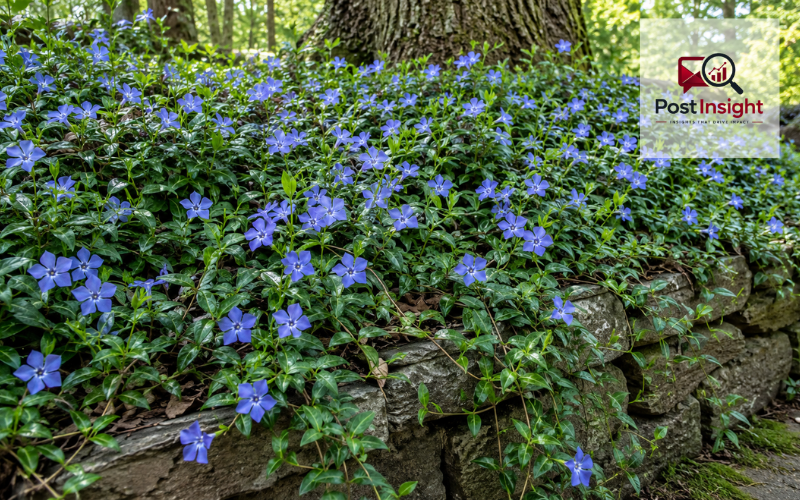
Vinca minor is a low-growing evergreen plant commonly used as ground cover. It spreads across the soil on trailing stems and gradually forms a thick carpet of leaves. In spring, violet-blue flowers appear above the glossy green foliage, bringing color to shaded areas.
Gardeners often choose vinca minor for places where grass struggles, such as beneath mature trees, along shaded banks, or beside walls. Once established, it tolerates shade, short dry periods, and several soil types. Its dense growth can also limit some weeds.
However, its greatest strength is also its main drawback. The stems root as they travel, allowing the plant to move beyond its intended space. It is considered invasive or potentially invasive in parts of North America, especially where it reaches woodland or other natural habitats. Gardeners should understand both its easy care and its need for firm control.
| Feature | Details |
| Common name | Lesser periwinkle, creeping myrtle |
| Scientific name | Vinca minor L. |
| Plant type | Evergreen perennial ground cover |
| Mature height | About 3–6 inches |
| Flower color | Violet-blue, lavender, or white |
| Blooming season | Mainly spring, with occasional later flowers |
| Best light | Partial shade to full shade |
| Soil | Moist, fertile, and well drained |
| Hardiness | Commonly USDA Zones 4–9 |
| Growth habit | Trailing stems that root at the nodes |
| Main uses | Shaded beds, slopes, under trees, retaining walls |
| Main concern | Aggressive spreading and invasive potential |
| Pet safety | Toxic if eaten by cats or dogs |
The vinca minor scientific name is Vinca minor L. The “L.” shows that Carl Linnaeus formally published the name. The species belongs to Apocynaceae, commonly called the dogbane family. The genus is Vinca, while minor means smaller, helping distinguish it from the larger Vinca major.
Its natural range extends across Europe toward the Caucasus. Botanists describe it as a perennial or subshrub of temperate regions. In everyday gardening language, it is best understood as a long-lived evergreen perennial with slightly woody, trailing stems.
Most stems lie close to the ground instead of forming an upright bush. This low structure allows the plant to cover open soil beneath taller plants.
The most widely used vinca minor common name is lesser periwinkle. Other names include common periwinkle, dwarf periwinkle, running myrtle, creeping myrtle, small periwinkle, and trailing myrtle. Nursery labels may simply say “periwinkle” or “vinca,” so checking the scientific name is important.
Vinca minor is not annual vinca. Annual vinca is usually Catharanthus roseus, a warm-season flowering plant often grown in sunny beds and pots. Although it was once placed in the genus Vinca, it now belongs to Catharanthus.
Creeping myrtle is also not true myrtle, which usually means Myrtus communis. Despite their shared common name, these plants differ in form, flowers, family, and care.
Vinca minor has a flat, spreading form. Thin stems grow outward and produce roots at their nodes, the points where leaves join the stem. Each rooted point helps the colony expand, so a few plants can eventually cover a broad area.
The plant usually stands about 3 to 6 inches tall, although flowering stems or certain cultivars may rise higher. A young plant may spread 6 to 18 inches, but connected stems can keep traveling when they are not cut back. Mature patches may therefore have no clear natural boundary.
The leaves grow in opposite pairs. They are smooth, oval, dark green, and usually glossy. Their firm, leathery texture helps them remain attractive through much of the year. In cold or exposed locations, the foliage may become dull or damaged during winter, but fresh growth often appears in spring.
Vinca minor grows quickly in suitable soil. A closely spaced planting may close its gaps within one or two growing seasons, while wider spacing takes longer.
Each vinca minor flower has five joined lobes with a slightly twisted, pinwheel-like shape. The usual color is violet-blue, blue-lavender, or soft purple, although cultivated forms may have white or deeper-colored blooms.
The main display normally begins in mid-spring and may continue into early summer, followed by occasional later flowers. Individual blooms are small, generally less than an inch to around 1.2 inches across.
Although the plant tolerates deep shade, very dark sites may produce fewer flowers. Partial shade or filtered light often provides the best balance of healthy leaves and flowering. Too much rich, nitrogen-heavy fertilizer may also encourage leafy growth instead of blooms.
The foliage is evergreen in many climates and semi-evergreen where winters are harsher. Frozen soil, cold winds, road salt, and sudden temperature changes can cause leaf browning even when the roots survive.
Vinca minor white forms are useful where a lighter flower color is preferred. The name Vinca minor f. alba refers to the white-flowered form, while nurseries may sell it as Vinca minor ‘Alba’. It has the familiar trailing stems and green leaves but produces white rather than violet-blue flowers.
‘Gertrude Jekyll’ is a well-known white selection with dark foliage and a long flowering period. ‘Bowles’s White’ is another name found in horticulture, although naming and availability may differ among nurseries and countries.
White cultivars can brighten woodland-style beds and shaded borders. Their performance may vary, however. One selection may spread faster, bloom longer, or stay more compact than another, so buyers should check the exact cultivar’s mature size and behavior.
Partial shade is usually the safest position for vinca minor. It also grows in dappled light and full shade, making it useful beneath open-canopied trees and on shaded sides of buildings. Full sun is possible, but the plant needs more reliable moisture during hot weather. Strong sun combined with dry soil can cause pale, yellowed, or scorched leaves.
The plant prefers moist but well-drained soil. Loam improved with compost or leaf mold supports quick establishment, but vinca minor can adapt to clay, sand, and different soil pH levels. Constantly waterlogged ground is unsuitable because it increases the risk of root and stem disease.
Vinca minor is commonly grown in USDA Hardiness Zones 4 through 9. Local performance still depends on winter exposure, summer heat, rainfall, and drainage. In colder zones, a sheltered position and light mulch may reduce winter stress. In very warm regions, afternoon shade helps protect the foliage.
Spring and early autumn are usually the best planting times because moderate temperatures help roots establish before severe heat or cold. Where winters are harsh, spring is often safer. In mild regions, autumn planting allows roots to develop while the soil remains warm.
Remove perennial weeds and unwanted roots before planting because they are difficult to pull once the ground cover thickens. Loosen compacted soil and mix in a modest amount of compost if the bed is poor. Avoid heavy fertilizing.
Set each plant at the same depth it grew in its pot. Spacing plants about 10 to 12 inches apart gives fairly quick coverage. Closer spacing fills the bed sooner but costs more and may reduce air movement, while wider spacing produces slower coverage.
Water thoroughly and keep the soil evenly moist during the first growing season. A thin mulch helps conserve moisture but should not bury the crowns. Before planting, create a firm boundary such as paving, deep edging, or a regularly maintained strip. It will not stop every runner, but it makes escaping growth easier to spot.
Vinca minor care is simple after establishment, but the plant still needs attention. Water new plantings whenever the upper soil begins to dry. Established patches tolerate brief drought, yet they remain healthier with watering during long dry periods.
Fertilizer is rarely needed in ordinary garden soil. If growth is weak and a soil test shows low fertility, apply a light, balanced feed in spring. Heavy feeding may create long stems, crowded foliage, and fewer flowers.
Inspect the edges several times during the growing season. Cut runners as soon as they cross paths, lawns, property lines, or bed boundaries. A hard trim in early spring can refresh a tired patch, while lighter trimming after the main bloom keeps it neat.
Remove thick layers of fallen leaves that could trap moisture. In spring, clear dead material, examine stems for disease, and check whether hidden runners have entered nearby planting areas.
Vinca minor is easy to propagate because stems that touch moist soil often root at their nodes. A rooted section can be cut from the parent plant, lifted with some soil, and replanted.
Division is another simple method. Lift part of an established clump in spring or autumn, separate it into rooted pieces, and replant them promptly. Healthy stem cuttings can also be rooted.
Easy propagation explains why control matters. Edge the bed regularly with shears or a spade, and remove complete runners rather than only cutting their tips. Check under shrubs, fences, and fallen leaves, where hidden stems may root unnoticed.
Do not dump fresh cuttings in woodland, vacant land, roadside areas, or an open compost heap where they may survive. Let them dry fully before disposal or follow local invasive-plant guidance. Avoid planting vinca minor near streams, woodland edges, parks, or other natural areas.
The main vinca minor uses relate to its shade tolerance and spreading habit. It can cover soil beneath mature trees where turfgrass receives too little light. It may also fill spaces under shrubs, soften the base of a wall, or trail over a raised bed.
On banks and slopes, its network of stems and roots can help hold surface soil. However, it is not a replacement for deep-rooted plants or professional erosion control on unstable ground. A varied planting of shrubs, grasses, and perennials normally gives stronger support and better habitat value.
Vinca minor may suit a contained courtyard, enclosed bed, or difficult shaded strip that can be checked regularly. It is a poor choice where it can enter native planting or mix with small, slow-growing woodland plants. Dense mats can leave little space for seedlings and other ground-layer species.
Where it is listed as invasive, gardeners should choose locally native ground covers instead. Local extension services and native plant groups can suggest options suited to the area’s soil, climate, and light.
The difference between vinca major and vinca minor is easiest to see in the leaves and flowers. Vinca major, or greater periwinkle, usually has broader, thinner leaves with slightly hairy edges and rounded or heart-shaped bases. Vinca minor has smaller, thicker leaves with smooth edges and bases that narrow more clearly toward the stem.
Vinca major generally produces larger flowers and a taller, coarser cover. Vinca minor stays lower and has a finer texture, so it may look more suitable for small beds or narrow shaded areas.
Cold tolerance also differs. Vinca minor is commonly hardy in Zones 4 to 9, while vinca major is better suited to milder climates and is often considered reliably hardy around Zone 7 and warmer. Cultivar and local conditions still matter.
Both species can escape cultivation. Vinca major is especially troublesome in several warm regions, but vinca minor also needs regular monitoring. A plant should not be selected only because it covers ground quickly, since removing a mature colony can be difficult.
Vinca minor is generally resistant to many pests, but disease can damage crowded or wet plantings. Stem blight or canker may make shoots turn dark, wilt, and die, leaving bare patches. Root rot, leaf spots, and rust may also occur. Good drainage, less overhead watering, removal of infected material, and regular thinning can reduce risk.
Yellow leaves may result from dry soil and intense sun, but soggy ground can also damage roots. Winter injury, compacted soil, or poor establishment are other possibilities. Check the entire site before adding fertilizer.
The plant’s invasive behavior is often a greater concern than routine disease. It can spread into lawns, beds, forest edges, and natural areas, where dense mats may crowd out smaller plants and reduce space for native seedlings. Its legal or advisory status varies, so check current local invasive-plant information before purchasing it.
Vinca plants contain alkaloid compounds and should not be eaten. Veterinary poison resources warn that periwinkle ingestion may cause digestive upset, low blood pressure, poor coordination, tremors, seizures, and other serious effects, depending on the species and amount. Because common names are easily confused, treat vinca minor as unsafe for cats, dogs, and children to chew. Contact a veterinarian or poison service promptly if ingestion is suspected.
Vinca minor can be an attractive solution for a shaded, difficult-to-cover area. Its glossy evergreen leaves, low growth, and violet-blue or white spring flowers offer long-lasting interest. Once rooted, it needs limited feeding and can tolerate conditions that challenge many other ground covers.
The decision to plant it should still be careful. Its runners root easily, spread quickly, and may escape into nearby beds or natural land. In some regions, planting it is discouraged because it behaves as an invasive species.
Vinca minor is most suitable for a clearly enclosed space where every edge can be inspected and trimmed. Check local invasive guidance, consider native alternatives, and think about nearby woodland, waterways, pets, and children. When its spread can be controlled responsibly, it may provide dependable cover; where control is uncertain, another ground cover is the safer choice.
Vinca minor remains evergreen in many mild and moderate climates. In colder or exposed areas, its leaves may suffer winter damage, but the roots usually survive and produce fresh growth in spring.
Vinca minor can spread quickly once established because its trailing stems develop roots wherever they touch suitable soil. Its exact growth rate depends on moisture, light, soil quality, and planting distance.
Yes, vinca minor tolerates full shade and is often planted beneath trees or shrubs. However, plants growing in very deep shade may produce fewer flowers than those receiving partial or filtered sunlight.
Vinca major usually has larger leaves, bigger flowers, taller growth, and less cold tolerance. Vinca minor stays lower, has smaller glossy leaves, and generally performs better in colder climates.
Vinca minor contains alkaloid compounds and should not be eaten by cats or dogs. Ingestion may cause digestive, nervous-system, or cardiovascular symptoms, so contact a veterinarian promptly if exposure is suspected.
Disclaimer: This article provides general gardening information. Plant performance, invasive status, and legal restrictions vary by region. Check local guidance and consult a veterinarian immediately if a pet eats vinca minor.


