
 11
11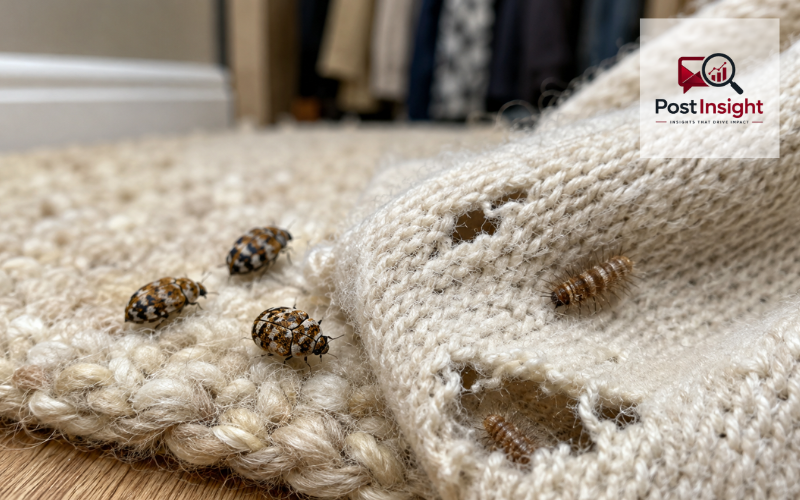
Anthrenus carpet beetles are tiny household pests that often go unnoticed until their larvae begin damaging clothing, carpets, upholstery, or stored natural-fiber items. Adults are usually only a few millimeters long, with rounded or oval bodies covered in patterned scales. They are often seen near windows because they are attracted to light and normally feed outdoors on pollen and nectar. The real household problem is the larval stage, not the adult beetle. Carpet beetle larvae feed on many materials that contain animal proteins, including wool, fur, feathers, hair, and some natural-fiber fabrics.
Finding one adult near a window does not always mean there is a serious infestation. However, repeated sightings, hairy larvae, shed larval skins, or unexplained holes in woolens deserve attention. Early identification makes it easier to locate the food source before damage spreads to valuable clothing, rugs, furniture, or collections.
| Feature | Quick Details |
| Adult size | About 2–4 mm long |
| Appearance | Small, oval, with mottled white, brown, yellow, or black scales |
| Damaging stage | Hairy larvae |
| Common food sources | Wool, fur, feathers, hair, silk, and animal-based materials |
| Common locations | Closets, carpet edges, furniture, cracks, vents, and stored fabrics |
| Do they bite? | No; larval hairs may cause skin irritation |
| Main control | Find the source, vacuum thoroughly, clean affected items, and prevent reinfestation |
Anthrenus is a genus within the dermestid beetle family, a group that includes several insects known for feeding on dried animal material during the larval stage. Common household members include the varied carpet beetle, Anthrenus verbasci, and the common carpet beetle, Anthrenus scrophulariae. Adults of these species are small, broadly oval, and often patterned with white, brown, yellow, orange, or black scales.
The larvae look very different from the adults. They are brownish, segmented, and covered with hairs or bristles. Mature larvae are commonly around 4 to 5 mm long, although size varies by species and stage. Their ability to digest keratin, a protein found in animal hair, feathers, and similar materials, is what makes them damaging household pests. The adult stage mainly feeds on flowers; the larval stage is responsible for most damage indoors.
Adult Anthrenus carpet beetles can be easy to mistake for tiny specks because of their size. Under close inspection, however, their backs usually show a mottled pattern formed by small colored scales. Older adults may appear darker because some scales wear away over time. Their rounded shape and patterned surface help separate them from longer, uniformly dark beetles.
Larvae are more likely to be found in dark, quiet areas. They are hairy, brown to reddish-brown, and may look slightly carrot-shaped or broad toward one end, depending on the species. They molt as they grow, leaving empty, papery-looking skins behind. These cast skins are one of the strongest clues of an active or recent infestation.
Other signs include small irregular holes in wool or other vulnerable fabrics, thin or bare patches in rugs, fine debris near damaged museum specimens, and repeated adult beetles on windowsills. Because different dermestid species can look similar, a close photograph or specimen may be useful when exact identification matters.
Anthrenus verbasci, commonly called the varied carpet beetle, is one of the best-known Anthrenus species found in homes and museum collections. Adults are usually about 3 mm long and have a dark body covered with irregular white, brown, and yellowish scales. The pattern may fade as the beetle ages.
Its larvae are hairy and typically show alternating light and dark brown bands. They can feed on woolen goods, fur, silk, feathers, stuffed animals, dried plant material, and other items containing suitable animal or organic matter. Outside, adults visit flowers, while larvae may develop in bird nests, wasp or bee nests, spider webs, and similar places where dead insects, feathers, or other food is available. These outdoor sources can sometimes lead to beetles entering nearby buildings.
Anthrenus scrophulariae is known as the common carpet beetle or, in some sources, the buffalo carpet beetle. Adults are generally around 2.5 to 3.8 mm long. Their dark oval bodies carry pale and orange, reddish, or yellowish scales that create a distinct pattern along the back. The species occurs widely and is well known as a pest of textiles and preserved specimens.
The larvae are reddish-brown and densely hairy. Like varied carpet beetle larvae, they can damage carpets, wool, clothing, furnishings, hair, fur, feathers, and museum materials. Adults normally feed outdoors on pollen and nectar, but females may lay eggs indoors when they find a suitable food source for their young. The two species can look similar at a glance, so scale patterns and other small features may be needed for confident identification.
Anthrenus carpet beetles develop through four stages: egg, larva, pupa, and adult. Females place small eggs in sheltered locations close to food that newly hatched larvae can use. Indoors, this may include carpets, stored clothing, cracks near accumulated lint, upholstered furniture, or preserved animal material. Outdoors, nests and other places containing dried animal debris can serve the same purpose.
After hatching, larvae spend much of their time feeding in dark or protected areas. The length of this stage varies greatly with species, temperature, humidity, and food quality. Carpet beetle development can therefore take months and, under some conditions, much longer. Pupation usually occurs in or near the last shed larval skin. Adults later emerge, move toward light, and often make their way outdoors to feed on flowers.
This long and variable larval period explains why an infestation can continue even when only a few adults are seen.
Carpet beetles can enter a home in several ways. Adult Anthrenus beetles are capable of flying and may come through open windows, doors, damaged screens, or small gaps. Because adults feed on pollen and nectar, flowering plants close to a building can naturally bring them near windows and entrances. Cut flowers can also occasionally carry adults indoors.
Infestations may also begin from bird, rodent, bee, wasp, or other animal nests around a structure. These places contain feathers, hair, dead insects, and other material that carpet beetle larvae can eat. Indoors, forgotten wool clothing, pet hair, lint, dead insects, feathers, and animal-based furnishings can provide a continuing food supply.
Having Anthrenus carpet beetles in a house does not automatically mean the home is dirty. Even clean homes can have suitable food hidden under furniture, inside vents, behind baseboards, or in rarely disturbed storage areas.
The best places to inspect are quiet areas that are rarely cleaned or moved. Carpet edges, spaces beneath heavy furniture, closet corners, drawers, stored blankets, upholstered furniture, floor cracks, baseboards, and heating or air-conditioning areas can all shelter larvae. Extension guidance notes that carpet beetle larvae prefer dark cracks, folds, and hidden spaces, while adults are commonly noticed around windows because they are attracted to light.
Do not focus only on carpet. Check wool sweaters, felt, fur trim, feather-filled items, stored textiles, pet-hair buildup, dried flowers, taxidermy, insect collections, and forgotten natural materials. If adults keep appearing in one room, inspect nearby storage areas and the outside of that part of the building for nests or other possible sources.
Damage from Anthrenus carpet beetles is usually uneven rather than neat. Larvae may leave irregular holes in wool clothing, thin patches in carpets, damaged upholstery, or missing hair and feathers from preserved specimens. Wool, silk, fur, feathers, hair, and materials containing animal products are among their common foods. Some plant-based fabrics may also be attacked when contaminated with body oils or other nourishing residues.
Museums take these insects seriously because larvae can damage taxidermy, insect specimens, historic textiles, and other organic collections. At home, shed larval skins around damaged items are an especially useful clue. Damage should not automatically be blamed on carpet beetles, though; clothes moths and other pests can affect similar materials, so finding larvae or cast skins helps confirm the cause.
Anthrenus carpet beetles do not bite people. Adult beetles are harmless to humans, and the larvae do not feed on living skin. The confusion comes from the fine hairs on some carpet beetle larvae. These hairs can become lodged in the skin or spread through fabrics and indoor air, triggering an allergic or irritating reaction in some people. Medical reports describe red, itchy lesions that can resemble bites from fleas or bed bugs.
That means the phrase “anthrenus carpet beetles bites” is misleading: the marks are usually a reaction to larval hairs rather than an actual bite. Reactions vary from person to person, so one household member may have symptoms while another has none.
If a rash is persistent, severe, spreading, infected from scratching, or difficult to explain, seek advice from a qualified medical professional. Skin symptoms alone are not enough to identify the pest; the home should also be checked for larvae, shed skins, bed bugs, fleas, and other possible causes.
The most effective way to get rid of Anthrenus carpet beetles is to find and remove the source rather than simply killing adults seen near windows. Start by checking vulnerable fabrics and hidden areas for live larvae, shed skins, damage, or concentrations of debris. Inspect natural-fiber items, furniture, closets, carpet edges, vents, and nearby nests.
Vacuuming is one of the most useful control steps. Thoroughly vacuum carpet edges, under furniture, closets, baseboards, upholstery, cracks, and other places where lint, pet hair, or dead insects collect. Dispose of vacuum contents promptly so captured insects cannot remain in the home. Washing or dry-cleaning suitable clothing also removes larvae and eggs and reduces food residues.
Heavily damaged or low-value infested items may be easier to discard safely. Continue inspecting and cleaning for several weeks because hidden larvae may remain after the first treatment. Finding the original food source is more important than repeatedly treating adult beetles that appear at windows.
Treatment depends on where the infestation is located and what items are affected. Wash washable fabrics using the warmest safe setting allowed by the care label, or use professional dry cleaning for suitable garments. Heat or steam can kill carpet beetles when the entire infested material reaches an effective temperature, but delicate fabrics may be damaged, so the treatment must suit the item.
Freezing can also be useful for smaller objects, but successful cold treatment depends on freezer temperature, item thickness, packing, and exposure time. Published pest-management guidance uses controlled freezing methods, so valuable or delicate objects should be treated conservatively rather than relying on a short, unverified household-freezer period.
Pesticides are not always necessary. Current pest-management guidance continues to place sanitation, source removal, and targeted treatment at the center of control. If a pesticide or desiccant dust is used, choose a product specifically labeled for the intended indoor site and carpet beetles, follow the label exactly, and avoid spraying clothing unless the label clearly permits it. Broad or repeated spraying without finding the source is unlikely to solve the problem. Severe, widespread, or inaccessible infestations are better assessed by a licensed pest-control professional.
Prevention starts with reducing food and hiding places. Clean wool, silk, fur, feather-filled, and other vulnerable items before long-term storage, then keep them in well-sealed containers or garment storage designed to exclude insects. Regular vacuuming under furniture, along carpet edges, in closets, and around vents helps remove lint, hair, dead insects, and other larval food.
Inspect second-hand rugs, upholstered furniture, wool clothing, taxidermy, and similar items before bringing them into the home. Repair damaged screens and close obvious gaps around windows where practical. If carpet beetles repeatedly appear in the same area, look outdoors for abandoned bird nests, insect nests, or other organic material close to the building, while following local wildlife rules before disturbing active nests.
Occasional adults may still enter from outdoors, especially during warmer months. The goal is not to make a home completely beetle-proof, but to prevent those adults from finding enough food for a hidden larval population to become established.
Anthrenus carpet beetles are small, but their larvae can cause noticeable damage when they remain undetected. Adults are mainly pollen and nectar feeders, while the hairy larvae are the stage that attacks wool, fur, feathers, stored textiles, and other suitable organic materials. Knowing this difference makes it easier to focus control efforts in the right places.
If you find Anthrenus carpet beetles, look beyond the adults on the windowsill. Search for larvae, shed skins, damaged fabrics, lint, dead insects, and other hidden food sources. Thorough cleaning, careful treatment of infested items, secure storage, and repeated inspection are usually the foundation of successful control. When the source cannot be found or the infestation is widespread, professional pest control can help identify hidden breeding areas and choose an appropriate treatment.
Anthrenus carpet beetles do not bite or feed on people. However, hairs shed by their larvae can sometimes irritate sensitive skin and produce itchy, red marks that resemble insect bites.
Adult beetles may fly indoors through windows and doors, while larvae can survive on wool, feathers, pet hair, dead insects, lint, stored fabrics, and material from nearby bird or animal nests.
Common signs include small patterned beetles near windows, hairy brown larvae in dark areas, shed larval skins, and irregular damage to wool clothing, carpets, upholstery, fur, or other natural materials.
Locate and remove the infestation source, vacuum hidden areas thoroughly, clean affected fabrics appropriately, eliminate lint and animal debris, and monitor regularly. Persistent or widespread infestations may require professional pest control.
Adult Anthrenus carpet beetles usually feed on pollen and cause little household damage. Their larvae are the destructive stage, feeding on animal-based materials such as wool, fur, feathers, hair, and silk.
Disclaimer: This article provides general information about Anthrenus carpet beetles and household pest management. Follow product-label instructions carefully and consult a qualified pest-control or medical professional when appropriate.


