
 11
11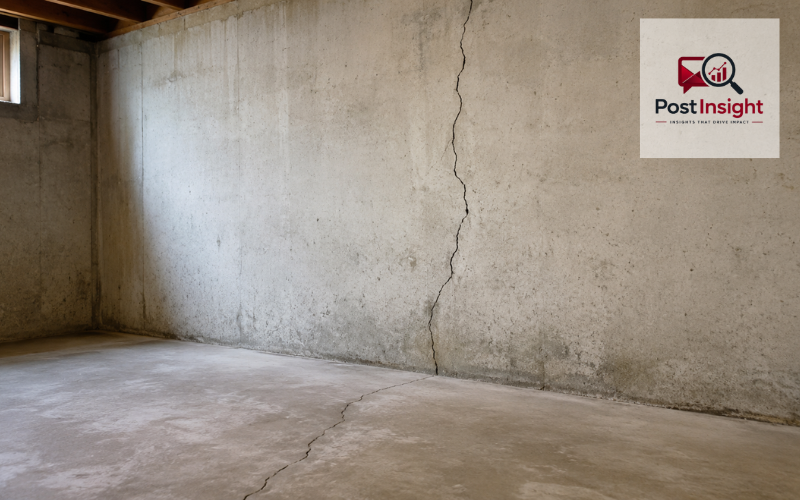
Finding a crack in a basement wall, concrete slab, or outside foundation can be worrying. It is natural to wonder whether the home is settling normally or developing a serious structural problem. The reassuring fact is that not all foundation cracks mean a foundation is failing. Concrete and masonry can crack for several reasons, including normal drying, minor settlement, changing soil moisture, and water pressure.
The appearance of a crack offers useful clues, but no single detail tells the whole story. A proper assessment considers four main factors: the crack’s direction, width, location, and movement. A thin vertical crack that has remained unchanged for years is very different from a horizontal crack running across a wall that is starting to bow inward.
Other symptoms also matter. Water leakage, uneven floors, sticking doors, gaps around windows, and crumbling concrete may suggest that the problem extends beyond a simple surface crack.
This guide explains why foundation cracks develop, what common crack patterns may mean, when to monitor them, and when to seek professional advice. It also covers repair methods and practical steps that may help prevent future damage.
| Crack Type | What It May Mean | Risk Level | Recommended Action |
| Thin vertical crack | Concrete shrinkage or minor settling | Low | Monitor and seal if water enters |
| Wider vertical crack | Settlement or ongoing movement | Moderate | Measure and arrange an inspection if it grows |
| Diagonal crack | Uneven foundation settlement | Moderate to high | Check for movement and related warning signs |
| Stair-step crack | Movement in brick or block foundations | High | Contact a structural professional |
| Horizontal crack | Soil or water pressure pushing against the wall | High to critical | Arrange a prompt structural evaluation |
| Slab crack with uneven sides | Settlement, heaving, or soil movement | High | Investigate the slab and supporting soil |
Concrete does not remain exactly the same after it is poured. As it cures and loses moisture, it shrinks slightly. This natural process can create narrow vertical or surface cracks, especially during the first months after construction. These cracks are often cosmetic, although they may still allow moisture to enter.
A house may also experience a small amount of settling after construction. Problems become more concerning when one part of the foundation settles faster or farther than another. This is known as uneven or differential settlement. It can place stress on foundation walls, floors, masonry, windows, and doors.
Soil conditions are another major factor. Clay-rich soil may expand when it absorbs water and shrink during dry weather. Repeated wet and dry cycles can move the soil supporting a foundation, leading to settlement or upward movement. Federal Highway Administration guidance confirms that expansive soil changes volume as its moisture content rises and falls.
Water around the home can make these conditions worse. Clogged gutters, short downspouts, low areas beside the foundation, and poorly sloped soil may allow rainwater to collect near basement walls. Wet soil is heavier and can place more sideways pressure on the wall. If groundwater builds up without adequate drainage, water pressure may also contribute to leaking, cracking, or displacement. Basement walls are designed to resist loads from the surrounding soil, and those loads vary with soil type and moisture content.
Plumbing leaks can soften or wash away supporting soil beneath a slab. Nearby trees may also affect moisture levels by drawing water from clay soil, although roots do not always push directly through a sound foundation. In colder regions, freeze-and-thaw cycles can worsen cracks when water enters them and repeatedly freezes.
Begin by looking at the crack as a complete pattern rather than focusing only on its width. Measure it at the widest point with a ruler or crack-width card. Write down the measurement and take clear, dated photographs from the same position.
Next, identify its direction. Vertical cracks often form from shrinkage or normal movement. Diagonal cracks may point to uneven settlement. Stair-step cracks follow mortar joints in brick or concrete block walls. Horizontal cracks may be linked to pressure pushing inward from the surrounding soil.
Check both sides of the wall when they are accessible. A small surface line on one side may be less concerning than a crack that passes through the wall. Also look for dampness, mineral deposits, rust marks, loose concrete, bulging, or one side of the crack sitting farther forward than the other.
Movement is one of the most important warning signs. A crack that remains unchanged may be stable, while one that becomes longer, wider, or uneven deserves closer attention. Do not depend on a universal width rule. A narrow crack can matter when it is moving, and a wider old crack may be stable. Direction, location, wall movement, and related symptoms must all be considered together.
Inspect the rest of the house as well. Sloping floors, doors that suddenly stick, separated trim, gaps around windows, and repeated drywall cracking may support the possibility of foundation movement.
Vertical foundation cracks run mostly straight up and down. They are common in poured concrete walls because concrete shrinks as it cures. A narrow vertical line with even edges, no wall displacement, and no noticeable growth is often considered lower risk than other crack patterns.
Hairline shrinkage cracks may be less than about 1/8 inch wide, but width should not be used as the only test. A vertical crack should receive professional attention if it continues to widen, leaks heavily, appears on both sides of the wall, or is accompanied by uneven floors and sticking doors.
The crack’s position also matters. Cracks near windows, doors, wall openings, or changes in wall height may form where stress is concentrated. A contractor may need to determine whether the crack is limited to the surface or extends through the concrete.
Stable cracks that leak can sometimes be sealed with polyurethane injection. Dry, inactive cracks may be suitable for epoxy injection in certain situations. However, sealing should not be treated as a solution to ongoing settlement. The cause of movement must be identified before the crack is permanently covered.
Horizontal foundation cracks run sideways across a basement or crawl-space wall. They are generally treated more seriously because they may indicate that the wall is being pushed inward.
Soil beside a basement wall places a sideways load on it. That load can increase when the soil becomes saturated, freezes, expands, or drains poorly. The U.S. Department of Energy’s foundation guidance explains that basement-wall loads are affected by fill height, soil type, moisture, and other site conditions.
A horizontal crack is especially concerning when the wall is bowed, tilted, bulging, or visibly displaced. Concrete block walls may develop a horizontal crack near the middle, while the upper or lower part of the wall moves inward. In such cases, simply filling the crack will not restore the wall’s strength or stop the pressure.
A visibly moving wall should be evaluated promptly by a qualified structural engineer or experienced foundation professional. Depending on the wall, soil, and amount of movement, repairs may include carbon-fiber straps, steel beams, wall anchors, braces, drainage improvements, or partial rebuilding. The correct method should be based on an on-site assessment rather than appearance alone.
Diagonal cracks usually travel across a poured concrete wall at an angle. They may develop when one section of the foundation settles more than another. A crack that is narrow at one end and wider at the other can be a sign of uneven movement.
Stair-step cracks are commonly seen in brick and concrete block foundations. Instead of cutting directly through the units, the crack follows the mortar joints in a stepped pattern. Small, stable mortar cracks can sometimes result from minor movement, but widening joints, loose blocks, or visible displacement may indicate foundation settlement.
Pay close attention to masonry near doors, windows, corners, and other openings. Look for separated mortar, tilted window frames, cracked bricks, or walls that lean or bulge. The National Park Service recommends checking masonry for cracking, bowing, leaning, bulges, and mortar deterioration during inspections.
An independent structural engineer can help determine whether the crack is cosmetic, caused by drainage, or linked to movement in the footing or supporting soil. This can be especially useful before accepting a costly repair proposal.
Poured concrete foundations can develop vertical, diagonal, horizontal, and surface cracks. Some appear during curing, while others form later because of soil movement, water pressure, impact, overloading, or corrosion of embedded steel.
Shrinkage cracks are usually narrow and show little displacement. Structural cracks may continue through the wall, widen over time, or appear with bowing and other building changes. Cracks can also develop around basement windows, utility openings, corners, pipe penetrations, and construction joints because these areas interrupt the wall’s continuous shape.
Surface crazing is a network of very fine lines on the concrete face. It often affects appearance more than strength. By comparison, a deep crack with uneven edges, loose material, or exposed steel deserves professional evaluation.
Moisture can worsen concrete damage. Water entering a crack may contribute to staining, freeze-and-thaw damage, or corrosion when it reaches reinforcing steel. Rusting steel expands, which can break or push away the concrete around it.
Concrete repair materials must be selected for the crack’s condition and purpose. The American Concrete Institute notes that repair choices may include epoxy, polyurethane, cement-based products, and surface sealers, depending on the service conditions.
Slab foundation cracks can appear in the concrete floor or in the foundation system supporting the house. Many slabs develop small surface cracks as concrete dries. A thin, level crack that does not change may be cosmetic.
Greater concern is warranted when one side of the crack is higher than the other, the crack continues through finished flooring, or several cracks appear with signs of movement. These patterns may result from shrinking or expanding soil, poor soil compaction, erosion, plumbing leaks, or inadequate support beneath the slab.
Possible signs of slab movement include cracked tiles, raised or sunken flooring, doors that no longer close correctly, wall cracks extending from windows, and gaps between walls and floors. Unexplained warm areas, high water bills, or recurring dampness may also justify checking for a leaking pipe beneath the slab.
Repair depends on the cause. A plumbing leak must be repaired before foundation work is completed. Settlement may require slab lifting, soil improvement, piers, or another stabilization method. Upward movement caused by expanding soil requires a different approach, which is why diagnosis should come before repair.
People often search for pictures of normal foundation cracks to compare with cracks in their own homes. Photographs can be useful for learning basic patterns, but they cannot confirm whether a particular foundation is safe.
Lower-risk cracks often appear as thin, stable vertical lines in poured concrete. Their edges are usually even, and there is no visible bowing or offset. Small cracks near planned control joints may also be expected because those joints are designed to manage where concrete movement occurs.
Minor surface crazing can look like a web of very fine lines. It generally stays close to the surface rather than creating a deep opening through the wall. Normal-looking cracks also tend to remain unchanged when photographed and measured over several months.
Even so, a harmless-looking crack may leak or may be connected to movement that is not visible in a close-up photograph. Images should therefore be used for general comparison, not as a substitute for inspecting the wall, soil, drainage, and rest of the house.
Pictures of foundation cracks that need repair often show more than a simple line. A horizontal crack may appear with a wall that curves or leans inward. Stair-step cracks may include separated mortar joints, displaced blocks, or gaps that become wider toward one end.
Diagonal cracks may need attention when they continue growing, pass through several parts of the wall, or appear with movement around doors and windows. Crumbling edges, exposed reinforcing steel, loose masonry, and one side of a crack projecting beyond the other are also concerning visual signs.
Water can provide another clue. Repeated wetness, active dripping, white mineral deposits, mold, or rust staining suggests that moisture is entering through or around the crack. The University of Minnesota Extension notes that concrete and block foundations commonly develop some cracks, but soil settlement and wall movement can make them more serious.
The full wall should always be examined. A close photograph may hide bowing, floor movement, nearby cracks, or poor exterior drainage.
A foundation crack deserves prompt professional attention when it is changing noticeably, running horizontally, or appearing with wall movement. Large gaps and cracks with uneven sides are also more concerning than thin, level, stable lines.
Other warning signs include several cracks forming in the same area, stair-step cracks with displaced masonry, sloping floors, sticking doors, separated trim, and gaps around windows. Repeated basement dampness, mold, rust stains, and water entry may indicate that drainage or waterproofing problems are adding pressure or causing deterioration.
Urgent evaluation is sensible when a wall appears unstable, is rapidly bowing, or is shedding pieces of concrete or masonry. Keep people away from the affected area if there is a risk of falling material or sudden movement.
For a crack that appears minor, begin monitoring it instead of hiding it immediately. Mark its ends lightly, record the width, and take dated photographs. Recheck it after heavy rain, seasonal changes, and periods of drought.
Searching for foundation cracks on Reddit can help homeowners find people who have dealt with similar-looking problems. Personal stories may provide useful questions to ask, examples of repair methods, or reminders to check gutters and grading.
However, online comments are not a structural diagnosis. Two cracks that look alike in photographs may have completely different causes because of differences in soil, wall construction, drainage, climate, and building age.
Online discussions can also create unnecessary panic. Some commenters may call every crack a major failure, while others may dismiss a serious crack as normal settling. Neither response is reliable without inspecting the building.
Be especially careful with advice that recommends drilling, excavating, bracing, or injecting a crack without first identifying the cause. Structural work performed incorrectly may hide movement, damage the wall further, or make a later inspection more difficult.
Use forum discussions to collect general information, not to make a final repair decision.
The right foundation crack repair depends on whether the crack is stable, moving, leaking, or structural. Small, unchanged cracks can often be monitored with dated photographs and measurements.
Epoxy injection may be used for certain dry, dormant concrete cracks because it can bond the crack surfaces. Polyurethane is often selected when flexibility or water control is important. Neither material should be used as a substitute for correcting active foundation movement. Repair guidance from concrete industry sources emphasizes that crack movement, width, moisture, and structural purpose all affect material selection.
Bowing walls may be stabilized with engineered carbon-fiber straps, steel beams, anchors, or braces. Serious settlement may require underpinning or piers that transfer the building load to stronger soil or rock. These methods should be designed for the actual foundation and site conditions.
Water management is often an essential part of prevention. Clean gutters, extend downspouts, repair leaks, and keep soil sloping away from the house. Department of Energy guidance recommends using gutters, downspouts, and proper grading to move rainwater away from the foundation.
An independent structural engineer is often the best starting point when the cause or severity is unclear. The engineer can assess the problem without being tied to a particular repair product. A foundation contractor can then provide a repair plan and cost based on that assessment.
Foundation cracks should be judged by their direction, width, location, movement, and surrounding symptoms. Many thin vertical cracks are related to normal concrete shrinkage and can be monitored or sealed. Horizontal cracks, widening diagonal cracks, displaced stair-step cracks, and walls that bow or lean require greater attention.
Do not ignore a crack, but do not assume the worst based on appearance alone. Measure it, photograph it, check for water, and inspect nearby floors, doors, windows, and walls. Address drainage problems early so water does not continue collecting around the foundation.
Most importantly, avoid repeatedly covering a changing crack without finding its cause. When foundation cracks are growing, leaking heavily, or appearing with structural warning signs, a qualified structural engineer or foundation professional can help determine the safest and most suitable next step.
No. Thin, stable vertical cracks are often caused by normal concrete shrinkage. Cracks that widen, leak, move, or appear with bowing walls and uneven floors require closer inspection.
Worry when a crack grows, runs horizontally, has uneven sides, causes water leakage, or appears with sticking doors, sloping floors, separated trim, or visible wall movement.
Small, stable, non-structural cracks may sometimes be sealed with epoxy or polyurethane. Structural cracks, active movement, bowing walls, and serious water problems should be handled by qualified professionals.
Measure the widest point, mark the crack ends, and take dated photographs from the same angle. Recheck it after heavy rain, drought, and seasonal temperature changes.
An independent structural engineer can assess the cause and severity without being tied to a repair product. A foundation contractor can then provide suitable repair options and cost estimates.
Disclaimer: This article provides general educational information and should not be treated as a structural diagnosis or professional engineering advice. Foundation conditions vary by building design, soil, drainage, climate, and location. Consult a qualified structural engineer or licensed foundation professional if cracks are widening, walls are moving, water is entering, or other structural warning signs are present.


