
 11
11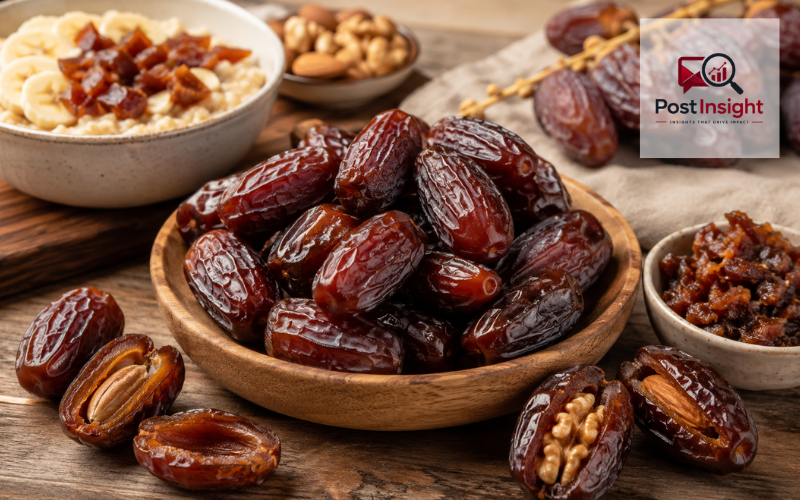
Medjool dates are large, soft fruits that grow on the date palm tree. They are known for their deep brown color, chewy texture, and naturally rich sweetness. Many people describe their flavor as similar to caramel or honey, which makes them enjoyable on their own and useful in both sweet and savory recipes.
Compared with many other common date varieties, Medjool dates are usually larger, softer, and more moist. Although they are sometimes grouped with dried fruits in stores, they are generally harvested at a fully ripe stage and naturally contain less moisture as they mature. Commercial Medjool dates are not necessarily dehydrated in the same way as raisins or dried apricots.
Medjool dates also provide carbohydrates, fiber, potassium, magnesium, copper, and other nutrients. However, they contain a concentrated amount of natural sugar and calories, so portion size still matters. They can be part of a balanced diet, but they should not be treated as an unlimited snack simply because their sugars occur naturally.
| Feature | Quick Detail |
| Taste | Rich, sweet, caramel-like |
| Texture | Soft, chewy, slightly sticky |
| Calories | About 66 calories per average date |
| Main Nutrients | Fiber, potassium, magnesium, carbohydrates |
| Common Uses | Snacking, smoothies, oatmeal, baking, date paste |
| Storage | Airtight container; refrigerate for longer freshness |
The most noticeable difference is size. A Medjool date is usually plump and substantial compared with smaller varieties. Its flesh is soft and slightly sticky, while the skin is thin and naturally wrinkled. The flavor is also distinctive, with strong caramel-like sweetness rather than a mild, dry taste.
Deglet Noor dates provide a useful comparison. They are generally firmer and less soft than Medjool dates. Their texture makes them convenient for chopping and cooking, while Medjools are especially popular for direct snacking and stuffed-date recipes.
The texture is partly connected to how dates mature. UC Davis explains that dates become sweeter, softer, and lower in moisture as they move from the partially ripe Khalal stage to the fully ripe Rutab and Tamar stages. Medjool is considered a soft date variety, while Deglet Noor is classed as semi-soft and generally has a longer storage life.
Because Medjools are large, soft, visually appealing, and strongly flavored, they are often sold as a premium date variety.
The common Medjool dates pronunciation in English is roughly “med-JOOL,” with the stronger sound on the second syllable.
Shoppers may also see names such as Medjoul, Mejhoul, or Majhool. These spellings usually refer to the same date variety rather than completely different fruits. The variations developed because the name has been written in English in different ways from Arabic and other regional languages.
Medjool is historically associated with Morocco and is now cultivated in several warm date-growing regions around the world.
Medjool dates nutrition is one reason these fruits attract so much attention, although their nutrient content should be considered together with their high natural sugar content.
According to nutrition information based on USDA data, two Medjool dates weighing about 48 grams provide around 133 calories, 36 grams of carbohydrates, 32 grams of sugar, 3.2 grams of fiber, and less than 1 gram of protein. That works out to roughly 66 calories, 18 grams of carbohydrates, 16 grams of sugar, and 1.6 grams of fiber for one average 24-gram date.
Medjool dates also contain useful minerals. Two dates provide potassium, magnesium, copper, iron, and calcium, as well as some vitamin B6. Potassium is especially important for normal nerve and muscle function and helps support a regular heartbeat.
Dates also contain naturally occurring plant compounds, including different antioxidants. Their exact nutrient levels can vary slightly according to fruit size, growing conditions, maturity, and brand.
One average Medjool date weighing approximately 24 grams contains about 66 to 67 calories. Two dates provide roughly 133 calories. Most of these calories come from carbohydrates, especially naturally occurring sugars.
This does not mean Medjool dates need to be avoided. It simply means they are more energy-dense than many fresh fruits because they contain relatively little water and a high concentration of carbohydrates.
A practical serving depends on the rest of your diet, activity level, and nutritional needs. One or two dates may work well as a small snack, while larger amounts can quickly add significant calories and sugar. Someone using several dates in smoothies, energy balls, oatmeal, and snacks throughout the same day may consume more than expected.
Paying attention to portions allows you to enjoy their sweetness and nutrients without treating them as a calorie-free substitute for candy or dessert.
The most realistic Medjool dates benefits come from their fiber, carbohydrates, minerals, and plant compounds rather than from any single “superfood” effect.
Their carbohydrates can provide quick energy, which makes dates a convenient snack before physical activity or when a fast source of food energy is useful. Their dietary fiber can also support normal bowel function. Fiber helps add bulk to stool and is an important part of a diet that supports digestive health.
Medjool dates contain potassium and magnesium. Potassium is needed for normal muscle and nerve function and plays a role in maintaining normal heart activity. However, people with certain kidney conditions may need to control potassium intake and should follow the advice of their healthcare professional.
Dates also contain antioxidant plant compounds, including phenolic compounds and carotenoids. Research continues to examine how these compounds may relate to long-term health. It is more accurate to view dates as one nutritious food within a balanced diet rather than claim that they prevent or cure specific diseases.
Medjool dates taste very sweet because much of their carbohydrate comes from naturally occurring sugars, including glucose and fructose. They also provide fiber, which makes their nutritional profile different from simply eating an equal amount of refined table sugar.
Research shows that the glycemic response to dates can vary according to variety, ripeness, serving size, and the person eating them. A review of available studies reported glycemic index values for different dates ranging from about 42.8 to 74.6. The researchers also noted that many existing studies are relatively small or short, so stronger research is still needed.
This is why describing all Medjool dates as automatically “low glycemic” can be misleading. Moderation remains important, particularly for people who monitor blood glucose.
Eating a date alongside foods containing protein or fat, such as plain yogurt, almonds, walnuts, or unsweetened nut butter, can also make a more balanced snack than eating several dates alone.
People with diabetes or another condition requiring careful carbohydrate control should consider their individual meal plan rather than relying only on general claims about dates.
One of the simplest ways to enjoy Medjool dates is to eat them on their own. If the fruit contains a pit, slice or pull it open and remove the hard seed before eating. Pitted versions are also widely available.
Their soft texture makes them easy to stuff. Almonds, walnuts, peanut butter, tahini, soft cheese, or yogurt-based fillings can balance their sweetness and add different textures.
Chopped Medjool dates work well in oatmeal, breakfast bowls, yogurt, salads, grain dishes, and homemade snack bars. They can also be blended into smoothies or processed with nuts and oats to make simple energy bites.
For savory meals, their sweetness can contrast nicely with leafy greens, roasted vegetables, cheese, grains, herbs, or spiced meat dishes. This versatility is one reason Medjool dates are useful beyond desserts.
Medjool dates can provide sweetness without using only refined white sugar. A common method is to soak pitted dates if necessary and blend them with water until they form a smooth date paste. The paste can then be mixed into oatmeal, smoothies, sauces, baked foods, snack bars, or desserts.
Their flavor is important to consider. Date paste does not taste exactly like plain sugar. It adds a deeper caramel-like taste and may also change the moisture, color, and texture of a recipe.
Using whole dates or date paste can provide small amounts of fiber and minerals that refined sugar does not offer in meaningful amounts. However, this does not make a recipe sugar-free. Medjool dates still contain a high concentration of natural sugars and carbohydrates.
For that reason, date paste is better understood as a different way to sweeten food rather than as a food that can be consumed without limits.
There are many date varieties, and Medjool is only one of them. Deglet Noor is among the most common alternatives.
Medjool dates are generally larger, softer, darker, and more caramel-like in flavor. Deglet Noor dates tend to have a firmer, less sticky texture. UC Davis also classifies Medjool as a soft date and Deglet Noor as a semi-soft variety, noting that semi-soft dates generally keep longer under proper storage conditions.
For direct snacking, stuffing, smoothies, and recipes where a soft texture is useful, Medjools can be especially convenient. Firmer dates can work well when a recipe needs neatly chopped pieces or a less sticky texture.
Neither type is automatically “better.” The best choice depends on taste, recipe, budget, and availability. Medjools are often more expensive because their large size and soft texture are commonly marketed as premium qualities.
Good Medjool dates should look plump and feel soft or chewy rather than extremely hard. A wrinkled surface is normal and does not automatically mean the fruit is old.
Look closely at the package or individual dates. Avoid fruit showing clear signs of mold, serious damage, unusual wetness, or a sour or fermented smell. UC Davis notes that yeast, molds, and bacteria can spoil dates, particularly when moisture and storage conditions encourage microbial growth. Fermented dates may develop an alcoholic or sour odor.
Some light-colored crystals or spots under the skin can simply be crystallized natural sugar rather than mold. This can change texture and appearance without necessarily making the date unsafe.
When buying packaged or imported Medjool dates, check the package condition, country of origin, weight, use-by or best-quality information, storage instructions, and whether the dates contain pits.
People searching “Medjool dates near me” can usually start with large supermarkets, produce stores, Middle Eastern or South Asian grocery shops, health-food stores, and dry-fruit retailers. Availability often increases during periods when dates are in high demand.
When looking for Medjool dates for sale online, compare more than the headline price. Check the package weight, whether the fruit is whole or pitted, shipping costs, seller reputation, origin, storage information, and customer policies. A cheaper box is not always better value if the fruit is old, excessively dry, or poorly stored.
For shoppers wondering where to buy Medjool dates from warehouse retailers, Costco is one possible option in markets where it operates. As of August 2026, Costco’s Same-Day service lists Medjool date products, including large organic Medjool dates. However, availability and pricing depend on location, and individual products can be out of stock.
Therefore, anyone specifically searching “Medjool dates Costco” should check their local warehouse or current online inventory rather than assuming the same product and price are available everywhere.
Proper storage helps Medjool dates remain soft and pleasant for longer. If you plan to eat them fairly soon, keep them in a sealed container in a cool, dry place and follow any instructions printed on the package.
For longer storage, refrigeration can slow quality loss. UC Davis recommends low-temperature storage for dates and notes that Medjool is a soft variety with a shorter storage life than semi-soft types such as Deglet Noor. Dates can also absorb strong odors, so a tightly closed or moisture-resistant container is useful.
Freezing is a good option when dates need to be stored for an extended period. UC Davis states that storage around -18°C or 0°F can preserve date quality for longer periods.
Discard dates if they develop visible mold, clear signs of decay, or a strongly sour, alcoholic, or otherwise unpleasant odor. Normal wrinkles or some sugar crystallization alone do not necessarily mean the fruit has spoiled.
Medjool dates stand out for their large size, soft chewy texture, and naturally rich caramel-like sweetness. They provide carbohydrates, fiber, potassium, magnesium, copper, and several plant compounds, while one average date contains roughly 66 calories and a significant amount of natural sugar.
They can be eaten on their own, stuffed, added to meals, blended into smoothies, or used to sweeten recipes. Their nutritional value does not mean portion size should be ignored, especially for people monitoring calories, carbohydrates, blood sugar, or potassium.
Choosing good-quality Medjool dates, storing them correctly, and eating them as part of a varied and balanced diet is a simple way to enjoy what makes this distinctive date variety so popular.
Medjool dates can be part of a balanced diet. They provide fiber, potassium, magnesium, natural carbohydrates, and plant compounds, but their concentrated sugar and calorie content means portion size matters.
One average Medjool date weighing around 24 grams contains approximately 66 calories. Exact calories can vary slightly depending on the size and moisture content of the fruit.
Yes, many people can eat Medjool dates daily in moderate portions. One or two dates can be a practical serving, depending on individual calorie, carbohydrate, and dietary needs.
Medjool dates contain natural sugars as well as fiber. Blood-sugar response can vary, so people managing diabetes or glucose levels should watch portions and follow personalized dietary advice.
Keep Medjool dates in an airtight container in a cool, dry place for short-term use. Refrigeration or freezing can help maintain quality when storing them for longer periods.
Disclaimer: This article is for general informational purposes only and is not medical or dietary advice. People with diabetes, kidney conditions, or other health concerns should consult a qualified healthcare professional.