
 11
11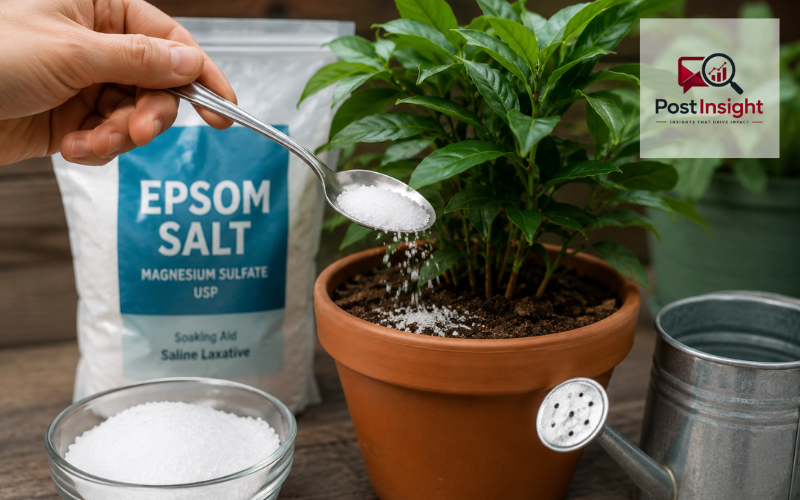
If you spend any time around gardening forums or plant-care groups, you’ve probably heard someone swear by Epsom salt for plants. It’s cheap, it’s easy to find, and it comes with a long list of promised benefits — greener leaves, bigger tomatoes, more flowers, even fewer pests. But how much of this is actually true, and how much is just garden folklore passed down for generations?
Epsom salt is simply magnesium sulfate, a naturally occurring mineral compound. Gardeners have used it for decades as a quick way to boost magnesium levels in soil, since magnesium is a nutrient many fertilizers don’t supply in large amounts. Used correctly, it can genuinely help plants that are lacking magnesium. Used incorrectly — or on plants that don’t need it — it does nothing at best, and can cause problems at worst.
This article covers what Epsom salt really is, how it works inside a plant, which benefits are backed by evidence, which claims are exaggerated, and exactly how to use it safely if your plants need it.
| Plant Type | Dosage (per gallon/litre) | Method | Frequency |
| Houseplants | ½ tbsp per gallon (~2g/litre) | Soil drench | Once a month (growing season only) |
| Tomatoes & Peppers | 1 tbsp per gallon (~4g/litre) | Soil drench or foliar spray | Every 3–4 weeks during fruiting |
| Roses | 1 tbsp per gallon (~4g/litre) | Soil drench | Every 3–4 weeks in season |
| Lawns | Diluted, hose-end sprayer | Foliar spray | Only if soil test confirms deficiency |
| Sage/Mediterranean herbs | Not recommended | — | — |
Despite the name, Epsom salt has nothing to do with table salt. It’s a mineral compound made of magnesium, sulfur, and oxygen, chemically known as magnesium sulfate. The name comes from a natural spring in Epsom, England, where the mineral was first discovered dissolved in the water centuries ago.
When gardeners talk about using Epsom salt for plants, they’re really talking about supplying two specific nutrients: magnesium and sulfur. There’s no nitrogen, phosphorus, or potassium — the three nutrients that make up the NPK ratio on every bag of standard fertilizer.
This is the most important thing to understand before using it: Epsom salt is not a fertilizer in the traditional sense. A regular fertilizer feeds a plant a broad range of nutrients for overall growth. Epsom salt does one narrow job — it corrects or prevents a magnesium shortage. If your soil already has enough magnesium, adding more won’t speed up growth or produce bigger blooms. It will just sit there, or in some cases, throw off the balance of other nutrients in the soil. Think of it less like food and more like a supplement that only helps when there’s a specific gap to fill.
To understand why magnesium matters, it helps to know what it does inside a plant. Magnesium sits at the center of the chlorophyll molecule — the pigment that gives leaves their green color and allows plants to turn sunlight into energy through photosynthesis. Without enough magnesium, a plant cannot produce enough chlorophyll, and its ability to photosynthesize drops.
Sulfur, the other half of Epsom salt, plays a supporting role. It helps build certain proteins and enzymes, and helps plants absorb and use other nutrients more efficiently, including nitrogen and phosphorus.
Together, magnesium and sulfur support healthy leaf color, steady energy production, and better nutrient uptake overall. This is the real, evidence-based reason Epsom salt for plants became popular — not because it’s a miracle product, but because magnesium deficiency is a real and fairly common problem, especially in soils gardened heavily for years without replenishment.
So what can Epsom salt actually do? When a plant is genuinely low in magnesium, adding Epsom salt can restore greener, more even leaf color within a couple of weeks. It can also improve photosynthesis, which supports steadier growth and can lead to better flowering or fruiting in crops like tomatoes, peppers, and roses — plants known to be moderately heavy magnesium users. Some research also shows magnesium sulfate can improve nutrient absorption in deficient soil, effectively helping other fertilizers work better once magnesium levels are corrected.
It’s worth being honest about the limits, though. These benefits show up specifically in plants and soils that are actually deficient. If your soil already has adequate magnesium — common in soils regularly amended with compost — adding Epsom salt won’t produce any noticeable improvement. The “real benefit” of Epsom salt for plants is really a correction, not an enhancement.
This is where a lot of the folklore comes in. Epsom salt has picked up a reputation as a cure-all, and several of the most repeated claims don’t hold up well.
One common myth is that Epsom salt keeps pests and slugs away. There’s no solid evidence for this. Some gardeners report short-term deterrence, likely because the gritty texture briefly bothers soft-bodied pests, but it washes away with the next watering and isn’t a reliable pest control method.
Another popular claim is that soaking seeds in Epsom salt water boosts germination rates. There’s little research to support this, and for most seeds, factors like soil temperature, moisture, and seed quality matter far more than magnesium at the germination stage.
Perhaps the most misleading myth is that Epsom salt “can’t harm plants” because it’s natural. Anything applied in excess can cause harm, and magnesium sulfate is no exception. Overuse can disrupt the balance of other nutrients, particularly calcium and potassium, and in high concentrations it can stress roots rather than help them.
The honest takeaway is that Epsom salt for plants works well for one specific job — correcting magnesium deficiency — and shouldn’t be treated as a general-purpose fix for pests, poor germination, or slow growth with unrelated causes.
Before reaching for Epsom salt, it helps to know what an actual magnesium deficiency looks like, so you’re not treating a problem that isn’t there.
The clearest sign is interveinal chlorosis — the leaf turns yellow between the veins while the veins themselves stay green. This pattern usually starts on older, lower leaves first, since magnesium is mobile within the plant and gets pulled from older growth to support newer growth when supplies run low. In advanced cases, leaf edges may curl upward or take on a reddish-purple tint, especially in tomatoes and roses.
It’s easy to confuse this with other nutrient problems. Nitrogen deficiency also causes yellowing, but tends to affect the whole leaf, veins included. Iron deficiency causes a similar interveinal pattern, but usually shows up on new growth at the top rather than older leaves.
Because these symptoms overlap, the most reliable first step isn’t to guess and start applying Epsom salt. A simple home soil test, or a lab test through your local agricultural extension office, will tell you your soil’s actual magnesium level along with pH and other nutrients — taking the guesswork out of the process.
If a soil test or clear deficiency symptoms confirm your plants need magnesium, there are two simple ways to apply Epsom salt: as a soil drench or a foliar spray.
A soil drench is the more common method. You dissolve Epsom salt in water and pour it around the base of the plant so the roots absorb it gradually. This works well for general feeding and is gentle enough to use every few weeks during the growing season if needed.
A foliar spray involves dissolving Epsom salt in water and misting it directly onto the leaves. Plants absorb magnesium through their leaves faster than through their roots, so this method works well when you need to correct a deficiency more quickly. It’s best done in the early morning or evening to avoid leaf burn from sun exposure on wet foliage.
Whichever method you choose, always dissolve the Epsom salt completely in water first. Sprinkling dry granules directly onto soil can lead to uneven concentration near the roots, increasing the risk of localized stress rather than an even feed.
Getting the dosage right matters more than most gardeners realize. Too little won’t make a difference, and too much can cause the very problems you’re trying to avoid. As a general guide, most home gardening recipes use roughly one tablespoon of Epsom salt dissolved per gallon of water, or about 4 grams per litre, though exact needs vary by plant type.
For houseplants, a lighter solution is safer, since pots have limited soil volume and nowhere for excess minerals to disperse. A weak solution applied once a month during the growing season is usually plenty, and it’s best skipped entirely during winter dormancy.
For tomatoes, peppers, and roses — the plants most commonly associated with magnesium benefits — a standard solution applied every three to four weeks during the growing season is the most common recommendation, and only when deficiency symptoms are present or confirmed by a soil test.
For lawns, Epsom salt is sometimes diluted more heavily and applied with a hose-end sprayer across a wider area, but only if a soil test indicates a genuine magnesium shortfall, since lawns cover a large area where overuse is easy to miss until it’s already caused damage.
In every case, less is more. Starting with a weaker solution and watching the plant’s response over a couple of weeks is safer than applying a strong dose all at once.
Tomatoes and peppers get mentioned so often alongside Epsom salt because they’re genuinely moderate-to-heavy users of magnesium, especially once they start setting fruit. Deficiency in these plants often shows up as yellowing between the veins on lower leaves right around the time fruit begins to develop, since the plant is redirecting nutrients toward fruit production and can run short if soil magnesium is already low.
If a soil test or clear deficiency symptoms point to a shortage, a diluted Epsom salt solution applied at the base of the plant every few weeks during fruiting season can help restore leaf color and support steady growth. Some gardeners also use a light foliar spray early in the season to give plants a boost as they begin flowering, a period of high nutrient demand.
That said, magnesium alone won’t fix blossom end rot, a common tomato problem often mistaken for a magnesium issue. Blossom end rot is caused by inconsistent calcium uptake, usually linked to uneven watering, not a lack of magnesium. Applying Epsom salt to treat it won’t help, and can even worsen the underlying calcium imbalance by competing for uptake in the roots.
This question comes up often, since Epsom salt is sold both in garden centers and in the bath and beauty aisle. Chemically, both products are magnesium sulfate, so in terms of the core mineral, they are the same.
The difference usually comes down to purity and additives. Garden-grade Epsom salt is typically sold plain, with no added fragrance, color, or other ingredients. Bath and beauty versions often include essential oils, dyes, or other additives meant for skin use, which aren’t necessarily safe for soil and plants.
If you’re using Epsom salt for plants, it’s safest to choose a plain, unscented, additive-free product labeled for gardening or general use, rather than a scented bath product from the cosmetics aisle.
Risks of Overusing Epsom Salt (What Can Go Wrong)
Because Epsom salt is inexpensive and widely available, it’s tempting to think more is always better. It isn’t. Overuse can throw off the balance of soil nutrients, particularly calcium and potassium, both of which compete with magnesium for root uptake. Too much magnesium can make it harder for a plant to absorb these nutrients, even if they’re present in adequate amounts.
An overly concentrated solution, especially as a foliar spray, can also scorch leaves, leaving brown, dry patches. Repeated heavy applications to the same patch of soil can lead to a mineral buildup that’s difficult to reverse.
There’s also a broader environmental consideration: excess magnesium and sulfate that isn’t absorbed by plants can leach through the soil and eventually reach groundwater, contributing to mineral runoff like any overused soil amendment.
Some plants are more sensitive to Epsom salt than others. Sage and other Mediterranean herbs, for example, are adapted to nutrient-poor, well-drained soils and generally don’t need extra magnesium. Applying it to these plants is unlikely to help and could disrupt their preference for lean growing conditions.
Epsom salt for plants is widely available and doesn’t need to be expensive. Garden centers and hardware stores typically stock it in the fertilizer or soil amendment section, usually in resealable bags labeled for gardening use. It’s also commonly available through online retailers like Amazon, where you can compare plain, additive-free options against scented bath varieties, which as mentioned earlier, aren’t ideal for plant care.
If you’re searching for Epsom salt for plants near me, most hardware stores, garden centers, and larger grocery stores with a gardening section will carry it. When choosing a product, look for a plain magnesium sulfate label without added fragrances, dyes, or moisturizing ingredients, and a resealable bag, since Epsom salt can absorb moisture from the air over time if left open.
Epsom salt has its place, but it addresses one specific nutrient gap and isn’t a substitute for overall soil health. For longer-term solutions, building healthy soil through compost is one of the most reliable approaches. Compost gradually improves soil structure and adds a broad range of nutrients, including magnesium, in a slow-release form that’s harder to overapply.
A balanced, slow-release fertilizer suited to your specific plants is also a more complete option than Epsom salt alone, since it addresses nitrogen, phosphorus, and potassium alongside secondary nutrients. And perhaps the most underused tool available to home gardeners is a simple soil test, whether through an at-home kit or a local agricultural extension service. Testing before treating takes the guesswork out of gardening and prevents the common mistake of adding a nutrient your soil already has enough of.
Epsom salt works best as one small part of a broader approach to soil health, not as a stand-alone solution.
Epsom salt for plants isn’t a myth, and it isn’t a miracle either. Used correctly, on plants that are genuinely low in magnesium, it can restore greener leaves and support healthier growth. Used without evidence of a real deficiency, it’s unlikely to do much of anything, and in larger amounts, it can throw off the nutrient balance your plants depend on.
The most useful habit any gardener can build isn’t reaching for a specific product, but testing before treating. A soil test tells you what your plants actually need, rather than leaving you to guess based on garden folklore. If magnesium turns out to be the issue, a light, occasional dose of Epsom salt, applied with care, is a simple and affordable fix. If it isn’t, your time and effort are better spent on compost, balanced fertilizer, and consistent watering — the fundamentals that support healthy plants far more reliably than any single supplement.
No. It only benefits plants with a genuine magnesium deficiency. Plants adapted to lean soil, like sage, don’t need it and may respond poorly to extra magnesium in their growing environment.
Chemically it’s the same magnesium sulfate, but bath versions often contain fragrances or dyes. Choose a plain, additive-free garden-labeled product instead for safer, more predictable results on soil.
Only if deficiency symptoms appear or a soil test confirms low magnesium. When needed, a diluted solution every three to four weeks during fruiting season is a common, safe approach.
No. Blossom end rot is caused by inconsistent calcium uptake, usually from uneven watering, not magnesium deficiency. Applying Epsom salt won’t fix it and may worsen calcium imbalance in the soil.
Yes. Overuse can disrupt calcium and potassium uptake, scorch leaves, and cause mineral buildup in soil over time. More isn’t better — always match the dose to a confirmed deficiency.
Disclaimer: This article is for general gardening information and educational purposes only. It is not a substitute for professional agronomic advice or a certified soil test. Plant needs vary by species, soil composition, climate, and growing conditions, so results may differ. Always test your soil and, when in doubt, consult a local agricultural extension office or horticulture professional before applying Epsom salt or any soil amendment.


