
 11
11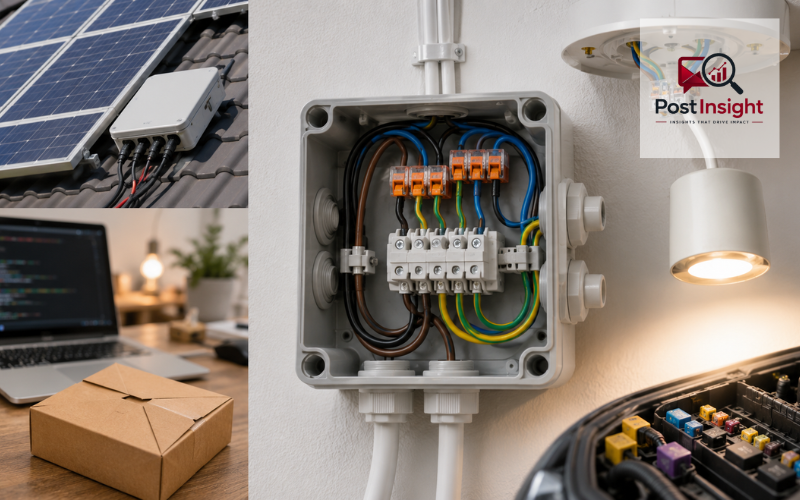
JBox is a short term that can mean different things depending on where it appears. In most cases, it refers to an electrical junction box, a small enclosure that holds and protects wire connections.
The same word is also used in other industries. A JBox may be connected with lighting fixtures, solar panels, software tools, Japanese online stores, vehicle electrical systems, or battery storage technology. Because the term has several meanings, people searching for “jbox” may be looking for very different information.
This article explains the main meanings of JBox in simple language. It begins with the electrical meaning, which is the most common, and then covers lighting, solar, retail, software, automotive, and smart-energy uses.
| JBox Type or Search | What It Usually Means | Common Use |
| JBox electrical | Electrical junction box | Protecting wire connections in homes, offices, and industrial systems |
| JBox lighting | Fixture or ceiling junction box | Connecting and supporting lights, fans, and outdoor fixtures |
| JBox solar | Solar-panel junction box | Protecting panel wiring, connectors, and bypass diodes |
| JBox store | Online retailer or business | Japanese goods, anime items, games, snacks, and collectibles |
| JBox Java | Software or development-related search | Coding tools, libraries, or similarly named projects |
| jBox plugin | A jQuery website plugin | Tooltips, pop-ups, notices, galleries, and modal windows |
| JBox programmer | Software or hardware programming tool | Programming devices, modules, or development projects |
| JBox car | Vehicle electrical junction unit | Managing fuses, relays, wiring, or electronic controls |
| JBox energy storage | Large battery-storage technology | Supporting power grids and electric-vehicle charging |
JBox, J-Box, and junction box are often used as different forms of the same electrical term. A junction box is an enclosure where two or more electrical wires meet, connect, split, or continue into another part of a circuit. The box keeps the connection contained and reduces the chance of accidental contact, physical damage, dust, or moisture reaching the wiring.
However, “JBox” is not limited to electrical work. It can also be a brand name, product name, software name, or informal label. That is why the words around it matter. A search for jbox electrical usually refers to wiring enclosures, while jbox lighting often relates to boxes that support light fixtures. Jbox solar commonly points to the junction box attached to the rear of a solar panel.
Other searches have completely different meanings. Jbox store or jbox menu may refer to an online shop. Jbox Java and jbox programmer may relate to software development or electronic programming tools. Jbox car can refer to a vehicle junction unit, fuse box, control module, or a model-specific electrical part.
Among all these meanings, the electrical junction box remains the most widely recognized use of the term.
A JBox electrical enclosure is designed to keep wire connections secure, organized, and protected. Instead of leaving joined wires exposed inside a wall, ceiling, or machine, the installer places the connections inside a suitable box and closes it with a cover.
Inside the box, wires may be spliced together, connected to terminals, or routed in different directions. The enclosure helps protect these points because connections are often more vulnerable than an unbroken length of cable. Loose, damaged, or exposed connections can create heat, sparks, electric shock risks, or equipment failure.
In homes, junction boxes are commonly used for switches, outlets, ceiling lights, wall lights, smoke alarms, and extensions to existing circuits. Commercial buildings use them for lighting networks, security systems, office wiring, and building controls. Industrial sites may use larger or stronger boxes for machinery, sensors, motors, and control equipment.
A sealed outdoor box may also help keep out rain, dust, and insects. Heavy-duty industrial boxes can be designed for harsh environments, vibration, chemicals, or high moisture.
An electrical cable usually enters a JBox through a built-in opening or a removable section called a knockout. Once the opening is prepared, the cable is secured with a clamp or connector so it cannot move freely or rub against a sharp edge.
The individual wires are then joined with approved connectors, terminal blocks, or another suitable method. The goal is to create a firm connection that does not loosen during normal use.
A typical junction box includes several basic parts. The body contains the wires. Knockouts provide cable-entry points. Cable clamps hold the cable in place. A cover closes the box and prevents accidental contact. Metal boxes may also include grounding points so the enclosure can be connected safely to the grounding system.
After the work is complete, the box should remain accessible. It should not normally be buried behind finished drywall, permanent panels, or another surface that prevents future inspection. Access matters because electrical connections may need to be tested, tightened, repaired, or replaced later.
Junction boxes come in many shapes and materials because one design cannot suit every location. Plastic boxes are common in residential work because they are light, easy to install, and do not conduct electricity. Metal boxes are often chosen for strength, fire resistance, metal conduit systems, or commercial and industrial installations.
Weatherproof boxes are made for outdoor or damp locations. They usually have sealed covers, gaskets, and cable fittings that help block water and dirt. Surface-mounted boxes sit on top of a wall, ceiling, or other surface. Recessed boxes are fitted into a wall or ceiling so the front sits close to the finished surface.
Single-gang and double-gang boxes describe the space available for switches, outlets, or similar devices. Square boxes provide more room for multiple cables and splices. Round and octagonal boxes are often used for lighting fixtures. Shallow boxes fit tight spaces, while deeper boxes provide more space for wires, connectors, and devices.
Every box has a safe capacity. Too many wires, clamps, devices, or connectors can make the box crowded and difficult to close. Overfilling may also increase heat and damage risk. The correct depth and volume should therefore be chosen before installation.
A JBox lighting setup provides a safe point where the building wiring connects to a light fixture. It may also support the fixture physically, depending on its rating and design. Ceiling lights, wall lights, outdoor lamps, pendant fixtures, and some fans all rely on correctly selected electrical boxes.
Round and octagonal boxes are widely used for ceiling and wall lighting because their shape works well with common fixture mounting plates.
The box must be suitable for the fixture’s weight. A small, lightweight lamp may work with a standard fixture box, but a heavy chandelier or large fitting may require extra support. Ceiling fans create movement and vibration, so they should be mounted to a box specifically rated for fan support or to a separate structural support system.
Outdoor lighting needs added protection. The box, cover, fittings, and seals should all be suitable for the location. A box intended only for a dry indoor wall should not be used where rain, condensation, or direct water exposure may occur.
In solar energy systems, a JBox solar component is commonly attached to the back of a photovoltaic panel. It provides a protected place where the panel’s internal electrical connections meet the output cables that carry electricity to the rest of the system.
A solar junction box may contain bypass diodes. These parts help electricity move around shaded or damaged sections of a panel, reducing performance loss and limiting harmful heat buildup in certain conditions. The box also includes cable outlets and connectors designed to remain secure while exposed to sunlight, temperature changes, and outdoor weather.
Larger solar installations may use additional junction or combiner boxes. These bring together wiring from several panels or strings before sending power toward an inverter or other equipment.
A solar JBox differs from an ordinary household junction box because it is made for direct-current solar wiring, long outdoor exposure, heat, and panel-specific connections. It should be selected according to the panel design and system requirements rather than treated as a general-purpose wiring box.
Safe installation starts with choosing the correct box for the job. The installer must consider the location, wire type, number of cables, environmental conditions, and whether the box must support a device or fixture.
Before any wiring begins, the electrical supply should be switched off and confirmed as dead with suitable testing equipment. Turning off a wall switch alone is not enough because power may still be present at the box.
The box should be mounted firmly, and cables should enter through proper openings with suitable clamps or fittings. Wire connections must be secure, correctly insulated, and arranged without sharp bends or excessive pressure. Metal boxes should be grounded where required. The box must also have enough internal space for all conductors, connectors, clamps, and devices.
After the wiring is checked, the correct cover should be fitted securely. Outdoor boxes need suitable seals and weather-resistant fittings. Because electrical rules differ by country and location, local codes and manufacturer instructions should always be followed. A qualified electrician is the safer choice when the work involves new circuits, damaged wiring, high loads, solar equipment, or uncertainty about legal requirements.
The right JBox depends first on where and how it will be used. An indoor plastic box for a light switch is very different from a sealed outdoor enclosure, a metal industrial box, or a solar-panel junction box.
Material is an important decision. Plastic is useful for many simple indoor installations, while metal offers greater strength and may be required with certain wiring systems. Size and depth must provide enough room for the wires, connectors, and devices.
Environmental exposure matters as well. Damp, dusty, hot, or outdoor areas need boxes with suitable protection ratings and compatible seals. A lighting box must support the fitting attached to it. A fan box must be fan-rated. Solar equipment must be designed for photovoltaic use and outdoor conditions.
Common mistakes include choosing a box that is too small, using an indoor box outdoors, leaving unused openings unsealed, attaching a heavy fixture to a weak box, or mixing parts that are not designed to work together. Careful selection at the start makes installation safer and future maintenance easier.
Junction boxes can develop problems through poor installation, age, moisture, movement, or damage. Loose wire connections are one of the most serious concerns because they can create resistance and heat. An overcrowded box may place pressure on connectors and make it difficult to inspect the wiring.
Damaged or missing covers leave connections exposed. Corrosion can affect metal parts and terminals, especially in damp areas. Water inside an outdoor box may show that a seal, gasket, fitting, or enclosure has failed. Burn marks, melted insulation, or dark discoloration can point to overheating.
Other warning signs include a burning smell, buzzing, crackling, visible sparks, flickering lights, or power that cuts in and out. These symptoms should not be ignored. The circuit should be switched off if it is safe to do so, and the box should be examined by a qualified professional.
Hidden or inaccessible boxes are also a problem because they prevent inspection and repair. A JBox may need replacement when the enclosure is cracked, badly rusted, too small, no longer sealed, or unsuitable for the wiring and environment.
The term JBox store can refer to an online retailer rather than an electrical product. JBOX has been used in connection with Japanese goods sold to international customers, including anime merchandise, games, snacks, media, and collectibles.
A person searching for a JBox menu may be trying to find the navigation menu, product categories, food menu, or service list of a business using the JBox name.
The easiest way to separate this meaning from electrical information is to look at the surrounding terms. Words such as “shop,” “anime,” “snacks,” “Blu-ray,” “shipping,” or “menu” suggest a retailer or business. Words such as “wiring,” “lighting,” “outdoor,” or “junction” usually point to an electrical box.
JBox Java and JBox programmer searches may lead to software libraries, coding projects, development tools, or hardware programming devices.
One known example is jBox, a jQuery plugin created for website features such as tooltips, modal windows, notices, image galleries, and pop-up messages. Despite the similar names, jQuery is a JavaScript library, not the Java programming language. The plugin’s official GitHub repository states that it was archived in December 2025 and is no longer maintained. It remains available for existing projects but is not recommended for new development.
The word “programmer” can also refer to a hardware device used to write data or firmware to an electronic module. Therefore, users should check the full product name, supported language, device model, documentation, release date, and maintenance status before downloading software or buying equipment.
In automotive searches, JBox car may refer to a junction box, fuse and relay unit, power distribution module, or electronic control unit. Vehicle makers use different names for these parts, and the meaning can change between models. A replacement should always be matched by part number, vehicle model, production year, and electrical specification.
JBox is also used as a registered product name in the energy sector. NW describes its JBox® as a French distributed energy-storage technology that provides services to electrical grids. The company pairs its storage work with high-power electric-vehicle charging activities. In 2026, NW continued to describe JBox® as a central part of its battery-storage operations while announcing further expansion and financing.
This smart-energy JBox is not a small household wiring enclosure. It is a large battery-based system designed to store electricity and support grid stability.
JBox most commonly means an electrical junction box used to contain and protect wire connections. These enclosures play an important role in homes, businesses, lighting systems, solar installations, and industrial equipment. Choosing the correct type, size, material, and rating helps keep wiring safe and accessible.
The same term can also refer to an online store, a web-development plugin, a vehicle electrical unit, or NW’s distributed battery-storage technology. That is why context is essential. Words such as electrical, lighting, solar, store, Java, programmer, car, or energy usually reveal the intended meaning.
Before buying, installing, repairing, or downloading anything described as a JBox, check the product name, manufacturer, application, and technical requirements. A few extra details can prevent confusion and help ensure that the correct JBox is chosen for the task.
A JBox is an enclosure that holds and protects electrical wire connections. It helps prevent accidental contact, damage, moisture exposure, dust buildup, and other conditions that may affect wiring safety.
A junction box containing wire connections should normally remain accessible for inspection and repair. Covering it permanently behind drywall or fixed panels may violate local electrical rules and create maintenance problems.
Round and octagonal junction boxes are commonly used for lighting fixtures. Heavy lights and ceiling fans may need specially rated boxes or additional structural support to carry their weight safely.
No. A solar JBox is designed for photovoltaic panels, outdoor exposure, direct-current wiring, heat, and weather resistance. It may also contain bypass diodes and solar-specific cable connectors.
No. Although an electrical junction box is the most common meaning, JBox can also refer to online stores, software plugins, vehicle electrical units, programming tools, or large battery-storage systems.
Disclaimer: The information in this article is provided for general educational purposes only. Electrical, solar, automotive, and battery-storage systems may involve serious safety risks. Always follow local regulations, manufacturer instructions, and seek help from a qualified professional when necessary.


