
 11
11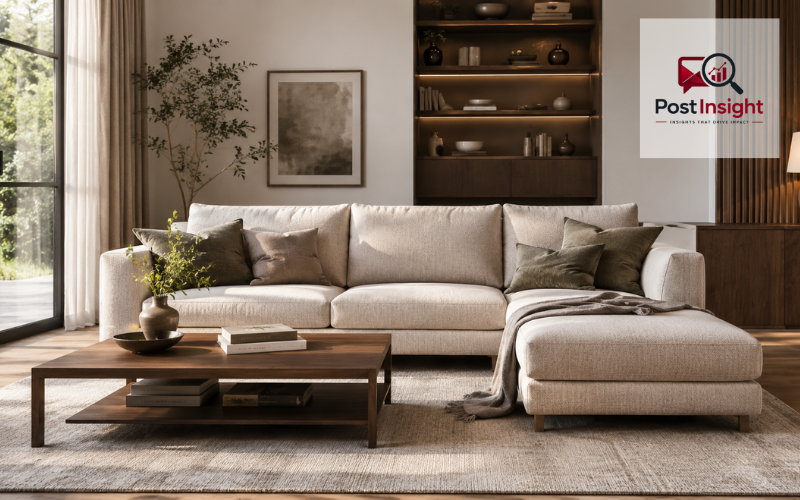
A chaise sofa is a couch with one seat that extends farther forward than the others. This longer section supports your legs, so you can sit upright, stretch out, read, watch television, or rest without adding a separate footstool. It combines the shared seating of a regular sofa with the relaxed shape of a chaise lounge.
This design can suit many homes. A compact model may fit an apartment, while a large sectional chaise sofa can anchor a family room. Some have a fixed left- or right-facing chaise, and others use a reversible section or movable ottoman.
Chaise sofas come in leather, velvet, corduroy, woven fabric, and easy-care upholstery. They may also include storage, a sleeper bed, reclining seats, or modular pieces. The right choice depends on room size, layout, comfort, material, and daily use.
Chaise Sofa Quick Comparison Guide
| Chaise Sofa Type | Best For | Main Benefit | Space Needed |
| Single chaise sofa | Bedrooms and reading corners | Compact lounging seat | Small |
| Sectional chaise sofa | Families and living rooms | More shared seating | Medium to large |
| Reversible chaise sofa | Renters and changing layouts | Chaise can switch sides | Small to medium |
| Sleeper chaise sofa | Guest rooms and apartments | Converts into a bed | Medium |
| Dual-chaise sectional | Large households | Lounging space at both ends | Large |
| Chaise sofa with recliner | Media and family rooms | Adjustable relaxation | Medium to large |
A standalone chaise lounge is a single long seat made mainly for reclining. Traditional diwans may have a low profile, one raised arm, carved legs, or button tufting. They work well in bedrooms, reading corners, dressing areas, and formal sitting rooms where one accent seat is enough.
An L-shaped chaise sofa combines standard seats with one extended end. It is practical for everyday living rooms because several people can sit normally while one person stretches out. Larger sectional versions can also define a lounge area in an open-plan home.
Modular and deep-seat designs offer more flexibility. Their sections may be moved, added, or separated as needs change. U-shaped and dual-chaise layouts give lounging space at both ends, making them useful for large families, but they require wider walkways and more floor space.
A chaise lounge is usually a single elongated chair designed for one person. A daybed is closer to a narrow bed and offers a full-length surface for sitting or occasional sleeping. A regular couch provides several seats of similar depth but does not support the legs unless you add an ottoman.
A chaise sofa couch sits between these options. It still provides shared seating, but one end is long enough for lounging. This makes it more versatile than a single chaise and more relaxed than a standard sofa.
Choose a chaise lounge for one-person comfort, a daybed when sleeping space matters, and a regular couch when equal seating is the priority. A chaise sofa is often the best balance when a household wants both shared seating and a built-in place to stretch out.
Chaise orientation can be confusing because retailers do not always describe it in the same way. Many identify the side while you stand facing the sofa, but some describe it from the seated position. Always check the product diagram before ordering.
The correct side should keep the room open. A chaise against a wall or beside a quiet corner often creates a neat layout. If it crosses a doorway, walkway, fireplace, or balcony access, it can make the room feel crowded.
A reversible chaise is useful for renters or anyone who may rearrange the room. Some models allow the long cushion and support base to switch sides. Others use a movable ottoman under either end. Check how the pieces connect, because an unattached ottoman may move more than a built-in chaise.
A sectional chaise sofa can range from a compact three-seat L-shape to a large arrangement with corner pieces, extra seats, and more than one chaise. Smaller versions can work in apartments if their depth does not block the main walkway. Larger ones suit family rooms where several people gather.
In an open-plan home, the back of the sectional can mark the edge of the living area. A corner layout uses two walls efficiently, while a floating arrangement can face a television, fireplace, or central table. In either case, keep clear paths around the seating.
Fixed sectionals are stable but cannot be rearranged. Modular sectionals offer the most flexibility because sections can be moved or added. Detachable models may separate for delivery or cleaning but are usually intended to stay in one main layout.
A chaise sofa single can add comfort where a full couch would feel too large. It may serve as an accent seat, reading chair, or compact daybed. In a bedroom, it can sit near a window or beside the bed. In a home office, it creates a softer place to read or take a break.
Armless designs look open and fit tight corners, although they offer less side support. One-arm models feel more like a small sofa. Tufted velvet gives a formal look, while simple mid-century lines usually feel lighter.
A single chaise saves space compared with a sectional, but it only seats one person comfortably. Measure its full length carefully, as a narrow-looking model may still extend far into the room.
A leather chaise sofa can suit modern or traditional interiors. Genuine leather is made from animal hide and often develops more character with use. Top-grain leather has a refined outer surface that gives it a more even look while keeping much of its strength. Faux leather is synthetic and usually costs less, but it may crack or peel sooner.
Leather is easy to wipe, which can help in busy homes. However, it may feel cool in winter, warm in strong sunlight, and vulnerable to scratches from pet claws. Pale leather can also show marks or dye transfer more clearly than darker finishes.
Follow the manufacturer’s care label. Remove dust with a soft cloth, wipe spills quickly, avoid soaking the surface, and keep the sofa away from direct heat. Use only cleaners or conditioners approved for that leather type.
Fabric provides the widest choice of colours and textures. Tightly woven upholstery is often practical for regular use, while loose weaves may catch on jewellery or claws. Removable covers can make care easier, but not every cover is machine washable.
Velvet gives a chaise sofa a soft, rich appearance and works well in bedrooms or formal lounges. Its pile may show pressure marks, which is normal but not ideal for everyone. Corduroy feels warm and casual, and its raised ribs suit deep-seat or cloud-style sofas.
Performance upholstery is designed to handle frequent use more easily than delicate fabric. It can be useful in homes with children or pets, but stain-resistant does not mean stain-proof. Check the cleaning code and deal with spills quickly. Mid-tone colours, textured weaves, and small patterns generally hide everyday marks better than very pale, flat fabrics.
Seat depth changes how a sofa feels. A shallow seat supports a more upright position and may suit shorter users. A standard-depth seat balances sitting and relaxing. A deep-seat chaise sofa encourages lounging, but shorter people may need an extra back cushion.
Soft cushions feel welcoming but may need regular reshaping. Firmer foam offers stronger support and often keeps a neater outline. Back height, arm shape, and chaise length matter too. A low back looks modern, while a higher back supports more of the shoulders.
Check more than the outer fabric. A strong frame, secure joints, even suspension, and cushions that regain their shape all support long-term comfort. Sit in several positions when possible. Make sure the seat edge does not press behind your knees and that the chaise supports your legs comfortably.
For online purchases, study the full dimensions and materials rather than relying on words such as “cloud,” “oversized,” or “luxury.” These are style descriptions, not fixed comfort standards.
A sofa with reversible chaise and ottoman works well for renters, apartments, and rooms that may be rearranged. The long cushion can often move from one side to the other, with the ottoman underneath supporting it.
The ottoman may also serve as a footrest, occasional seat, or soft table when used with a stable tray. A storage ottoman adds room for blankets, toys, or spare cushions. Attached versions feel more secure, while movable ones provide more freedom but can slide on smooth floors.
This setup is most useful when flexibility matters more than a fully built-in look. Check that the chaise cushion fits properly on both sides and that the ottoman lines up firmly with the sofa.
A sofa chaise sleeper adds a temporary bed without needing a separate guest room. Pull-out models hide a mattress or platform beneath the seats. Fold-flat designs lower the back, while some convertible sectionals pull an extra platform forward until it meets the chaise.
These sofas can suit studio apartments, multipurpose rooms, and homes with occasional guests. If the bed will be used often, look for a flatter and more supportive sleeping surface rather than choosing only by sofa comfort.
Measure the sofa in both positions. Leave enough room to open the bed and move nearby tables. Check the final bed width, cushion gaps, and bedding size. Storage under the chaise or ottoman can keep sheets and blankets close by.
Current IKEA examples show how these features may be combined. The FRIHETEN chaise can switch sides, includes storage under the chaise, and forms part of a sofa that converts into a bed. IKEA also currently lists categories for sofa beds with chaise sections and storage, although availability differs by market.
A sofa with chaise and recliner offers two ways to relax. The chaise supports the legs without moving, while the recliner lifts a footrest and lowers the back. Manual models use a handle or body pressure, while powered versions use a motor.
This added comfort needs extra space. Some recliners require clearance behind the back and in front of the footrest. Powered seats also need a nearby outlet, and cables should stay out of walkways.
These sofas suit media rooms and family lounges where comfort matters more than a slim shape. Test the movement, listen for unusual noise, and check whether motors, controls, and moving parts have separate warranty conditions.
Start by measuring the room, wall length, doorways, hallways, stairs, and elevator if needed. Record the narrowest point on the delivery route. A sofa can fit the living room but still be too large to carry through a tight turn.
Mark the full width and chaise depth on the floor with painter’s tape. Walk around it and open nearby doors, cabinets, and curtains. Keep access to windows, sockets, vents, and common paths.
Place the chaise where it supports the layout rather than cutting across it. In a narrow room, setting the long section against a wall often keeps the centre open. In a large room, a floating sectional can define the seating area.
Choose a rug large enough to sit under at least the front legs of the sofa. Use a coffee table that can be reached without crowding the chaise. A slim side table and floor lamp often fit better beside the extended seat than bulky furniture.
When comparing a chaise sofa IKEA design with other options, focus on the actual configuration. Current IKEA ranges include sofas with chaise lounges, modular pieces, L-shaped layouts, U-shaped sectionals, and sleeper models with storage. Some systems can be expanded, while certain sleeper chaises can switch from left to right.
Read every measurement, including total width, chaise depth, seat height, arm width, and package size. Check whether the orientation is fixed, reversible, or modular. Review the upholstery, cleaning instructions, removable-cover details, assembly steps, and availability of replacement parts.
Delivery, returns, and warranty terms matter too. IKEA US currently says new and unopened products may be returned within 365 days and open products within 180 days with proof of purchase, subject to exclusions and condition rules. It also says many sofas, sleeper sofas, armchairs, and ottomans have a 10-year limited warranty against qualifying defects in frames and cushions, although coverage varies by item. Policies in other countries may differ.
Before ordering any chaise sofa, confirm that it fits the room and delivery route, its direction supports the layout, its cushions feel suitable, and its upholstery matches your cleaning needs. A lower price is not good value if the sofa blocks the room or feels uncomfortable.
A chaise sofa can make a room more comfortable without adding a separate recliner or footstool. It provides standard seating for guests and a longer place to relax, making it useful in apartments, family rooms, bedrooms, and open-plan homes.
The best choice is not always the largest or softest model. Consider orientation, measurements, cushion depth, upholstery, frame quality, and useful extras such as storage, a sleeper bed, an ottoman, or a recliner. Also think about how people move through the room on an ordinary day.
Measure carefully, compare full specifications, and choose a layout that supports your lifestyle. A well-planned chaise sofa should make the room easier to use and more enjoyable, not simply fill more of it.
Yes. A compact or reversible chaise sofa can work well in a small room when placed against a wall. Measure the full chaise depth to ensure it does not block walkways.
A chaise sofa has an extended lounging seat attached to a couch. A sectional is made from several connected sections and may include a chaise, corner seat, recliner, or additional seating units.
Place the chaise on the side that keeps doors, windows, and main walkways open. Always check how the retailer defines left-facing and right-facing before placing an order.
Leather is easy to wipe and often durable, while fabric usually feels softer and offers more colours. The better option depends on comfort, budget, pets, children, and maintenance needs.
Some chaise sofas include pull-out or fold-flat sleeper functions. A regular chaise may support short naps, but it is generally too narrow and uneven for comfortable overnight sleeping.
Disclaimer: This article provides general furniture and buying guidance. Product dimensions, materials, features, warranties, prices, and availability may vary, so always verify the latest details with the retailer or manufacturer.


