 11
11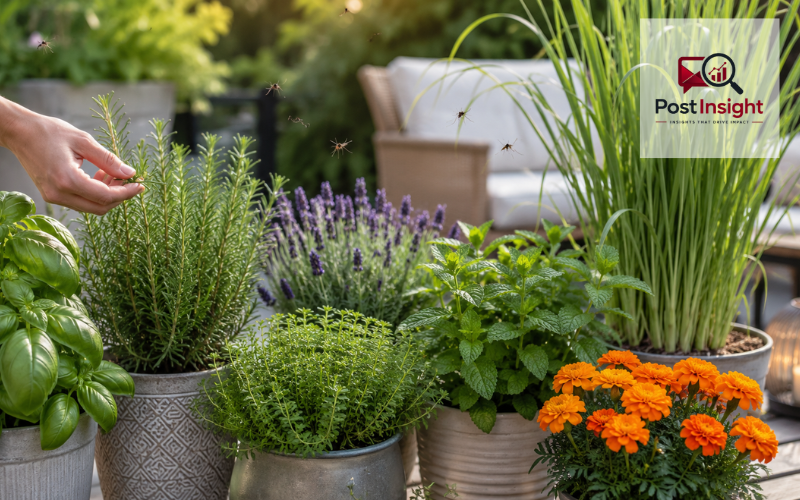
Mosquito repellent plants are aromatic herbs, grasses, flowers, and shrubs that contain natural oils associated with insect-repelling effects. Popular examples include citronella grass, catnip, rosemary, lavender, basil, mint, and lemongrass. These plants can make a garden more attractive and provide leaves or stems that may be harvested for their fragrance.
However, a living plant does not normally release enough oil into the surrounding air to protect an entire patio, room, or garden. The useful compounds are usually more noticeable after leaves are crushed, brushed, distilled, heated, or added to a properly formulated product. University of Florida mosquito specialists describe passive “mosquito-repelling” plants as more myth than dependable control, while the CDC recommends EPA-registered repellents when reliable bite prevention is needed.
This guide compares 25 plants and covers growing conditions, safe use, common myths, and more dependable prevention steps.
Aromatic plants produce volatile oils, meaning the oils evaporate and create a noticeable scent. Some compounds may interfere with the way mosquitoes detect carbon dioxide, body odor, heat, and other signals from people. Yet the amount released by an untouched plant is usually too low and too uneven to form a reliable protective zone.
Crushing leaves releases more fragrance, while distillation produces concentrated oil. Smoke, candles, and heated products spread vapor through a limited area, but wind carries it away. Commercial repellents contain measured active ingredients in tested formulations.
Laboratory findings also do not automatically prove that a plant will work in a garden. Researchers may test a concentrated oil against one mosquito species in a controlled chamber. Outdoors, performance changes with mosquito species, temperature, humidity, wind, concentration, and application method.
A 2026 field study found that lotions containing catnip essential oil significantly reduced mosquito landings, but the result applied to a formulated lotion—not to a catnip plant sitting nearby.
The table below treats the word “repel” carefully. A higher rating means there is useful evidence for an extracted oil, active compound, or formulated product. It does not mean the untouched plant creates dependable protection.
| Plant | Group and Growing Location | Light | Main Aromatic Compounds | Most Practical Use | Evidence or Reliability |
| Catnip | Herb; beds or pots | Full sun to part sun | Nepetalactone | Grow for harvested oil or foliage | Strong for formulated catnip oil; weak as a passive plant |
| Common thyme | Herb; pots, paths, or rock gardens | Full sun | Thymol and carvacrol | Harvest for fragrance or extracts | Moderate for oil compounds |
| Lemon thyme | Herb; sunny edging or pots | Full sun | Thymol and citral-type compounds | Brush or harvest aromatic leaves | Limited direct evidence for this exact plant |
| Rosemary | Woody herb; pots or borders | Full sun | Camphor, cineole, and pinene | Harvest sprigs or use in tested products | Moderate for extracts; weak passively |
| Basil | Annual herb; pots or beds | Full sun to part sun | Linalool and eugenol | Culinary use and harvested foliage | Limited to moderate for extracts |
| Lemon basil | Annual herb; containers | Full sun | Citral and linalool | Harvest fresh leaves | Limited evidence |
| Peppermint | Spreading herb; containers | Sun to part shade | Menthol and menthone | Harvest leaves and keep contained | Moderate for essential oil, not the plant |
| Spearmint | Spreading herb; containers | Sun to part shade | Carvone | Harvest leaves near doors or seating | Limited evidence |
| Lemon balm | Herb; pots or beds | Sun to part shade | Citral and citronellal | Harvest fragrant foliage | Limited evidence |
| Sage | Herb; dry beds or pots | Full sun | Camphor and cineole | Harvest leaves or sprigs | Limited field evidence |
| Oregano | Herb; pots or dry borders | Full sun | Carvacrol and thymol | Grow for aromatic leaves | Mainly laboratory evidence |
| Citronella grass | Tropical grass; large pots or ground | Full sun | Citronellal and geraniol | Source plant for citronella oil | Moderate for formulated oil; weak passively |
| Lemongrass | Tropical culinary grass | Full sun to part sun | Citral | Harvest stalks and leaves | Moderate for extracts; weak passively |
| Vetiver | Clumping tropical grass | Full sun | Vetiverol and related oils | Landscaping or oil production | Limited mosquito evidence |
| Lavender | Flowering herb; dry beds or pots | Full sun | Linalool and linalyl acetate | Fragrant landscaping and harvested flowers | Moderate for oil; weak passively |
| Bee balm | Flowering herb; beds | Sun to part sun | Thymol and terpenes | Pollinator planting and fragrant foliage | Limited mosquito evidence |
| Marigold | Annual flower; beds or pots | Full sun | Terpenes and thiophenes | Ornamental companion planting | Weak for repelling adult mosquitoes |
| Floss flower | Annual flower; borders | Sun to part sun | Coumarin-related compounds and precocenes | Ornamental use only | Limited laboratory evidence |
| Scented geranium | Tender perennial; pots | Full sun to part sun | Geraniol and citronellol | Fragrant container plant | Poor evidence as an area repellent |
| Pyrethrum daisy | Flower; cool, sunny beds | Full sun | Pyrethrins | Source of insecticidal compounds | Insecticidal, not a passive mosquito shield |
| Chrysanthemum | Flower; beds or pots | Full sun | Terpenes that vary by type | Ornamental use | Limited as a mosquito repellent |
| Lemon verbena | Tender shrub; pots or warm gardens | Full sun | Citral and limonene | Harvest fragrant leaves | Limited evidence |
| Bay laurel | Shrub or small tree; pots | Full sun to part sun | Cineole and eugenol | Culinary leaves and fragrance | Limited mosquito evidence |
| Lemon eucalyptus | Tree; warm outdoor climates | Full sun | Citronellal in raw oil; PMD in processed products | Source linked to registered repellents | Strong for registered OLE or PMD products, not the tree |
| Lantana | Flowering shrub; warm landscapes | Full sun | Variable terpenes | Ornamental use where locally permitted | Some extract research; passive effect unproven |
Plant-derived oils often evaporate quickly. Thyme compounds have shown repellency in controlled tests, while field studies found that citronella-scented geranium plants did not reduce landings. True pyrethrins come from pyrethrum daisies, not marigolds.
For sunny patios and balconies, citronella grass, lemongrass, rosemary, lavender, sage, catnip, and lemon thyme provide aromatic foliage for harvesting. Pots also let gardeners move tender plants indoors before frost.
In warm climates, citronella grass and lemongrass form broad clumps, while rosemary may become a woody shrub. Place smaller herbs where they are easy to harvest, but do not expect pots to form an invisible barrier. Use sturdy containers in exposed sites.
Rosemary, thyme, lavender, and sage are well suited to dry, sunny locations with quick-draining soil. Basil, catnip, and lemongrass generally need more regular watering. Containers make it easier to give each species the conditions it needs.
Plants can be positioned beside paths where their foliage may be brushed naturally. This releases a small amount of scent, but the effect is brief and should be viewed as a gardening benefit rather than reliable bite protection.
Indoor mosquito repellent plants need bright light. Basil, rosemary, mint, lemon balm, and scented geranium can grow near a sunny window or suitable grow light. Use pots with drainage holes and empty saucers.
Weak, stretched growth usually means the plant needs more light. Yellow leaves and fungus gnats often point to soil remaining wet for too long. Let the soil surface dry as appropriate for the species, provide airflow, and avoid crowding several pots together.
Rosemary and scented geranium prefer drier conditions than mint or basil. Rosemary may decline quickly in a dark, humid room, while mint is more forgiving but can outgrow a small pot.
Indoor plants add fragrance and useful foliage, but they should not replace window screens, closed doors, mosquito nets, or proven personal repellents.
Mint, lemon balm, catnip, bee balm, and some scented geraniums can handle partial sun, especially where they receive gentle morning light. Partial shade normally means several hours of usable light rather than a dark corner.
Deep shade may produce thin stems, fewer flowers, and less strongly scented foliage. Even shade-tolerant aromatic plants usually perform better with some direct or filtered sunlight.
Shaded areas also dry slowly. Space plants well, use free-draining soil, and water only when needed. Mint and lemon balm can spread aggressively in favorable conditions, so containers are often the simplest way to control them.
Florida’s heat and long growing season suit lemongrass, basil, rosemary, mint, and several tropical aromatic plants. Lemongrass can grow about six feet tall and performs in full or partial sun, while rosemary needs at least six hours of sun and very well-drained soil.
Lavender is less dependable in Florida’s wet summer conditions and is usually easier to manage in a raised bed or container with excellent drainage.
For patios, pool areas, and screened porches, containers allow better control during heavy rain and storms. Move tall pots to shelter before severe weather and check saucers for trapped water afterward.
Florida gardeners should also check current UF/IFAS invasive-plant guidance. Common lantana is listed as invasive and not recommended, although some assessed sterile cultivars have different ratings.
Mint and lemon balm are best contained in pots because they spread quickly. Rosemary and thyme should be protected from waterlogged soil during periods of heavy rain.
Basil, lavender, rosemary, mint, lemongrass, sage, and catnip are often grown around outdoor dining spaces, doors, kitchens, and waste areas. Their strong fragrances are pleasant to many people and may discourage some insects when their oils are released.
These plants are most useful as fragrant, multipurpose additions rather than stand-alone pest control. Basil, mint, rosemary, and sage also provide culinary leaves, while lavender adds flowers and fragrance to sunny borders.
A leaf, homemade infusion, essential oil, candle, and EPA-registered repellent are not interchangeable. Their concentration, safety, and duration differ greatly. Traditional garden use should therefore be separated from products that have been scientifically tested against mosquitoes or flies.
Citronella grass and lemongrass belong to the same plant genus, but they are not the same species. True citronella grass usually refers to Cymbopogon nardus or Cymbopogon winterianus. It has coarse leaves and is grown mainly as a source of citronella oil.
Lemongrass, Cymbopogon citratus, has a strong lemon scent, contains high levels of citral, and is widely used in cooking. The lower part of its stalk is commonly used in soups, curries, teas, and other dishes.
Both are warm-climate clumping grasses that prefer sun and good drainage. Lemongrass suits edible gardens; citronella grass is mainly grown for fragrance and oil production. Both may need large pots.
The plant sold as “citronella geranium” or “mosquito plant” is a scented Pelargonium, not citronella grass. Field tests have not shown it to protect a surrounding area reliably.
Citronella oil can provide short-term repellency in suitable formulations, but growing the grass alone is not equivalent to applying a tested product.
Start with growing conditions, not the strongest marketing claim. Choose rosemary, thyme, lavender, and sage for sunny sites with fast drainage. Select mint, lemon balm, bee balm, or catnip for partial sun.
Use basil and scented geranium in bright indoor spaces. Choose lemongrass or citronella grass for warm outdoor areas with enough room for their mature size.
Decide whether you want fragrant landscaping, culinary herbs, or harvestable foliage. Consider size, frost tolerance, watering, invasiveness, and access by children or pets. When safety is uncertain, do not use foliage or oil on skin.
Check the available light, space, root spread, intended use, and maintenance needs. Dependable protection from mosquito-borne illness should come from proven prevention methods, not plants alone.
Brushing or crushing foliage releases more scent than leaving a plant untouched, but fresh leaves should not automatically be treated as a safe skin repellent. Plant sap and essential oils can irritate skin, trigger allergies, or increase sensitivity in some people.
Concentrated oils are much stronger than fresh leaves and should never be applied undiluted simply because they are natural. A plant that is safe to eat may still cause irritation when its concentrated oil is placed on the skin.
For topical protection, use a registered product as directed. EPA-listed active ingredients include catnip oil, citronella oil, oil of lemon eucalyptus, PMD, DEET, picaridin, IR3535, and 2-undecanone. The CDC considers EPA-registered repellents safe and effective when label directions are followed.
Dried sage, rosemary, or other aromatic sprigs are sometimes placed near an outdoor fire to create scented smoke. Keep plant material out of indoor fires, never leave flames unattended, and avoid smoke around children, pets, or anyone with breathing sensitivity.
Do not give homemade mixtures a specific protection time unless the exact formula has been tested. A homemade spray may have an uneven concentration and can lose strength quickly as its oils evaporate.
Most aromatic herbs produce their best growth in suitable light and well-drained soil. Mediterranean plants such as rosemary, thyme, lavender, sage, and oregano dislike waterlogged roots.
Basil, mint, lemon balm, and lemongrass usually prefer more regular moisture, although their pots must still drain freely. Water according to the plant’s needs rather than following one schedule for every container.
Place pots where plants can be cared for and harvested, not because they are expected to repel mosquitoes across the yard. Pinch basil regularly, trim mint before it becomes untidy, and take small rosemary or thyme cuttings without removing too much growth at once.
Bring frost-sensitive plants indoors before cold weather. Grow aggressive spreaders such as mint and lemon balm in containers or remove unwanted runners before they become difficult to control.
Do not let the garden create mosquito habitat. Empty water from saucers, buckets, toys, gutters, and unused containers weekly. Reducing standing water is more dependable than adding another scented plant.
One citronella plant cannot protect an entire patio. A strong scent to the human nose also does not prove that enough active compound is present in the air to stop mosquitoes. Wind, distance, oil concentration, and mosquito species all affect the result.
Marigolds are another source of confusion. Ordinary Tagetes marigolds do not produce pyrethrum. Natural pyrethrins come from specific pyrethrum daisies.
Lavender oils and floss flower compounds have shown biological activity in some research, but this does not prove that the garden plants prevent bites. Floss flower should be treated as an ornamental plant, not as a homemade topical treatment.
Scented geranium is often marketed as a mosquito plant, yet field studies found no meaningful area-wide protection. Similar caution applies to homemade sprays. Without controlled testing, there is no reliable way to promise how long a mixture will work or whether its concentration is safe.
The biggest mistake is ignoring stronger measures. Remove standing water, repair screens, wear suitable clothing, use fans, and apply an EPA-registered repellent when needed. Gardening should not replace disease-prevention advice.
Mosquito repellent plants can add fragrance, color, culinary value, and useful aromatic material to a home or garden. Catnip, thyme, rosemary, citronella grass, lemongrass, basil, mint, and lavender are worthwhile choices when they match the local climate and available light.
Their main limitation is equally important: an untouched plant is not a dependable mosquito shield. Choose plants for their wider gardening benefits, use oils and homemade preparations cautiously, remove standing water, and rely on tested repellents when strong bite protection is needed.
Used realistically, mosquito repellent plants can be a pleasant and useful part of a broader mosquito-prevention plan.
Living plants alone rarely provide reliable mosquito protection. Their natural oils are more noticeable when leaves are crushed, brushed, heated, extracted, or included in tested repellent products.
Citronella grass, lemongrass, rosemary, catnip, lavender, and lemon thyme are practical outdoor choices. Select plants according to sunlight, climate, available space, drainage, and maintenance needs.
Basil, mint, lemon balm, rosemary, and scented geranium can grow indoors with strong light, proper drainage, good airflow, and careful watering. They do not replace screens or repellents.
Fresh leaves and concentrated oils may irritate the skin or cause allergic reactions. Avoid applying unknown plants or undiluted essential oils, and use a tested skin repellent when protection matters.
No. Citronella grass is mainly grown for citronella oil, while lemongrass is a culinary herb rich in citral. Neither creates dependable mosquito protection simply by growing nearby.
Disclaimer: This article is for general gardening and educational purposes. Mosquito repellent plants should not replace registered insect repellents, window screens, protective clothing, or professional medical and pest-control advice.