 11
11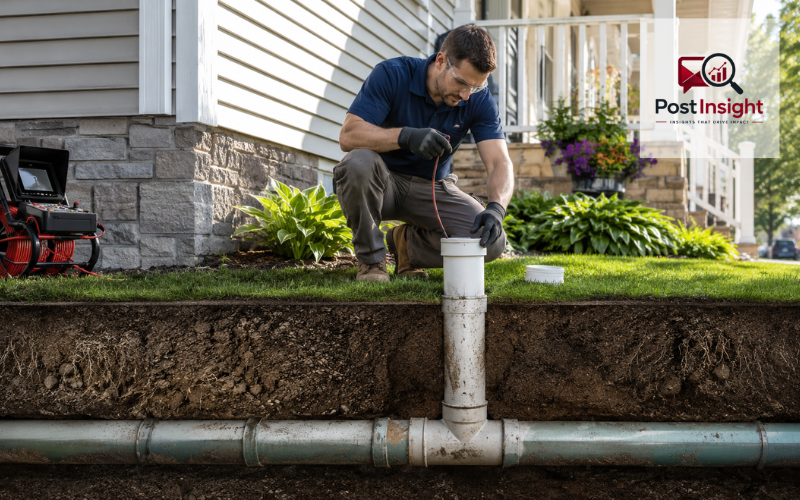
A sewer line clean out is one of those parts of a home that many people never notice until there is a serious drain problem. In simple words, it is an access point that connects to your home’s main sewer line. It usually looks like a capped pipe, and its job is to give plumbers a direct way to inspect or clear the main drain line without tearing into floors, walls, or landscaping.
This small access point matters because every sink, toilet, shower, bathtub, washing machine, and floor drain in your home depends on the sewer line to carry wastewater away. When that line becomes blocked, wastewater may stop draining properly or even come back into the house. A sewer line clean out helps make inspection, cleaning, and maintenance faster and less invasive.
Homeowners should pay attention to the sewer line clean out before an emergency happens. Knowing where it is located, what the sewer cleanout cap looks like, and when to call a plumber can help prevent confusion during a backup. It can also save time when a professional needs to inspect the line with a camera, clear a clog with a drain snake, or remove heavy buildup with hydro jetting.
| Topic | Quick Answer |
| What it is | A capped pipe that gives access to the main sewer line |
| Common location | Yard, near foundation, property line, basement, garage, or crawl space |
| What it looks like | 3–4 inch pipe with a threaded sewer cleanout cap |
| Main warning signs | Multiple slow drains, gurgling toilets, sewage smell, or backups |
| Cleaning methods | Camera inspection, snaking, augering, or hydro jetting |
| DIY safety | Do not fully open the cap if water or pressure is present |
| Cost factors | Access, blockage severity, inspection, snaking, hydro jetting, and emergency service |
A sewer line clean out is a capped opening installed on the main drain pipe that carries wastewater from your home to the municipal sewer system or septic tank. It is not the same as a sink drain, shower drain, or toilet drain. Those smaller drains serve individual fixtures. The cleanout gives access to the larger pipe that receives wastewater from many parts of the home.
The cleanout is normally connected to the main sewer line through a fitting that allows tools to enter the pipe. When a plumber opens the cap, they can send equipment into the line to look for clogs, roots, grease buildup, broken pipe sections, or other issues. This is why a cleanout is so useful during sewer problems. It provides a direct path into the pipe instead of forcing the plumber to access the line through a toilet or another indoor fixture.
A regular drain is made for wastewater to flow through during daily use. A cleanout, on the other hand, is made for service and maintenance. You do not pour water into it during normal household use. It stays capped until it is needed for inspection or cleaning.
A residential sewer line clean out works as a service opening for the home’s main drain system. Inside the house, wastewater from different fixtures flows into branch drain lines. These branch lines connect to larger pipes, and those pipes lead to the main sewer line. From there, wastewater travels away from the home toward the city sewer main or a private septic system.
The cleanout is placed along this path so the pipe can be reached when flow slows down or stops. If there is a blockage in the main line, the cleanout allows a plumber to work from a practical access point. This can be especially helpful because main sewer problems often affect more than one drain at the same time.
Access points are important because sewer blockages are not always near the fixture where symptoms appear. For example, a bathtub may fill with dirty water, but the clog may be several feet away in the underground line. With the cleanout open, a plumber can send a camera or cleaning cable into the main sewer line and find the real cause instead of guessing.
The clean out drain location can vary from one house to another, but there are a few common places to check. In many homes, the cleanout is outside in the yard, often near the foundation wall. It may be a short white, black, or green pipe sticking slightly above the ground, or it may sit inside a small covered box that is flush with the lawn.
Another common location is near the sidewalk, curb, driveway, or property line. In some areas, this position helps mark the path between the private sewer lateral and the public sewer system. If your home uses a septic tank, the cleanout may be located along the line between the house and the septic tank.
Indoor cleanouts are also common, especially in colder climates where outdoor pipes may be more exposed to freezing. If the cleanout is inside, it may be in the basement, garage, crawl space, utility room, laundry area, or near the main horizontal waste pipe. In some homes, it may be set into the floor with a flat cap.
Home age, local plumbing code, climate, foundation type, and past renovations can all affect where the cleanout is placed. If you cannot find it, check along the most direct path from your bathrooms or utility area toward the street or septic tank. If it is buried, covered by landscaping, or hidden behind finished walls, a plumber can help locate it.
The sewer cleanout cap is the cover that seals the cleanout opening. It is usually round and threaded, meaning it screws onto or into the cleanout pipe. Many caps have a square or hex-shaped raised fitting on top so they can be turned with a wrench.
Most residential cleanouts are around 3 or 4 inches wide, though some may be larger depending on the plumbing system. Newer cleanouts are often made from PVC or ABS plastic, while older homes may have cast iron, brass, or other metal cleanout fittings. Some caps are white, black, green, or metal-colored, depending on the material and location.
You may see markings such as “S,” “C.O.,” “Sewer,” or “Cleanout” on or near the cap. Outdoor caps may stick above the ground, sit flush with the lawn, or be hidden under a small round or square cover. Indoor cleanouts may appear as a plug in the floor or a capped fitting on a larger pipe.
A missing or broken cap should not be ignored. The cap helps keep dirt, rocks, rainwater, pests, and yard debris out of the sewer line. It also helps contain sewer gases. If the cap is cracked, loose, or missing, replacing it is a simple step that can help prevent bigger problems later.
A main sewer line cleanout is different from smaller drain cleanouts found under sinks, near tubs, or along branch drain pipes. The main cleanout serves the larger sewer line that carries wastewater away from the entire home. Smaller cleanouts usually serve only one fixture or one section of the plumbing system.
This difference matters because using the wrong cleanout may not solve the problem. If only one bathroom sink drains slowly, the issue may be in a small branch line. But if several drains are slow at the same time, or wastewater backs up in the lowest drain in the home, the problem may be in the main sewer line.
One clue that a cleanout serves the whole house is its size and location. Main cleanouts are usually larger and are often found near the foundation, in the basement, or along the path to the sewer or septic system. Smaller cleanouts are usually closer to individual fixtures.
When in doubt, it is better to ask a plumber before opening or using a cleanout. Sewer systems can hold pressure during a blockage, and opening the wrong fitting can make a messy situation worse.
A sewer line cleanout diagram is useful because it helps homeowners understand how the system is arranged. Imagine your home’s plumbing as a tree. Each sink, toilet, shower, and appliance has a smaller branch line. Those branch lines connect to a larger main pipe. That main pipe leaves the house and carries wastewater to the city sewer or septic tank.
The cleanout usually sits on or near that larger main pipe. In a simple diagram, you would see the home on one side, the sewer or septic connection on the other side, and the cleanout placed somewhere along the pipe between them. The cleanout points upward so the cap can be opened when service is needed.
When a plumber uses the cleanout, tools enter through this opening and travel into the main sewer line. A camera can show the inside of the pipe. A snake or auger can break through a clog. Hydro jetting equipment can wash away heavy buildup from the pipe walls.
A diagram also helps explain why a clog in the main line can affect several drains at once. Since all the smaller drains eventually connect to the same main pipe, a blockage in that pipe can slow down the entire system.
The most common sign of a main sewer problem is more than one drain acting up at the same time. If your kitchen sink, shower, bathtub, and toilet all start draining slowly, the issue may be deeper than a simple fixture clog. A single slow sink is usually local, but multiple slow drains can point toward the main sewer line.
Toilet gurgling is another warning sign. If the toilet bubbles or makes gurgling sounds when the washing machine drains, the shower runs, or another toilet flushes, air may be trapped in the plumbing because wastewater is struggling to move past a blockage.
Sewage smells can also indicate trouble. Odors near the yard, basement, floor drain, or lower bathroom should be taken seriously. They may come from a damaged pipe, a loose sewer cleanout cap, or a developing blockage.
The strongest warning sign is water backing up into low drains, such as basement floor drains, shower pans, or tubs. When wastewater cannot move forward through the main line, it may look for the lowest opening and come back into the home. Because sewage can contain harmful bacteria and pathogens, a backup should be treated as a health concern, not just a plumbing inconvenience. North Dakota State University Extension notes that sewage can carry bacteria, protozoans, and other pathogens that create health risks when it backs up into a home.
Opening a clean out drain pipe may seem simple, but it should be done carefully. If there is no active backup, no strong odor, and no sign of pressure, a homeowner may be able to visually inspect the cap area or check whether the cap is loose or damaged. However, opening the cap during a live sewer backup is risky.
Before touching the cap, wear gloves, eye protection, old clothes, and waterproof footwear. Keep children and pets away from the area. Do not stand directly over the cap while loosening it. Turn it slowly and listen for pressure or movement inside the pipe.
If you loosen the cap and see water rising, hear pressure releasing, or smell strong sewage odor, stop immediately and tighten the cap again if it is safe to do so. This can mean the pipe is holding backed-up wastewater. Removing the cap fully may cause sewage to spill out quickly.
You should also stop if the cap is stuck, cracked, or difficult to remove. Forcing it can break the fitting or send pieces into the pipe. A city or utility crew may open a cleanout during a sewer backup investigation, and some municipalities ask homeowners to provide access to the cleanout before crews assess the problem. For most serious backups, the safer choice is to call a licensed plumber.
Plumbers use different sewer line clean out methods depending on the cause and severity of the blockage. The first step is often a video camera inspection. A small waterproof camera is sent into the sewer line through the cleanout. This helps identify grease buildup, tree roots, broken pipe sections, collapsed areas, or objects stuck in the pipe.
Snaking or augering is another common method. A plumber feeds a strong cable into the line to break through or pull apart a blockage. For roots, the cable may use a cutting head. For softer clogs, the tool may push through the blockage and restore flow.
Hydro jetting is used when the pipe has heavy sludge, grease, scale, or recurring buildup. This method sends high-pressure water through the line to clean the inside walls of the pipe. It can be very effective, but it should be used carefully, especially in older or damaged pipes. A camera inspection may be recommended before hydro jetting so the plumber can check whether the pipe is strong enough.
The best method depends on the pipe condition, clog type, cleanout access, and whether the problem is a one-time blockage or a recurring issue.
Many homeowners search for sewer line clean out chemicals when they want a quick fix. The problem is that harsh chemical drain cleaners are not always safe for main sewer lines. Some products can create heat, damage older pipes, harm seals, or sit in the line if the blockage does not clear. They can also create risks for anyone who later opens the cleanout or works on the drain.
Chemicals are especially risky when there is a full blockage. If the product cannot move through the pipe, it may remain trapped with wastewater. When a plumber opens the line or uses equipment, that chemical mixture can splash or release fumes.
Enzyme-based products may be used for light maintenance in some cases because they are generally gentler than harsh chemical cleaners. However, they are not a reliable solution for a serious main line clog, root intrusion, collapsed pipe, or sewage backup.
Good drain habits are safer than depending on chemicals. The EPA advises that toilets should only be used for human waste and toilet paper, and it specifically warns against flushing items such as cooking grease, oil, and non-flushable wipes. Local wastewater guidance also warns against sending fats, oils, grease, wipes, rags, and household hazardous waste into sewer systems.
Sewer line clean out cost depends on the type of service, the location of the blockage, the condition of the pipe, and how easy it is to reach the cleanout. A simple service call with basic snaking is usually less expensive than hydro jetting, camera inspection, excavation, or emergency work after hours.
Camera inspections are commonly used when the plumber needs to find the exact cause of the problem. Current 2026 cost data from Angi places sewer camera inspections in a wide range, with pricing affected by line length, camera type, pipe material, and add-on services. HomeGuide lists average sewer camera inspection costs at about $125 to $500, with lower add-on pricing in some home inspection situations.
Hydro jetting usually costs more than basic snaking because it uses specialized equipment and provides a more thorough cleaning. HomeGuide reports average hydro jetting costs around $600 to $1,400, depending on clog severity, access, pipe condition, location, and labor rates.
The final price can change if the cleanout is buried, broken, missing, indoors in a difficult spot, or not installed at all. Severe root damage, collapsed pipe sections, or repairs under concrete can also increase the total cost. For the most accurate estimate, a plumber usually needs to inspect the cleanout location and the condition of the line.
Preventive maintenance starts with what you keep out of your drains. Grease should not be poured into sinks because it can cool, harden, and stick to pipe walls. Wipes, even those labeled as flushable, can collect in pipes and contribute to clogs. Heavy paper products, hygiene products, cotton items, and food scraps should go in the trash instead of the toilet or drain.
Tree roots are another common problem for older sewer lines. Roots naturally move toward moisture, and small cracks or loose pipe joints can attract them. If you have large trees near the sewer path, recurring slow drains, or a history of root problems, periodic camera inspections may help catch issues early.
Older homes may need more attention because older pipe materials can crack, corrode, shift, or collect buildup over time. Scheduling an inspection before a major backup can be less stressful than waiting until wastewater appears in a basement drain.
It is also important to keep the sewer cleanout cap visible and accessible. Do not bury it under soil, concrete, mulch, or landscaping. Avoid placing heavy objects over it. If the cap is damaged or missing, replace it with the correct size and type. A clean, accessible cap helps plumbers work faster during an emergency and helps protect the main sewer line from debris.
A sewer line clean out is a small part of the plumbing system, but it plays a major role when something goes wrong. It gives plumbers access to the main sewer line for inspection, cleaning, and maintenance. It can also help reduce unnecessary digging or disruption when a blockage needs to be cleared.
Every homeowner should know the clean out drain location, understand what the sewer cleanout cap looks like, and recognize the warning signs of a main line problem. Multiple slow drains, gurgling toilets, sewage smells, and backups in low drains should never be ignored.
Safety is the most important point. If there is pressure behind the cap, standing wastewater in the cleanout, or sewage backing up inside the home, do not continue opening the pipe. Call a licensed plumber and avoid using drains until the problem is checked.
With good drain habits, a visible cap, and timely inspections, your main sewer line cleanout can remain a useful access point instead of becoming part of an emergency. Knowing how it works gives you a better chance of protecting your home, your plumbing system, and your peace of mind.
A sewer line clean out gives plumbers direct access to the main sewer pipe so they can inspect the line, remove clogs, clear roots, and perform maintenance without major digging.
It is often found outside near the foundation, sidewalk, or property line. In colder areas, it may be indoors in a basement, garage, crawl space, or utility room.
You can inspect the cap carefully, but opening it during a backup can release sewage under pressure. If you see water, smell sewage, or feel pressure, call a plumber.
Harsh chemicals are usually not the best choice for main sewer lines. They can damage pipes, sit behind clogs, and create safety risks during professional cleaning.
The cost depends on the clog, pipe access, inspection needs, and cleaning method. Basic snaking usually costs less than hydro jetting, camera inspection, or emergency service.
Disclaimer: This article is for general homeowner education only. Sewer backups can involve health risks and property damage. For active backups, pressure in the pipe, or recurring sewer problems, contact a licensed plumber.