
 11
11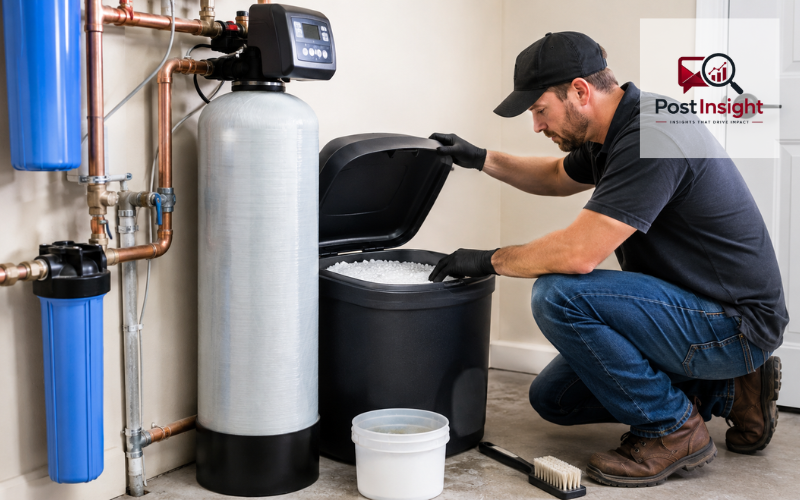
Water softener maintenance means taking care of your water softener so it can keep removing hardness minerals from your home’s water. In simple words, it is the routine of checking the salt, cleaning the tank, watching for problems, and making sure the system can regenerate properly.
A water softener works quietly in the background, but it still needs basic care. Without maintenance, salt can harden inside the brine tank, mineral buildup can coat the resin bed, and small parts can become clogged. Over time, this may allow hard water to return, which can leave spots on dishes, make laundry feel stiff, reduce soap lather, and create scale inside plumbing and appliances.
The good news is that water softener maintenance is not difficult. Most homeowners can handle the basic tasks with a simple routine. In this guide, you will learn what maintenance includes, how often to do it, how to check salt levels, how to deal with salt bridges and salt mushing, when to clean the brine tank, how resin cleaner helps, what DIY tasks are safe, what professional service may cost, and when it makes sense to search for water softener maintenance near me.
| Maintenance Task | How Often | Why It Matters |
| Check salt level | Every 4–6 weeks | Keeps enough brine available for regeneration |
| Inspect for salt bridges | Monthly | Prevents salt crusts from blocking brine formation |
| Look for salt mushing | Monthly | Stops thick salt sludge from clogging the tank |
| Clean venturi valve | Every 6 months | Helps the system pull brine correctly |
| Flush resin bed | Every 6–12 months | Removes iron, minerals, and buildup from resin beads |
| Deep clean brine tank | Every 1–3 years | Removes sludge, dirt, and bacteria buildup |
| Call a service | When problems continue | Helps fix leaks, error codes, high water level, or hard water issues |
Water softener maintenance includes the small checks and cleaning tasks that help your system keep working as it should. A salt-based water softener depends on a brine tank, salt, resin beads, a control valve, a nozzle or venturi valve, and a drain line. Each part plays a role in softening water and cleaning the system during regeneration.
The brine tank holds salt and water. This creates the brine solution that helps recharge the resin beads. The resin bed is where hardness minerals such as calcium and magnesium are removed from the water. The venturi valve helps pull brine into the resin tank during the regeneration cycle. The drain line carries wastewater away after the cleaning process.
Maintenance is important because one small issue can affect the entire system. For example, if salt forms a hard crust, the water may not reach enough salt to make brine. Without proper brine, the resin bed cannot recharge well, and hard water may start flowing through your home again. Manufacturers and water treatment brands often point to salt bridges as a common reason a softener stops working properly.
Regular maintenance helps your water softener do its job more consistently. When the system is clean and the salt level is correct, it can regenerate properly and keep reducing hardness minerals from your water.
This matters because hard water can affect many parts of daily life. You may notice cloudy glasses, white spots on faucets, dry-feeling skin, dull laundry, or soap that does not lather well. Over time, mineral buildup can also collect inside pipes, water heaters, dishwashers, and washing machines.
A well-maintained softener helps reduce these problems. It supports better cleaning, helps appliances run with less scale, and may extend the useful life of the softener itself. Many modern salt-based systems are designed to be low-maintenance, but “low-maintenance” does not mean “no maintenance.” A few regular checks can prevent bigger problems later.
A simple water softener maintenance checklist can help you stay organized. You do not need to inspect every part every week. The goal is to build a light routine that catches problems early.
Start by checking the salt level in the brine tank. Then look for salt bridges, which are hard crusts that form over the water line, and salt mushing, which is thick sludge at the bottom of the tank. Check the water level inside the brine tank as well. Some water is normal in many systems, but a tank that looks too full may point to a clog, drain problem, or brine draw issue.
You should also clean the venturi valve when needed, flush the resin bed with a cleaner, and deep clean the brine tank from time to time. Finally, watch your water. If dishes become cloudy, soap stops lathering well, or laundry feels stiff again, your system may need attention.
Many homeowners like to keep a water softener maintenance checklist as a note on their phone, printed page, or water softener maintenance PDF. This makes it easier to remember dates, salt refills, cleaning, and any symptoms you notice.
A clear water softener maintenance schedule keeps the process simple. For most homes, checking the salt level every 4 to 6 weeks is a good starting point. Some households may need to check more often if they use a lot of water, have very hard water, or own an older system.
Once a month, open the brine tank and look for salt bridges or salt mushing. Use a broom handle or wooden rod gently to test whether the salt is loose or hardened. Do not hit the tank walls with force, because you could damage the tank.
Every 6 months, clean the nozzle and venturi valve if your model has an accessible one. This helps keep brine moving properly. Every 6 to 12 months, use a resin bed cleaner, especially if you have well water or iron in your water. Every 1 to 3 years, deep clean and sanitize the brine tank. Some tanks need cleaning sooner if low-quality salt leaves a lot of sludge.
This schedule is a general guide. Always compare it with your owner’s manual because different brands and models can have different instructions.
Salt is one of the most important parts of water softener maintenance. Without enough salt, the system cannot make the brine needed to recharge the resin bed. As a general rule, keep the salt level above the water level in the brine tank. Many homeowners aim to keep the tank around one-third to two-thirds full, depending on the size of the tank and the system’s design.
Do not let the salt run completely empty for long periods. If the system regenerates without enough salt, the resin may not be properly cleaned. This can allow hard water to return.
Choosing the right salt also matters. Evaporated salt pellets are often a cleaner choice because they usually dissolve more evenly and leave less residue than lower-grade rock salt. Rock salt may be cheaper, but it can contain more insoluble material, which may settle at the bottom of the brine tank and create sludge. Some guides also note that lower-purity salt can make brine tank cleaning necessary more often.
Before changing salt type, check your manual. Some systems work best with pellets, while others may allow crystals or cubes.
Salt bridges and salt mushing are two of the most common problems inside a brine tank. They are simple issues, but they can stop your water softener from working correctly.
A salt bridge happens when salt forms a hard crust across the tank. The top may look full, but there can be an empty space below the crust. Water stays underneath, but it cannot reach enough salt to form strong brine. When this happens, the resin bed cannot recharge properly, and your water may feel hard again.
Salt mushing is different. It happens when dissolved salt turns into a thick paste or sludge at the bottom of the tank. This paste can block water flow and clog the brine well or tank drains.
To inspect for these problems, open the tank lid and gently press into the salt with a broom handle or wooden rod. If you hit a hard layer, you may have a bridge. Break it gently so the salt falls into the water. If you find thick paste at the bottom, scoop it out carefully. If salt mushing keeps coming back, consider using better-quality salt and cleaning the tank more often.
The brine tank does not need constant cleaning, but it should not be ignored. Over time, salt residue, dirt, and sludge can collect at the bottom. This buildup may affect water flow and make the system less efficient.
A good time to clean the brine tank is when the salt level is already low. First, put the system in bypass mode or turn off the water supply according to your manual. Unplug the unit if the instructions recommend it. Remove leftover salt and water from the tank. A small scoop, bucket, or wet/dry vacuum can make this easier.
Next, remove the brine grid if your tank has one. Wash the inside of the tank with warm water and mild dish soap. Use a long-handled brush to loosen sludge at the bottom. Rinse the tank well before refilling it.
Some homeowners also sanitize the tank with a small amount of household bleach diluted in water. If you do this, follow your manual and rinse until no bleach smell remains. Pentair’s brine tank cleaning guidance also recommends turning off the water, removing salt and brine, cleaning with soap and water, and adding fresh salt afterward.
The nozzle and venturi valve are small parts, but they can make a big difference. The venturi valve helps create suction so the system can pull brine from the brine tank into the resin tank during regeneration. If it becomes clogged with sediment, dirt, or salt residue, the softener may not draw brine properly.
Signs of a clogged venturi valve may include hard water after regeneration, too much water in the brine tank, salt not being used, or weak system performance. Some systems may also show an error code.
To clean it, make sure the system is not in an active regeneration cycle. Follow your manual to remove the cap and take out the screen and venturi parts. Wash the pieces in warm, soapy water and use a soft brush if needed. Be gentle because small seals, screens, and O-rings can be easy to lose or damage. Reassemble everything in the correct order and hand-tighten the cap.
If you are unsure how to access this part, do not force it. Some newer models are designed differently, and forcing parts can cause leaks.
The resin bed is where the real softening happens. It contains small resin beads that attract hardness minerals from the water. During regeneration, brine helps clean these beads so they can keep working.
Over time, resin beads can become coated with iron, manganese, sediment, or organic material. Regular salt may not remove all of this buildup. When the resin is coated, the softener may still run, but the water may not feel as soft as before.
A resin bed cleaner can help restore performance. Most cleaners are poured into the brine well or brine tank, then followed by a manual regeneration cycle. This pulls the cleaner through the resin bed and helps remove buildup.
Homes on well water may need resin cleaning more often because well water can contain more iron, manganese, or sediment. If your water has heavy iron, a pre-filter or iron filter may also be needed before the softener. A water softener is helpful, but it should not be forced to handle every water problem by itself.
Many water softener maintenance DIY tasks are safe for homeowners. Checking salt, breaking a salt bridge, cleaning the brine tank, adding resin cleaner, and watching for symptoms are usually simple. These tasks do not require advanced plumbing knowledge if you follow the manual and work carefully.
DIY maintenance is often enough when the system is working normally and you are simply keeping it clean. It can also save money because you only need salt, cleaner, and basic supplies.
A professional water softener maintenance service is safer when the problem is harder to identify. Call a technician if the system shows repeated error codes, the brine tank stays full of water, the unit does not use salt, water remains hard after regeneration, or you notice leaks around the control valve.
Professional service is also useful for older systems. If your softener has not been serviced in years, a technician can test the water, inspect the control valve, check the drain line, test brine draw, and decide whether the resin is still in good condition.
Water softener maintenance cost depends on what needs to be done. Basic DIY care is usually affordable. Your main costs are salt, resin cleaner, mild cleaning supplies, and possibly a small brush or wet/dry vacuum if you want easier tank cleaning.
Professional service costs more because it may include inspection, cleaning, water testing, valve checks, and repair work. Cost can vary by location, system size, brand, water quality, and whether parts are needed. HomeGuide reports that a water softener service call and inspection can cost around $40 to $100 before repair parts, while repair costs often range higher depending on the issue.
Simple maintenance is almost always cheaper than waiting for a major repair. A clogged valve, damaged resin bed, or neglected brine tank can become more expensive than routine care. Good maintenance also helps you decide whether a system is worth repairing or whether it may be time to replace it.
Searching for water softener maintenance near me makes sense when normal DIY steps do not fix the problem. If your water still feels hard after regeneration, the issue may be more than low salt. The system may not be drawing brine, the resin bed may be coated, the drain line may be blocked, or the control valve may not be working correctly.
A high water level in the brine tank is another sign that professional help may be needed. Some standing water can be normal, depending on the system, but a tank that looks unusually full may point to a clogged injector, blocked drain, kinked brine line, or failed valve. Recent troubleshooting guides also note that kinks, clogs, loose fittings, and drain line problems can interfere with proper brine movement.
You should also call for service if your system shows error codes, leaks, strange noises, or repeated regeneration problems. If the unit is older and has never been inspected, a local technician can check whether maintenance is enough or whether the system is near the end of its useful life.
Online advice can be useful, especially when you want to understand common homeowner experiences. Water softener maintenance Reddit discussions may show real problems people have faced, such as salt bridges, brine tank water issues, or confusion about salt types.
However, online advice should be used carefully. A solution that worked for one person may not match your model, water quality, or plumbing setup. Your owner’s manual should always be the first guide. Local water conditions also matter. A home with city water may not need the same maintenance as a home with well water, iron, or heavy sediment.
When reading forums or Reddit threads, compare the advice with your model’s instructions. Avoid tips that involve forcing parts, bypassing safety steps, mixing chemicals, or changing settings without understanding what they do. Online advice can help you ask better questions, but it should not replace professional service when the system has leaks, electrical issues, repeated error codes, or brine draw problems.
Water softener maintenance does not have to be complicated. A simple routine can help prevent hard water problems, protect your plumbing, and keep your system working longer. The most important steps are checking salt levels, watching for salt bridges or salt mushing, cleaning the brine tank when needed, flushing the resin bed, and paying attention to changes in water quality.
If you stay consistent, most problems can be caught early. A few minutes every month can help you avoid cloudy dishes, stiff laundry, weak soap lather, and mineral buildup around fixtures. It can also help reduce the chance of costly repairs later.
For many homeowners, DIY care is enough for regular upkeep. But if your water still feels hard, the brine tank water level looks wrong, the system shows error codes, or the unit has not been serviced in years, it is smart to call a professional. Good water softener maintenance is not about doing too much. It is about doing the right small tasks at the right time so your system can keep giving your home better water every day.
Most homeowners should check salt every 4–6 weeks, inspect for salt bridges monthly, clean the venturi valve every 6 months, and deep clean the brine tank every 1–3 years.
Poor maintenance can cause salt bridges, clogged parts, weak regeneration, hard water stains, stiff laundry, poor soap lather, and possible mineral buildup inside plumbing and appliances.
Yes, basic tasks like checking salt, breaking salt bridges, cleaning the brine tank, and adding resin cleaner are usually DIY-friendly if you follow your system’s manual.
Call a service if the water still feels hard, the brine tank has too much water, the system shows error codes, salt is not being used, or leaks appear.
DIY maintenance usually costs less because you mainly buy salt, resin cleaner, and cleaning supplies. Professional service costs more and depends on location, system condition, and repair needs.
Disclaimer: This article is for general informational purposes only. Water softener models can vary, so always follow your manufacturer’s manual. For leaks, electrical issues, error codes, or ongoing hard water problems, contact a qualified water treatment professional.