
 11
11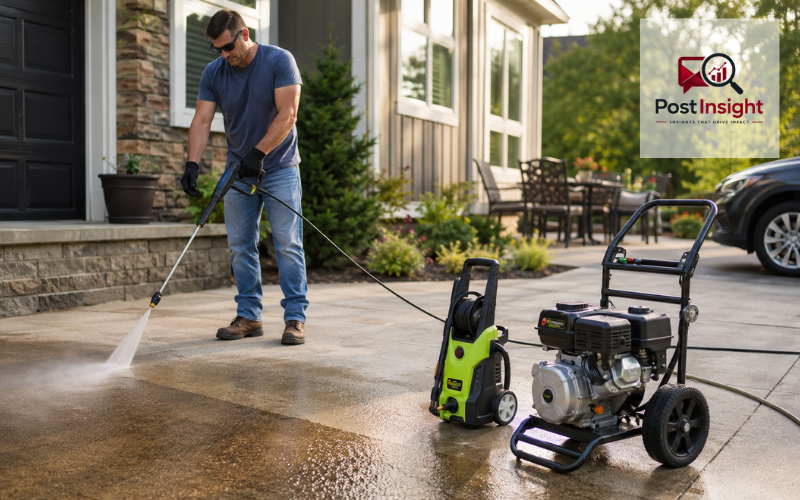
A pressure washer is a cleaning machine that uses a strong stream of water to remove dirt from outdoor surfaces. Instead of scrubbing for hours with a brush and bucket, a pressure washer pushes water through a narrow spray tip at high speed. This makes it easier to clean mud, grime, mold, grease, loose paint, stains, and built-up dirt from surfaces around the home.
People use pressure washers for many common jobs, including washing cars, cleaning patios, refreshing driveways, rinsing decks, removing dirt from siding, and cleaning outdoor furniture. A good pressure washer can save time, reduce effort, and make old surfaces look much cleaner.
But choosing the right pressure washer matters. Too little power may leave dirt behind, while too much pressure can damage paint, wood, windows, tires, and softer surfaces. The best machine is not always the most powerful one. It is the one that matches your cleaning task, your comfort level, and the surfaces you plan to clean.
| Need | Best Pressure Washer Type | Why It Works Best |
| Cars and outdoor furniture | Electric pressure washer | Easy to use, gentle enough, and low maintenance |
| Large driveways and concrete | Gas pressure washer | More power and faster cleaning |
| Light cleaning while traveling | Cordless pressure washer | Portable and useful where outlets are not available |
| One-time deep cleaning | Pressure washer rental | Saves money if you rarely need one |
| Regular home cleaning | Buy an electric model | Convenient, quiet, and easy to store |
There are three common types of pressure washers: electric, gas, and cordless battery models. Each one works differently and is suitable for different cleaning needs.
An electric pressure washer is usually the best choice for regular home cleaning. It plugs into a power outlet and is often used for cars, patios, small driveways, fences, siding, and outdoor furniture. It is simple to start, easier to store, and usually quieter than a gas model.
A gas pressure washer is built for heavier work. It runs on fuel and is usually stronger than an electric machine. This type is useful for large concrete driveways, heavy stains, farm areas, construction cleanup, and jobs where you need more cleaning power.
A cordless or battery pressure washer is made for light and quick cleaning. It is easy to carry and can be useful for bicycles, camping gear, small garden tools, and areas where you do not have a nearby outlet. However, most cordless models have lower pressure and limited battery life, so they are not the best choice for deep cleaning.
For most home users, an electric pressure washer is enough. For renters, occasional users, or people who only need a machine once or twice a year, pressure washer rental may be more practical. For heavy-duty cleaning, gas models are usually the better option.
A pressure washer electric model is a smart choice for many homeowners because it is simple, clean, and easy to manage. You plug it in, connect the garden hose, attach the right nozzle, and start cleaning. There is no fuel to store, no engine oil to change, and no exhaust fumes to worry about.
Electric pressure washers work well for washing cars, rinsing outdoor furniture, cleaning patios, removing light dirt from siding, and refreshing small driveways. Many models are compact enough to store in a garage, shed, or utility room. They also tend to be quieter, which is helpful if you live in a neighborhood where noise matters.
The main limitation is the power cord. You need access to an outdoor outlet, and the cord can limit how far you can move. Electric models are also usually less powerful than gas machines, so they may take longer on large concrete areas or deep stains. Still, for regular home cleaning, an electric pressure washer offers a good balance of power, price, and convenience.
A pressure washer gas model is designed for stronger cleaning jobs. Because it does not need to stay plugged into an outlet, it gives you more movement around large outdoor spaces. This makes it useful for long driveways, big patios, farm equipment, commercial areas, and surfaces with old dirt or deep stains.
Gas pressure washers usually offer higher PSI and GPM than most electric models. PSI means water pressure, while GPM means water flow. Together, these numbers affect how quickly and strongly the machine cleans. Lowe’s describes light-duty pressure washers as up to 1,899 PSI, medium-duty models as 1,900 to 2,788 PSI, heavy-duty models as 2,800 PSI at 2 GPM or more, and commercial models as starting around 3,100 PSI.
The extra power is useful, but it also comes with more responsibility. Gas machines are louder, heavier, and need regular maintenance. You may need to check fuel, oil, spark plugs, filters, and winter storage steps. They also produce exhaust, so they should only be used outdoors in well-ventilated areas.
A gas pressure washer is a good choice when cleaning speed and high power matter more than quiet operation and simple storage.
Many people search for a pressure washer Honda engine because Honda engines have a strong reputation in outdoor power equipment. In gas pressure washers, the engine is one of the most important parts of the machine because it powers the pump that creates water pressure.
Honda lists pressure washer engine models such as GX120, GX160, GX200, and GC160 for pressure washer applications, with GX models often positioned for commercial use. This is one reason some buyers prefer a pressure washer with a Honda engine when they want durability, easier starting, and dependable power.
A Honda-powered pressure washer may be a good option for homeowners with frequent heavy cleaning tasks, contractors, detailers, property managers, or anyone who wants a gas machine built for long-term use. However, the engine brand is only one part of the machine. You should also check the pump quality, hose length, frame strength, nozzle set, warranty, and overall cleaning power.
When comparing pressure washers, two numbers matter more than almost anything else: PSI and GPM.
PSI stands for pounds per square inch. It tells you how strong the water pressure is. Higher PSI means the water hits the surface with more force. This can help remove stubborn dirt, but it can also increase the risk of surface damage if used carelessly.
GPM stands for gallons per minute. It tells you how much water the machine moves. Higher GPM helps rinse dirt away faster. A machine with good flow can often clean large areas more quickly than a machine with high pressure but low water volume.
For cars, outdoor furniture, and light cleaning, you usually do not need very high pressure. For patios, siding, and fences, a medium-duty machine often works well. For concrete, old stains, and larger jobs, a stronger gas model may save time. The goal is not to buy the highest PSI possible. The goal is to match the machine to the surface.
A pressure washer can be very useful around the home when it is used carefully. One of the most common uses is washing cars. For vehicles, it is better to use a wider spray pattern, keep the nozzle away from the paint, and avoid spraying directly at tires, badges, sensors, or damaged paint.
Concrete driveways and walkways can also benefit from pressure washing because they collect dirt, tire marks, algae, and weather stains. A surface cleaner attachment can make this job easier because it spreads the water evenly and reduces streaks.
Patios and decks can be cleaned with a pressure washer, but the pressure must be controlled. Wood is softer than concrete, so too much force can leave marks or lift fibers from the surface. Siding, fences, garden tools, trash bins, and outdoor furniture can also be cleaned, but each surface needs the right distance, nozzle, and detergent.
The most important rule is simple: start gently. Test a small hidden area first, then increase pressure only if needed.
Pressure washer rental makes sense if you only need the machine for one project. For example, if you want to clean a driveway once before selling a home, renting may cost less than buying and storing a machine. Home Depot offers pressure washer rental options for jobs such as driveways, decks, and siding, including gas and electric models with pickup or delivery depending on location.
Buying is better if you clean regularly. If you wash your car often, maintain a patio, clean siding every season, or have a large driveway, owning a pressure washer can be more convenient. You can use it whenever needed without rental deadlines or transport issues.
The choice depends on cost, storage space, cleaning frequency, and comfort. Renting gives you access to a stronger machine without long-term ownership. Buying gives you convenience and can save money over time if you use it often.
Many buyers compare pressure washer Home Depot options, pressure washer Lowe’s options, pressure washer Harbor Freight models, and pressure washer Ryobi products before making a decision. These stores often carry different brands, price ranges, accessories, and rental choices.
Home Depot is commonly searched because it sells many homeowner and contractor models and also offers rental options in many areas. Lowe’s provides pressure washer categories and buying guidance, including information about PSI ranges for light, medium, heavy-duty, and commercial machines. Harbor Freight carries both electric and gasoline pressure washers, including models listed up to 4,400 PSI, along with pressure washer accessories.
Ryobi is another popular name, especially among homeowners who already use Ryobi tools. However, buyers should check current recall notices before buying used or older models. In 2025, the U.S. Consumer Product Safety Commission announced a recall involving certain Ryobi brushless electric pressure washers, including models RY142300, RY142300VNM, and RY142711VNM, because of a projectile hazard. Ryobi also lists recall information on its official website, including affected pressure washer models sold through Home Depot and Direct Tools Factory Outlet from July 2017 through June 2024.
Before choosing a store or brand, compare pressure, water flow, warranty, accessories, replacement parts, return policy, and safety information.
A pressure washer is more useful when you understand its accessories. The nozzle controls the spray pattern. A narrow nozzle creates a stronger stream, while a wider nozzle spreads the water over a larger area. Wider spray patterns are usually safer for cars, siding, and delicate surfaces.
A foam cannon or detergent tank can help when washing cars, patio furniture, or oily surfaces. Detergent loosens dirt before rinsing, which can reduce the need for high pressure. Always use a cleaner made for pressure washers, because the wrong product can damage the pump or surface.
A surface cleaner attachment is helpful for driveways, sidewalks, and patios. It looks like a round cleaning head and helps clean flat surfaces more evenly. An extension wand can help reach higher siding or awkward areas, while a longer hose gives more movement without dragging the machine around.
Not every accessory is necessary. For most home users, the most useful items are the correct nozzles, a good hose, a detergent option, and a surface cleaner if you have a lot of flat concrete.
A pressure washer can cause injury if it is used carelessly. The water may look harmless, but the force can cut skin or push dirt and bacteria into a wound. The CDC warns that pressure washer injuries can be serious and gives wound-care guidance for people hurt by these machines.
Never spray people, pets, or your own hands and feet. Wear closed shoes, eye protection, and clothing that protects your skin. Keep children and pets away from the cleaning area.
Before starting, connect the garden hose and squeeze the trigger until water flows smoothly. This helps remove air from the line. Running a pressure washer without proper water flow can damage the pump.
Use the right nozzle for the surface. Keep a safe distance from car paint, tires, windows, siding, and wood. It is better to start farther away and move closer slowly than to start too close and cause damage.
One of the biggest mistakes is using too much pressure on car paint. A pressure washer can remove dirt quickly, but it can also chip weak paint, force water into seals, or damage trim if used incorrectly. Always use a wide spray pattern and keep the wand moving.
Another mistake is holding the nozzle too close to the surface. This can leave lines in wood, remove paint from siding, damage mortar, or create marks on softer materials. The closer the nozzle is, the stronger the impact.
Using the wrong detergent can also cause problems. Some cleaners are too harsh for painted surfaces, plants, or pressure washer pumps. Always read the label and rinse nearby plants before and after using detergent.
Old wood, loose paint, cracked concrete, and damaged siding need extra care. Pressure washing does not fix weak surfaces; it can make damage more visible. Running the pump without water is another serious mistake because it can overheat and ruin the machine.
The best pressure washer is the one that fits your real cleaning tasks. Start by asking what you plan to clean most often. If your main jobs are cars, patio furniture, small patios, and light home cleaning, an electric pressure washer is usually enough.
If you need to clean large concrete areas, heavy stains, farm tools, or commercial spaces, a gas pressure washer may be a better fit. It will usually clean faster, but it will also need more maintenance and storage care.
If you only need a machine once or twice, pressure washer rental may be the smartest choice. It gives you access to a capable machine without buying, storing, or maintaining it.
Also consider your budget, storage space, hose length, power source, water supply, and comfort level. A powerful machine is not helpful if it is too heavy, too loud, or too difficult for you to use safely. Choose a model that gives enough cleaning power without making the job harder than it needs to be.
A pressure washer can make outdoor cleaning faster, easier, and more satisfying, but the right choice depends on your surface, cleaning frequency, and power needs. Electric models are great for everyday home use. Gas models are better for heavy-duty cleaning. Cordless models are useful for quick, light jobs. Rental can be the best option when you only need a machine for a short time.
Before buying, compare PSI, GPM, accessories, safety features, maintenance needs, and warranty support. Think about what you will actually clean, not just the highest number on the box.
The best pressure washer is not always the biggest or most expensive one. It is the machine that cleans your surfaces safely, fits your budget, and helps you get the job done with confidence.
A pressure washer is used to clean outdoor surfaces such as cars, patios, driveways, decks, siding, fences, garden tools, and outdoor furniture by removing dirt, grime, mold, mud, and stains.
Yes, an electric pressure washer is usually best for everyday home cleaning because it is quieter, easier to maintain, simple to store, and powerful enough for cars, patios, furniture, and small driveways.
A gas pressure washer is better for heavy-duty cleaning, large concrete areas, and deep stains. However, it is louder, heavier, and needs more maintenance than an electric pressure washer.
Rent a pressure washer if you only need it for one project. Buy one if you clean your car, patio, driveway, siding, or outdoor furniture regularly throughout the year.
Yes, a pressure washer can damage car paint, wood, windows, siding, and tires if the pressure is too high or the nozzle is held too close to the surface.
Disclaimer: This article is for general informational purposes only. Pressure washer performance, safety needs, prices, rental options, and product availability may vary by brand, store, and location. Always read the manufacturer’s instructions before using any pressure washer.


