
 11
11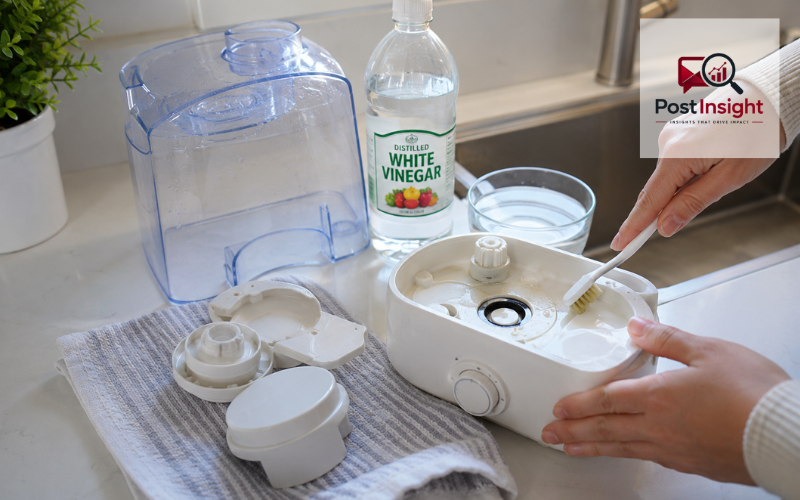
White vinegar for cleaning humidifier is a simple and natural way to remove mineral buildup, light odor, and everyday residue from a humidifier. Many humidifiers collect white crust, slimy film, or stale smells over time, especially when tap water is used often. White vinegar helps loosen these deposits so the machine can stay cleaner and work more smoothly.
Humidifiers add moisture to indoor air, but they also hold water for long periods. When water sits inside the tank or base, minerals, dust, and bacteria can build up. This is why regular cleaning is important. White vinegar is commonly used because it is affordable, easy to find, and effective for breaking down limescale without using harsh chemicals.
However, vinegar must be used the right way. It should be used for soaking, wiping, and descaling the humidifier parts, not for running through the machine. You should never turn on a humidifier while vinegar is inside because it can send acidic mist into the air. After cleaning, every part should be rinsed well and dried completely before the humidifier is used again.
| Cleaning Point | Best Practice |
| Best vinegar to use | Plain distilled white vinegar |
| Main use | Removing mineral scale, odor, and light buildup |
| Safe method | Soak, scrub gently, rinse, and dry |
| Avoid | Running vinegar through the humidifier |
| Deep cleaning | Once a week during regular use |
| Best prevention | Use distilled water and empty the tank daily |
White vinegar works well because it has natural acidity. This acidity helps soften and loosen the hard white mineral deposits that often appear inside a humidifier. These deposits usually come from tap water, which can contain minerals such as calcium and magnesium. When the water evaporates or turns into mist, the minerals can stay behind as crusty white buildup.
This buildup is common around the tank opening, base reservoir, mist nozzle, and heating or ultrasonic parts. If it is not cleaned, it can make the humidifier look dirty and may also affect how well the mist comes out. White vinegar helps dissolve this crust so it can be scrubbed away more easily with a soft brush or cloth.
Vinegar can also help reduce stale smells caused by old water. If a humidifier is left with water inside for too long, it may start to smell musty. Cleaning with vinegar helps freshen the tank and base, but it should still be followed by a full rinse. A humidifier should never smell strongly like vinegar when it is put back into use.
The safest way to use white vinegar for cleaning humidifier parts is to start by unplugging the unit. Never clean a humidifier while it is connected to power. Once it is unplugged, empty all old water from both the tank and the base. Stagnant water should not be reused because it may contain minerals, dust, or germs.
Vinegar should only be used while the humidifier is off and disassembled. Pour it into the areas that need cleaning, let it sit for a short time, and then scrub gently. It is not meant to be used as a misting liquid. Running a humidifier with vinegar inside can spread a strong acidic vapor into the room, which may irritate your eyes, throat, nose, and lungs.
After using vinegar, rinsing is very important. Rinse the tank, base, and removable parts several times with clean water. The vinegar smell should be completely gone before you use the humidifier again. If any vinegar remains, it may create an unpleasant smell or irritation when the machine runs.
Before you start, gather everything you need so the cleaning process is simple and safe. Plain distilled white vinegar is the best choice because it is simple and does not contain added scents or unnecessary ingredients. You will also need clean water for rinsing after the vinegar soak.
A soft brush or old toothbrush is useful for cleaning corners, small openings, and areas with mineral buildup. Avoid using a hard metal brush because it can scratch or damage delicate humidifier parts. A microfiber cloth can help wipe the tank, base, and outside surfaces without leaving lint behind.
You should also keep a clean towel nearby. After rinsing, place all humidifier parts on the towel and allow them to air dry. Drying is important because moisture left inside the unit can lead to more odor or buildup later.
Start by turning off and unplugging the humidifier. Remove the water tank from the base and take off any detachable parts, such as the tank cap, mist nozzle, tray, or filter if your model has one. Always check the user manual if you are unsure which parts can be removed.
Pour out any old water from the tank and base. Then add white vinegar to the base reservoir, using enough to cover the areas with visible mineral scale. If your humidifier has an ultrasonic plate or heating element, make sure the vinegar touches the buildup around that area, but avoid spilling liquid into vents or electrical sections.
For the water tank, add one to two cups of white vinegar, close the cap, and gently shake or swish it around. This helps coat the inside walls of the tank. Let both the tank and base soak for about 20 to 30 minutes. If smaller parts have white crust, place them in a small bowl with warm water and a little vinegar.
After soaking, use a soft toothbrush or cloth to loosen the buildup. Scrub gently around corners, openings, and the base. Do not use too much force on delicate parts. Once the buildup is removed, pour out the vinegar carefully. When emptying the base, pour away from any fan vents so water does not enter the electrical area.
Rinse all parts several times with clean water. Keep rinsing until the vinegar smell is gone. Finally, place the parts on a clean towel and let them dry completely before reassembling the humidifier.
Cleaning a cool mist humidifier with vinegar is slightly different because many cool mist models have an ultrasonic plate or small misting area that needs careful handling. These parts can collect mineral scale quickly, especially if the humidifier is filled with tap water.
Focus on the tank, base, mist nozzle, and ultrasonic plate. Add vinegar only to the water-holding areas, not to the fan vent or motor area. Let the vinegar sit long enough to soften the buildup, then use a soft brush to clean around the plate and corners. Be gentle because ultrasonic parts can be sensitive.
After cleaning, rinse the base carefully without flooding electrical areas. The tank can usually be rinsed more freely, but the base should be handled with more care. Allow everything to dry fully before using the machine again. This helps prevent moisture from staying trapped inside.
No, you should not run vinegar through a humidifier to clean it. This is one of the most important safety points to understand. Vinegar is useful when it is used for soaking and wiping, but it should not be turned into mist and released into the air.
Running vinegar through a humidifier can spread acidic mist around the room. This mist may irritate your eyes, nose, throat, and lungs. It can also leave a strong smell in the room and may not be safe for children, pets, or people with breathing sensitivity.
The proper method is to unplug the humidifier, clean it manually, rinse it fully, and dry it before use. If you see advice online that says to run vinegar through the machine, avoid that shortcut. It is safer to clean the parts by hand while the humidifier is off.
Vinegar in a humidifier is not dangerous when it is used correctly for cleaning. It becomes risky when it is used the wrong way. Soaking the tank or base with vinegar while the machine is unplugged is generally a safe cleaning method. Running the humidifier with vinegar inside is not safe.
Another major danger is mixing vinegar with bleach. Vinegar and bleach should never be mixed because the combination can create toxic chlorine gas. If you use vinegar first and later choose to sanitize with another product, rinse every part completely before using anything else. Never combine cleaners in the tank or base.
Vinegar can also be irritating if it is not rinsed away properly. Even after cleaning, the humidifier should not smell strongly like vinegar. A clean water rinse and full drying process help make sure the unit is safe and ready to use again.
The best white vinegar for cleaning humidifier parts is plain distilled white vinegar. It is simple, affordable, and effective for loosening mineral scale. You do not need a fancy or expensive product for regular cleaning.
Avoid scented vinegar, flavored vinegar, or vinegar products that contain extra additives. Some cleaning vinegars may be stronger than regular white vinegar, so they should only be used if the humidifier manual allows it and if they do not contain harsh added chemicals. For most homes, basic distilled white vinegar is enough.
Common store options, including CVS-style basic white vinegar, can work well as long as the product is plain white vinegar. Always read the label before using it. The simpler the vinegar, the better it usually is for humidifier cleaning.
Many people search for white vinegar for cleaning humidifier Reddit advice because they want real user experiences. Reddit discussions often mention vinegar as a helpful solution for mineral buildup, white crust, and odor. This advice can be useful, especially when people share practical cleaning tips for similar humidifier models.
However, community advice should be used carefully. Not every tip online is safe for every humidifier. Some users may recommend shortcuts, such as running vinegar through the machine, but that should be avoided. The safest approach is to follow your humidifier’s manual first and use vinegar only for soaking, wiping, and descaling.
Reddit can be helpful for learning what worked for others, but it should not replace basic safety rules. If a tip sounds risky, involves mixing cleaners, or tells you to run vinegar as mist, it is better not to follow it.
A humidifier should be rinsed daily when it is used often. Daily rinsing helps remove old water and reduces the chance of odor or slimy buildup. You do not need to deep clean with vinegar every day, but you should empty the tank and base regularly.
A deeper clean with white vinegar once a week is a good routine during heavy-use seasons. This is especially helpful in winter or dry weather when the humidifier may run for many hours each day. Weekly cleaning helps control mineral scale before it becomes thick and hard to remove.
If you use tap water, you may need to clean more often because tap water usually contains minerals. If you see white crust, cloudy residue, or smell stale water, clean the humidifier sooner. When the humidifier is not in use, empty it, rinse it, and let it dry instead of leaving water inside.
If you do not want to use vinegar, you can still clean your humidifier with warm water and mild dish soap for light cleaning. This can help remove dust, surface dirt, and some everyday residue. After using soap, rinse very well so no soap remains inside the tank or base.
For mineral buildup, some humidifier brands may recommend a specific descaling product. If your manual suggests one, follow the instructions carefully. Do not use random strong cleaners unless the manufacturer says they are safe for your model.
For sanitizing, follow the safe method in your humidifier manual. Some people use diluted bleach for disinfection, but it must never be mixed with vinegar. If you choose any sanitizing method, rinse thoroughly and allow all parts to dry fully before using the humidifier again.
One common mistake is running the humidifier with vinegar inside. This may seem like an easy cleaning shortcut, but it can spread acidic mist into the air. Always clean manually while the unit is unplugged.
Another serious mistake is mixing vinegar with bleach. This can create dangerous gas and should never be done. If you use one cleaner, rinse completely before using another, and only use products that are safe for your humidifier.
Some people also forget to rinse the tank properly after cleaning. If vinegar remains inside, the humidifier may smell unpleasant when turned on. Poor rinsing can also make the air uncomfortable. Always rinse until the vinegar smell is gone.
Leaving water sitting for days is another habit to avoid. Stagnant water can lead to odor, residue, and unwanted buildup. Scrubbing too harshly is also a problem because delicate parts can be scratched or damaged. A soft brush and gentle pressure are usually enough after the vinegar has had time to loosen the scale.
White vinegar for cleaning humidifier parts is a simple, affordable, and effective method when used correctly. It helps remove white mineral scale, light odor, and buildup from the tank, base, and mist outlets. For many homes, plain distilled white vinegar is enough to keep a humidifier cleaner and easier to maintain.
The most important rule is to use vinegar only during cleaning, not while the humidifier is running. Soak, scrub gently, rinse completely, and let the parts dry before using the machine again. Never mix vinegar with bleach, and never follow unsafe shortcuts that spread vinegar mist into the air.
For better long-term care, rinse your humidifier daily during regular use and deep clean it with vinegar once a week. Using distilled water can also reduce white crust and make cleaning easier. With the right routine, your humidifier can stay fresher, cleaner, and safer to use.
Yes, white vinegar is useful for cleaning humidifier parts because it helps loosen mineral scale, odor, and light buildup. Always rinse everything fully before using the humidifier again.
No, you should not run vinegar through a humidifier. It can release acidic mist into the air and may irritate your eyes, throat, and lungs.
Plain distilled white vinegar is the best option. Avoid scented vinegar, flavored vinegar, or products with added chemicals because they may leave residue or smells behind.
Deep clean your humidifier with vinegar once a week during regular use. You should also empty and rinse the tank daily to prevent odor and buildup.
You can use warm water and mild dish soap for light cleaning. For deeper cleaning or sanitizing, follow the humidifier manual and never mix different cleaners together.
Disclaimer: This article is for general informational purposes only. Always follow your humidifier manufacturer’s manual before cleaning, and never mix vinegar with bleach or other cleaning chemicals.


