
 11
11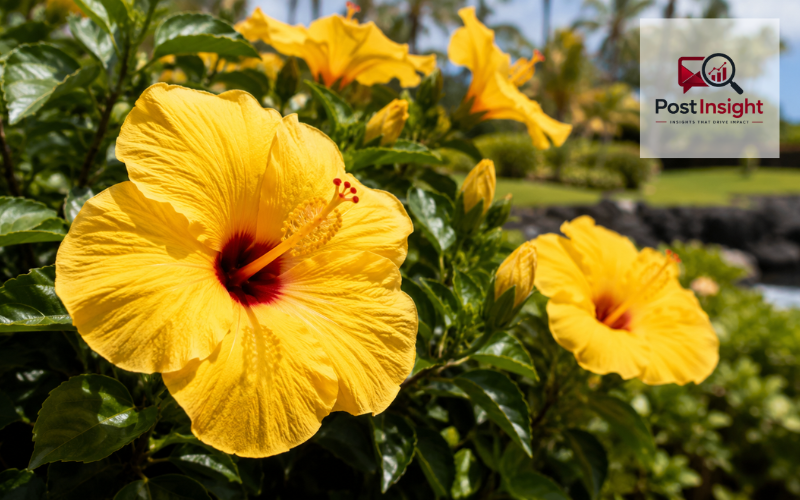
A yellow hibiscus is a warm-climate flowering shrub known for its large blooms, bright petals, and long central column of stamens. Its sunny color makes it a natural symbol of happiness and tropical beauty. The flower is strongly linked with Hawaii because the native maʻo hau hele is the official state flower, but many yellow hibiscus plants seen in gardens are cultivated tropical hybrids rather than the rare Hawaiian species.
The name can describe more than one plant. It may refer to Hawaii’s native yellow hibiscus, commonly called Hibiscus brackenridgei, or to yellow forms of tropical hibiscus sold under Hibiscus rosa-sinensis and related hybrid names. Most garden types need warmth, strong light, regular moisture, and freely draining soil. Their flowers may be lemon yellow, deep gold, or yellow with a red, orange, or maroon center.
Knowing which plant you have affects its care, mature size, cold tolerance, conservation value, and whether it should ever be used in food or tea.
| Feature | Quick Information |
| Scientific name | Hibiscus brackenridgei or yellow Hibiscus rosa-sinensis cultivars |
| Plant family | Malvaceae |
| Flower color | Pale yellow, golden yellow, or yellow with a red center |
| Sunlight | At least 6 hours of direct sunlight |
| Watering | Keep soil evenly moist but never waterlogged |
| Soil | Rich, loose, and well-draining |
| Climate | Warm tropical or subtropical conditions |
| USDA zones | Usually Zones 9–11 |
| Mature size | Around 4–15 feet, depending on variety |
| Main uses | Garden display, hedges, containers, and tropical landscaping |
| Safety | Do not use unidentified ornamental flowers for tea |
Yellow hibiscus plants belong to Malvaceae, the mallow family. This family also includes okra, cotton, and hollyhocks. The familiar garden plant is usually labeled Hibiscus rosa-sinensis, also known as Chinese or tropical hibiscus. It prefers rich, moist, well-drained soil and full sun to partial shade.
The yellow hibiscus scientific name connected with Hawaii is traditionally written as Hibiscus brackenridgei. That remains the name used in Hawaii law, state conservation material, and the U.S. endangered-species listing. However, Plants of the World Online now accepts Sabdariffa brackenridgei as the updated name and lists Hibiscus brackenridgei as a synonym following a 2025 taxonomic publication. Readers may therefore see both names in reliable sources.
Correct identification also prevents people from assuming that any hibiscus with yellow petals is suitable for tea or other edible uses.
Maʻo hau hele is the best-known Hawaiian name for the native yellow hibiscus. Hawaii law designates the native yellow hibiscus, also called pua aloalo or maʻo-hau-hele, as the state’s official flower. The plant is endemic to the Hawaiian Islands, meaning it occurs there naturally and is not native elsewhere.
In the wild, it grows as a spreading or upright shrub and may become a small tree. The U.S. Fish and Wildlife Service describes it as reaching about 5 meters, or 16 feet. Hawaiian propagation information places it mainly in dry forests and shrublands, although habitat differs among populations and subspecies.
Maʻo hau hele is federally listed as endangered wherever found. Habitat loss, invasive plants, fire, browsing animals, and small separated populations have contributed to its vulnerability. It is safer to describe the species as endangered than to repeat uncertain wild-population numbers that can quickly become outdated.
A yellow flowering shrub in a hotel garden or ordinary nursery is not automatically maʻo hau hele. Most are tropical cultivars bred for frequent blooms, compact growth, or unusual colors.
The classic yellow hibiscus flower has five broad petals arranged around a long staminal column. Some blooms are yellow from edge to center, while others have a red or maroon throat. A single flower may last only a short time, but a healthy plant can continue producing buds through warm weather.
Maʻo hau hele can become a large, loosely branched shrub or small tree. Tropical garden hibiscus commonly reaches about 4 to 12 feet, depending on the cultivar, climate, pruning, and space. Container plants stay smaller because their roots are restricted and their shape is easier to control.
Modern cultivars range from pale cream-yellow to deep gold. Petals may be smooth, ruffled, doubled, or marked with orange, pink, or red. “Lilikoi Yellow” is one documented Hibiscus rosa-sinensis cultivar, although many modern garden hibiscus are complex hybrids.
Because names may be reused or misspelled online, check the plant label, mature size, and scientific name rather than relying only on a flower photo.
The yellow hibiscus meaning is commonly linked with happiness, warmth, friendship, welcome, and cheerful beauty. These ideas mainly come from the flower’s bright color and connection with sunny tropical places. They are symbolic interpretations, so meanings can differ between regions and occasions.
Hibiscus flowers are also associated with island hospitality, leis, celebrations, clothing prints, and tropical décor. In Hawaii, it is helpful to separate general hibiscus imagery from the special importance of maʻo hau hele as an endemic, endangered state flower.
A well-known Hawaiian custom uses a flower worn above the ear to communicate relationship status. The Hawaii Tourism Authority explains that a flower above the left ear, on the side of the heart, suggests the wearer has a significant other. A flower above the right ear commonly signals availability. The custom is not limited to yellow hibiscus, and social-media explanations sometimes oversimplify it.
As a gift, a yellow hibiscus can express joy, encouragement, affection, or appreciation.
The clearest yellow hibiscus flower benefits are ornamental. The blooms create a bright focal point, soften walls and fences, and add a tropical feeling to patios and courtyards. A larger shrub can work as an informal screen or flowering hedge, while a pruned plant can stand alone as a specimen.
Open hibiscus flowers may be visited by bees, butterflies, hummingbirds, and other flower-feeding wildlife, depending on the species and location. Simple flowers usually offer easier access than heavily doubled cultivars. Gardeners supporting native pollinators should still combine hibiscus with locally native plants rather than relying on one ornamental shrub.
Containers are useful in cold regions because the plant can spend summer outdoors and move inside before frost. They also allow gardeners to reposition the plant when wind, intense heat, or poor light becomes a problem.
Claims that an ornamental yellow hibiscus cures disease, burns fat, or guarantees medical results should be treated cautiously. Research involving one hibiscus species does not automatically apply to every yellow-flowering cultivar.
Most tropical yellow hibiscus plants perform best in warm, frost-free conditions. They are commonly grown outdoors year-round in USDA Zones 9 to 11, although the exact cultivar and local exposure affect cold tolerance. In colder climates, they are usually treated as summer patio plants or overwintered indoors. Extension guidance recommends moving tender tropical plants inside before nights become consistently chilly.
Give the plant strong light. About six or more hours of direct sun is a useful target, but indoor-grown plants should be introduced to full outdoor sun gradually. Some afternoon protection may help in very hot, dry areas. Too much shade often leads to fewer and smaller flowers.
The best soil holds moisture but releases extra water quickly. A loose mix with organic matter is usually better than heavy clay or dense potting soil. Tropical hibiscus prefers rich, moist, well-drained conditions.
Humidity supports tropical growth, but poor airflow and wet foliage can encourage disease. Strong wind may tear petals, dry the soil, and knock off buds.
Plant outdoors after frost danger has passed and the soil has warmed. Choose a sunny, sheltered position with enough room for the plant’s mature width. Dig a hole wider than the root ball but no deeper. Set the plant at its original soil level, backfill gently, water well, and add light mulch without piling it against the stem.
Spacing depends on whether the plant will be a specimen or hedge. Use the mature measurements on the cultivar label because yellow hibiscus varieties do not all grow to the same size.
For a container, choose a sturdy pot with open drainage holes. It should be only moderately larger than the root ball; an oversized pot may remain wet too long. Use fresh, free-draining potting mix rather than compact garden soil. Water until excess moisture drains from the bottom, then empty any full saucer.
Before moving the plant indoors for winter, inspect the leaves, stems, buds, and soil surface for pests. Place it near a bright south- or west-facing window or provide suitable supplemental light.
Water deeply enough to wet the root area, then allow the surface to begin drying before watering again. Do not follow a fixed daily schedule without checking the soil. Heat, wind, pot size, and indoor conditions all affect moisture use. Constantly soggy soil reduces oxygen around the roots, while repeated drought can cause yellow leaves and dropped buds.
Feed during active growth with a fertilizer labeled for flowering shrubs or container plants, following the package rate. Potted hibiscus often needs regular feeding because watering carries nutrients from the soil. Smithsonian guidance recommends feeding from spring through fall and reducing or stopping fertilizer during winter unless the plant remains actively growing.
Prune selectively to remove dead, damaged, crossing, or weak branches. Tropical hibiscus flowers on new growth, so pruning does not permanently stop blooming, but heavy trimming can delay it. Repeated shearing may remove developing buds.
After transplanting, keep the root ball evenly moist and temporarily protect a previously sheltered plant from harsh midday sun. Indoor winter plants need less water, no cold drafts, and regular pest checks.
Yellow leaves can result from soil that is too wet, severe dryness, sudden temperature changes, low indoor light, pest feeding, or nutrient imbalance. Check moisture first, then examine leaf undersides and stems before applying fertilizer. Moving a plant between indoor and outdoor conditions can also cause temporary leaf drop.
Aphids gather around tender growth. Whiteflies rise when disturbed. Mealybugs look like white cottony patches, while spider mites may cause pale speckling, bronzed leaves, and fine webbing. Isolate affected pots, wash off light infestations, remove badly damaged growth, and use insecticidal soap or horticultural oil according to the label.
Bud drop often follows uneven watering, sudden heat or cold, relocation, or pests. Weak flowering usually points to low light, excessive pruning, or poor feeding. Avoid keeping foliage wet overnight and improve airflow when leaf spots appear. Soft, dark roots and sour-smelling soil suggest root rot; improve drainage and remove decayed roots when repotting.
Not every yellow hibiscus is a tea plant. The tart red drink commonly sold as hibiscus tea is usually made from the fleshy calyces of roselle, traditionally called Hibiscus sabdariffa. Roselle itself can produce pale yellow flowers with a dark center, but the deep red drink comes mainly from the enlarged red calyx around the seed capsule, not from common yellow ornamental petals.
Do not make yellow hibiscus tea from an unidentified garden shrub. It may be a different species, treated with pesticides not approved for food crops, or grown only for decoration. Correct identification and a known chemical history are essential.
Commercial yellow-colored hibiscus drinks may contain roselle blended with fruit, herbs, or other ingredients. The drink’s color does not prove that it came from yellow hibiscus flowers. Medical claims should also be kept separate from ordinary food use.
People searching for a yellow hibiscus plant for sale will usually find tropical cultivars at nurseries, garden centers, online shops, and specialist hibiscus growers. Availability changes with season and climate, so local sellers may provide more useful advice than listings showing only a flower photo.
Read the full label before purchasing. Look for a scientific or hybrid name, mature height, hardiness information, and a clear cultivar photo. Ask whether it is a tropical hibiscus, a native Hawaiian species, or another yellow-flowering relative. When buying maʻo hau hele, choose a responsible native-plant grower who can confirm its source.
A healthy plant should have firm leaves, clean stems, new growth, and no sticky coating, webbing, cottony patches, or insects under the leaves. Avoid plants sitting in foul-smelling, waterlogged soil. For online orders, ask about pot size, shipping method, weather delays, and damage policies.
A listing titled simply “yellow hibiscus for sale” does not provide enough information. Identity, mature size, cold tolerance, and growth habit determine whether the plant suits your garden.
“Yellow Hibiscus Jo Malone” refers to a fragrance rather than a living plant variety. Jo Malone London’s archived 2021 spring page describes Yellow Hibiscus Cologne as a bright floral scent built around a yellow hibiscus accord, rose, and white musk. The brand’s current U.S. collection features Red Hibiscus Cologne Intense, while Yellow Hibiscus does not appear as a standard current listing, so availability may be limited.
Hibiscus imagery is common in perfume packaging, fabric prints, wallpaper, jewelry, and tropical décor because its broad petals and long center are easy to recognize.
For a yellow hibiscus drawing, begin with five wide petals arranged in a shallow funnel. Add soft folds and overlapping edges instead of making every petal identical. Draw the long staminal column extending from the center, with small pollen-bearing tips near its end. Use deeper yellow, orange, red, or maroon near the throat when the chosen variety has a contrasting eye. Glossy, toothed leaves and unopened buds will make the illustration feel more natural.
Yellow hibiscus can describe both Hawaii’s rare native state flower and the many tropical yellow cultivars grown worldwide. Maʻo hau hele is an endangered Hawaiian plant with special cultural and conservation importance, while most nursery plants are ornamental tropical hibiscus hybrids.
Knowing the plant’s identity helps you choose suitable care, buy responsibly, and avoid unsafe edible use. For a healthy yellow hibiscus, provide warmth, strong light, evenly moist but well-drained soil, sensible feeding, and protection from frost. With these basics in place, the plant can reward careful gardeners with repeated golden blooms and a bright tropical presence.
Yes. Hawaii’s official state flower is the native yellow hibiscus known as maʻo hau hele. Its traditional scientific name is Hibiscus brackenridgei, although updated botanical sources may classify it differently.
A yellow hibiscus commonly symbolizes happiness, friendship, warmth, welcome, and cheerful beauty. Its sunny color and tropical appearance also connect it with hospitality, relaxation, and island culture.
A yellow hibiscus usually needs at least six hours of direct sunlight each day. In extremely hot climates, light afternoon shade may help prevent heat stress and excessive moisture loss.
Not every yellow hibiscus is edible. Traditional hibiscus tea is usually made from Hibiscus sabdariffa. Never consume an unidentified ornamental plant or flowers treated with garden pesticides.
Yellow leaves may result from overwatering, dry soil, poor drainage, low light, cold temperatures, pests, or nutrient problems. Check soil moisture and inspect the plant before adding fertilizer.
Disclaimer: This article provides general gardening and educational information. Confirm the plant species before eating or using any yellow hibiscus medicinally, and seek professional advice for health or safety concerns.


