
 11
11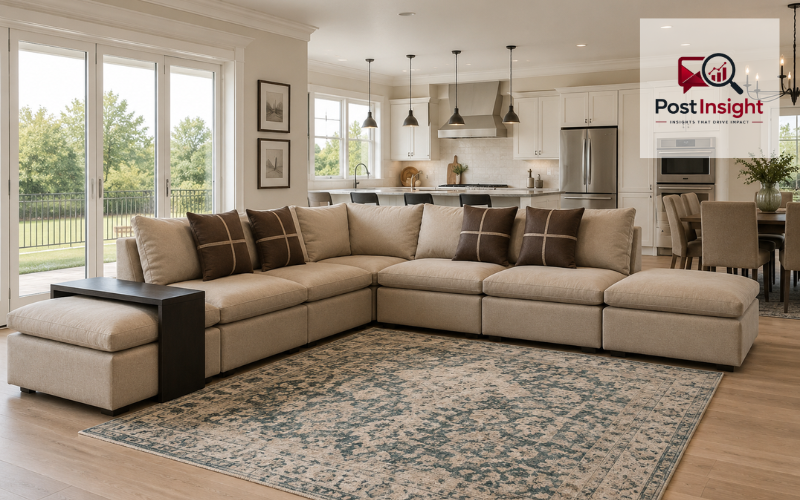
Modular sofas are made from separate seating pieces that can be joined, moved, or rearranged to suit a room. Instead of buying one fixed couch, you select individual units and build a setup that works for your space. A small arrangement may use two seats and an ottoman, while a larger one can include several seats, corners, and chaises.
This flexibility is the main difference between modular sofas and traditional couches. A fixed sofa keeps the same basic shape, while a modular design can change when you move, add seating, create a guest area, or refresh the room. Many current collections also offer removable covers, performance fabrics, storage, and other practical features.
This guide explains the main layouts, materials, comfort choices, and buying details to consider. It will also help you measure your room, compare quality, and decide whether a modular sofa is the right long-term choice for your home.
| Feature | What to Check | Best For |
| Layout | Straight, L-shaped, U-shaped, or pit-style | Different room sizes and seating needs |
| Seat depth | Standard for upright sitting or deep for lounging | Personal comfort and posture |
| Upholstery | Fabric, performance fabric, or leather | Cleaning needs, children, and pets |
| Connectors | Clips, brackets, or locking systems | Preventing sections from separating |
| Removable covers | Zippered and machine-washable options | Busy families and pet owners |
| Storage | Hidden space inside seats or ottomans | Apartments and smaller homes |
| Expandability | Availability of matching modules later | Growing families and future moves |
| Warranty | Frame, cushions, fabric, and hardware coverage | Long-term value and protection |
A modular sofa is a seating system built from independent sections, often called modules. Common pieces include armless seats, corner units, left- or right-arm seats, chaise sections, and ottomans. Some systems also offer narrow arms, tables, storage bases, or sleeper modules.
The design works much like building blocks. Two armless seats may form a compact loveseat. Adding a corner and another seat can create an L-shape. More sections can turn the same system into a U-shaped modular sectional sofa or a wide lounge arrangement.
The way the pieces connect matters. Some sofas use metal brackets, clips, shoes, or locking hardware under the frame. Others rely mainly on weight and non-slip feet. A secure connection helps prevent shifting and gaps. Before buying, check whether the connectors are included, easy to use, and strong enough for regular rearranging.
Modern homes often need furniture to do more than one job. A living room may serve as a family space, home office, play area, or entertainment room. Modular sofas suit this changing use because their shape is not permanent.
They are especially useful for renters and frequent movers. Separate sections are generally easier to carry through doors, hallways, elevators, and stairs than one oversized frame. The system can also adapt to a new floor plan, although this depends on whether the brand continues selling compatible modules.
Families may value the option to expand later. A couple might begin with three seats and add a corner or ottoman as their needs change. Current designs also range from soft “cloud” seating to firmer tailored styles, curved forms, leather pieces, and clean-lined modern models. The appeal is therefore practical as well as visual.
A straight layout works well against a wall, in a narrow room, or in an apartment where floor space is limited. It also gives the sofa a more traditional appearance.
An L-shaped layout adds a corner or chaise to one end. It can define a seating zone in an open-plan room and give people space to stretch out. Choose the return or chaise side carefully so it does not block a doorway, balcony, fireplace, or main walkway.
A U-shaped sofa creates a social setting with seats facing inward. It can suit a large family room or basement but needs open space for easy entry. A pit layout fills the center with ottomans or extra modules, creating a broad lounging surface for movies. It is comfortable for reclining but less useful for formal, upright seating.
Many modular sofa modern designs use low backs, wide arms, deep seats, and simple shapes. These can look elegant in large rooms but may feel bulky in a compact home. The best layout supports both comfort and natural movement.
Modular sofas for small spaces can work well because you buy only the sections that fit. A two-seat setup with one open end may feel lighter than a couch with thick arms on both sides. An ottoman can serve as a footrest, extra seat, or temporary table when used with a tray.
Compact rooms benefit from shallower seats, slimmer arms, raised legs, and pieces that can be moved without clearing the whole room. A small corner arrangement may use an awkward corner efficiently, while a straight setup can preserve a clear walking path.
Some ottomans and seat bases open to hold blankets, games, or seasonal items. However, storage mechanisms can add weight. Also, do not assume that every modular sofa saves space. Many lounge models are unusually deep and can occupy more floor area than a standard couch. Judge the complete footprint, not only the number of seats.
Measure the wall length, available floor depth, ceiling height, windows, radiators, outlets, and nearby doors. Then mark the planned sofa footprint with painter’s tape. This makes it easier to see whether the arrangement will crowd the room or block movement.
Check the full width and depth of the finished layout, including arms, corner pieces, and chaises. Seat height and seat depth also matter. A low seat can be relaxing but harder for some people to stand from. A deep seat may suit tall users or casual lounging, while shorter users may need extra back pillows.
Delivery access is just as important. Measure exterior doors, hallways, stair turns, elevator openings, and the narrowest point along the route. Modular pieces are often easier to deliver than a one-piece sofa, but individual sections can still be wide or heavy. Furniture delivery guidance also recommends checking the height and width of doors and hallways before an order arrives.
Finally, leave space for side tables, lamps, reclining sections, and cleaning. A sofa that technically fits may still feel too large if it removes every clear walkway.
Standard upholstery fabric offers the widest choice of colors and textures. Cotton, linen, polyester, velvet, and blends all have different care needs. Polyester blends are often practical for everyday use because they can be easier to clean and more resistant to wear than delicate natural fabrics. Performance fabrics may add stain, moisture, fading, or abrasion resistance, but protection varies by product. Always read the care code and test a swatch.
Homes with children or pets often benefit from tightly woven material, removable covers, and forgiving colors. Washable covers are useful only when they can be removed and refitted without too much difficulty. Some must be washed cold and line-dried rather than placed in a dryer.
Leather modular sofas offer a different feel. Good-quality leather can be durable, easy to wipe, and attractive as it develops a natural patina. It may also show scratches, fading, or body-oil marks depending on its finish. More natural leathers show greater variation, while protected finishes may suit busy homes. Regular dusting and product-appropriate care help preserve the surface.
Order swatches and view them in the room during daylight and evening light. Color and texture can look very different on a screen.
Comfort is personal, so labels such as “soft,” “medium,” or “firm” are only a starting point. A plush sofa may use feather, fiber, soft foam, or a combination that lets the body sink in. This can feel relaxing for movies and naps, but loose fill usually needs more fluffing and rotation.
A firmer sofa often uses layered or higher-density foam for stronger support and quicker shape recovery. It may suit upright sitting or people who dislike sinking deeply. Foam can still soften with use, so reviews written after several months are more useful than first-day comments.
Seat depth affects comfort as much as filling. Deep seating supports curled-up lounging but may leave shorter people unable to place their feet on the floor. Standard-depth seating is often better for upright posture. Back height, pillow shape, arm height, and gaps between sections also matter.
Removable cushions should be rotated and fluffed regularly to encourage even wear, a care step recommended by established furniture retailers.
Modular sofas with storage are useful when a room has limited closets or serves several purposes. Storage is commonly placed inside ottomans, chaise bases, or seat modules, keeping blankets and cushions nearby without adding another cabinet.
Sleeper sections can help in homes without a guest room. Some use a pull-out mattress, while others create a flat sleep surface by joining deep seats and ottomans. Check the sleeping dimensions and cushion gaps before treating a pit layout as a regular bed.
Other options may include built-in tables, cup holders, power outlets, USB charging, adjustable headrests, or sound systems. Lovesac, for example, currently offers optional technology for compatible Sactionals.
Extra features should solve a real need. Electronics can increase price and weight, while storage hinges and sleeper hardware add moving parts. A well-built basic sofa may offer better value than a feature-heavy model whose extras are rarely used.
To compare modular sofas fairly, begin with the finished layout rather than the starting price. Include every required seat, side, corner, cover, connector, ottoman, and delivery charge. A low-priced base module can become expensive once the full arrangement is built.
Compare frame construction, cushion materials, upholstery, connectors, and replacement-part availability. A strong frame matters because the sofa carries weight across separate joints. Furniture-quality guidance recommends examining frames, cushions, fabric quality, and construction rather than judging furniture only by appearance.
Read the warranty carefully. Find out whether it covers only the frame or also cushions, fabric, seams, hardware, and defects. Check return shipping, restocking charges, made-to-order exclusions, and packaging requirements.
A useful final check is simple: Does it fit the room and delivery path? Is the comfort right for daily use? Can the fabric handle the household? Do the pieces connect securely? Will replacement covers or modules be available? Is the total price reasonable for the expected years of use?
Modular sofas can be grouped by the need they serve. Deep lounge systems focus on soft cushions, wide seats, and pit layouts. Customizable systems offer many arm, side, cover, and configuration choices. Family-focused models emphasize washable covers and performance fabrics. Compact systems use smaller modules and slimmer profiles.
As of July 2026, several well-known brands illustrate these approaches. Albany Park’s Kova range includes modular frames, deep seating, several configurations, and removable machine-washable covers in performance fabrics. Lovesac Sactionals focus on rearrangeable seats and sides, replaceable covers, and add-on features; the brand states that most covers are machine-washable.
7th Avenue emphasizes rearrangeable layouts, removable covers, performance materials, and the ability to add components later. Its FAQ lists a limited lifetime warranty on sofa construction. Sundays’ Get Together line includes deep seats and removable slip, cushion, and frame covers in several configurations.
These examples are not automatically right for every buyer. Compare dimensions, comfort, care instructions, total cost, and service in your area rather than relying on brand popularity.
Owner reviews can reveal details that product photos cannot, including cushion sagging, fabric pilling, connector movement, cover shrinkage, delivery damage, assembly time, pet wear, and customer-service response.
Many shoppers search “modular sofas Reddit” because discussion forums may include long-term experiences and photos from real homes. This can be helpful, but anonymous comments are not verified testing. One person’s ideal softness may feel unsupportive to another, and some posts leave out important context.
Look for patterns across several sources. Give more weight to reviews that name the exact model, fabric, household conditions, purchase date, and length of ownership. Separate product problems from delivery problems, and check whether the brand resolved the issue.
Professional testing can provide measurements and structured comparisons, while owner forums show daily-life performance. The strongest decision combines both with official specifications and, when possible, an in-person sit test.
When shopping for a modular sofa USA buyers should confirm where the product ships, who completes delivery, and whether service reaches their ZIP code. Delivery may mean parcel shipping, a threshold drop-off, room-of-choice service, or white-glove assembly. Each option changes the cost and the amount of lifting required.
Check whether fabric swatches are available, how long made-to-order pieces take, and whether all modules arrive together. Confirm the return window, restocking fees, return freight, and packaging requirements before ordering. Large furniture returns can be difficult even when a policy sounds generous.
Ask whether replacement covers, cushions, hardware, and modules are stocked in the country. A future add-on must match the original height and connector style, and fabric dye lots may vary slightly over time.
Online shopping offers more choice, but a showroom visit can answer questions about firmness, seat depth, fabric feel, and ease of standing. When that is not possible, use swatches, detailed measurements, customer photos, and a taped floor plan to reduce uncertainty.
Modular sofas provide flexibility that fixed couches cannot easily match. Separate sections can form a straight apartment layout, an L-shaped family setup, a spacious U-shape, or a relaxed pit arrangement. They can also be easier to move, expand, repair, or update when compatible parts remain available.
The right choice depends on more than appearance. Room dimensions, delivery access, seat depth, cushion support, fabric care, connector quality, warranty terms, and future module availability all affect long-term satisfaction. Features such as washable covers, storage, charging, or sleeper sections are valuable when they fit the way the household lives.
Measure carefully, compare the complete price, order fabric samples, and study long-term reviews before buying. With those steps, modular sofas can provide comfortable seating that continues to work as the room, home, and family change.
Yes. Modular sofas for small spaces can be arranged with fewer sections, slim arms, or compact corner units. Always measure the complete footprint because some deep-seat models may still feel bulky.
Sections can separate when connectors are weak or missing. Look for strong metal brackets, locking clips, or non-slip feet, and check the fittings occasionally to keep the layout secure.
They can be very comfortable, but support varies by cushion filling and seat depth. Plush designs suit lounging, while firmer foam cushions generally provide better shape retention and upright support.
Some models have fully removable, machine-washable covers, while others allow only spot cleaning. Read the care label carefully because certain covers must be washed cold and air-dried.
Many systems allow additional seats, corners, chaises, or ottomans to be purchased later. Confirm that the brand plans to keep compatible modules, connectors, fabrics, and replacement covers available.
Disclaimer: This article provides general furniture-buying information. Product dimensions, materials, features, warranties, prices, and availability may change, so always confirm current details with the manufacturer or retailer before purchasing.


