
 11
11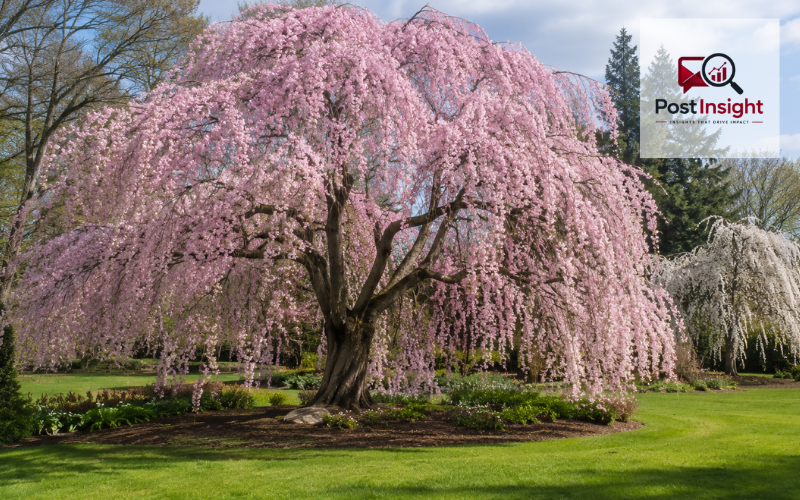
A weeping cherry tree is an ornamental flowering tree known for long branches that bend toward the ground. When it blooms, those hanging branches become covered with pink or white flowers, creating a soft, fountain-like display. The name is used for several weeping forms and cultivars within the Prunus group, including trees sold under names such as Prunus pendula, weeping Higan cherry, and older labels involving Prunus subhirtella. Because nursery names can vary, the cultivar name on the plant label is often more useful than the species name alone.
These trees have strong links to Japanese garden traditions and are usually planted as decorative focal points rather than fruit trees. A typical standard form may reach about 15 to 25 feet tall, although some cultivars remain smaller and others can grow much larger. The spread may equal or exceed the height as the branches lengthen.
Flowers usually open in early spring before or as the leaves appear. The small fruits that sometimes follow are bitter and not considered useful for eating, although birds may visit them. Ornamental cherries are also generally shorter-lived than many large shade trees, but good planting conditions and proper care can help them remain attractive for decades.
| Feature | Quick Information |
| Botanical group | Prunus species and cultivars |
| Typical height | About 15–25 feet, depending on variety |
| Typical spread | About 15–30 feet |
| Flower color | Pink or white |
| Blooming season | Early to mid-spring |
| Sunlight | At least 6 hours of direct sun |
| Soil | Moist, fertile, and well-draining |
| Hardiness | Commonly USDA zones 5–8 |
| Watering | Regular watering while young; during drought when established |
| Pruning | Light pruning after flowering or during dry weather |
| Lifespan | Often around 30–40 years with proper care |
| Best use | Lawn focal point, garden border, entrance, or patio area |
The main feature of a weeping cherry tree is its curved, downward-growing canopy. Some trees form a neat umbrella, while others develop a wider and more natural curtain of branches. In spring, the bare stems may be lined with single or double flowers. Green leaves open after the flowers and create an attractive canopy during summer.
Depending on the cultivar, autumn foliage may turn yellow, orange, or red before falling. Once the leaves are gone, the tree’s curved branches continue to provide interest during winter.
Many nursery trees are top-grafted. This means a weeping cultivar is joined to a straight trunk, often four to six feet above the ground. The height of the graft largely determines where the hanging canopy begins.
The branches above the graft continue to grow longer and wider, but the trunk below it does not keep raising the crown in the same way as a normally upright tree. Naturally low-growing forms are also available and may look more like spreading mounds unless they are trained. Final size depends on the cultivar, rootstock, climate, soil, and pruning.
One of the best-known pink varieties is ‘Pendula Rosea’, commonly sold as a weeping Higan cherry. It normally produces pale pink to rose-pink flowers and may reach around 15 to 25 feet in height.
‘Pendula Plena Rosea’ is valued for fuller, double pink blossoms. Pink Cascade™ is another strongly weeping selection with brighter pink flowers and a smaller, fine-textured shape that can work well as a garden specimen.
White-flowering choices include Snow Fountains®, which is sold under the cultivar name ‘Snofozam’. It has narrow, trailing branches covered with white spring flowers and is commonly chosen when a smaller ornamental tree is needed.
Cultivars can differ greatly in flower color, flower shape, graft height, mature spread, autumn color, hardiness, and disease tolerance. Before buying, read the full plant label and ask the nursery about its expected size in your local climate. A tree marked only as “weeping cherry” may not provide enough information for correct placement.
A dwarf weeping cherry tree can bring the same cascading appearance to a courtyard, compact yard, or small front garden. However, the word “dwarf” does not always describe one exact size.
It may refer to a naturally smaller cultivar or a tree grafted onto a short trunk. Some compact forms remain around 8 to 15 feet tall, while low-grafted trees may stay closer to the ground and spread outward. Always check both the expected mature size and the graft height before purchasing.
Small weeping cherries can also grow in large containers, but it is important to choose a genuinely compact variety. The container needs good drainage, enough weight to remain stable, and adequate room for root development.
Container trees can dry out quickly during summer and become waterlogged during wet winters. Their roots are also more exposed to freezing temperatures than roots planted in the ground. Regular watering, occasional repotting, and winter protection may therefore be necessary.
The Snow Fountain weeping cherry tree is one of the most recognizable compact varieties. Snow Fountains® ‘Snofozam’ is a slow-growing ornamental cherry with slender branches that fall almost vertically toward the ground.
In early spring, those branches become covered with small white flowers, giving the tree the appearance of a bright floral fountain. Its green summer leaves may later develop attractive shades of yellow, orange, or gold during autumn.
Its size depends on how it was produced and trained. Missouri Botanical Garden lists Snow Fountains at approximately 8 to 15 feet tall and 6 to 8 feet wide. It may be sold as a naturally weeping tree, a top-grafted tree, or even a low-growing ground-cover form.
It works well beside an entrance, near a patio, in a lawn island, or against a simple background where its shape can be clearly seen. Avoid placing it directly beside a narrow walkway because its long branches need room to hang naturally.
A weeping cherry tree flowers best in full sun. Aim for at least six hours of direct sunlight each day, preferably in a location with good air movement around the canopy.
Some forms can tolerate partial shade, but too much shade may reduce flowering and cause leaves and branches to remain wet for longer after rain. Constantly damp foliage and poor airflow can increase the chance of fungal problems. The planting space should also be large enough for the tree’s mature spread, not just the size of the young nursery plant.
The best soil is fertile, moist, and well drained. A slightly acidic to neutral soil, around pH 6.0 to 7.0, is generally suitable, although these trees can tolerate a somewhat wider range. Good drainage is usually more important than reaching one exact pH number.
Avoid low areas where water remains after rain, locations beneath roof downspouts, and heavily compacted ground. Leave enough distance from walls, paving, utility lines, and nearby trees for the mature canopy to spread without constant cutting.
Early spring and autumn are usually the best planting seasons because temperatures are milder and the soil is easier to work. In very cold regions, spring planting may be safer because it gives the roots a full growing season to establish before winter.
Dig a hole wider than the root ball but no deeper than necessary. Find the root flare, which is the area where the trunk begins to widen into the main roots. Keep this flare at or slightly above the finished soil level. Planting too deeply can keep the trunk wet and reduce the amount of oxygen reaching the roots.
Backfill the hole mainly with the original soil unless a soil test shows that improvement is necessary. Water slowly after planting to remove large air pockets and settle the soil around the roots. Do not press the ground down too firmly because this can increase compaction.
Apply a two- to three-inch layer of organic mulch over the root area. Keep it several inches away from the trunk and leave the root flare visible. Staking is only necessary when the root ball is unstable or the location is very windy. Any temporary ties should be checked regularly and removed before they begin cutting into the trunk.
Newly planted trees need consistent moisture while their roots expand into the surrounding soil. Water deeply over the root ball and nearby ground instead of giving frequent, shallow splashes.
The exact schedule depends on rainfall, temperature, drainage, and tree size. As a general starting point, a newly planted tree may need daily watering for the first week or two, water every two or three days during the following weeks, and weekly watering later in the establishment period. Natural rainfall and actual soil moisture should always be considered.
Established trees usually need extra water only during long dry periods. The ground should remain lightly moist but should never stay saturated. Check the soil beneath the mulch before watering because yellow leaves can result from both dry conditions and overly wet roots.
Fertilizer is not automatically required every spring. If growth is steady and the leaves have a healthy color, mulch and good soil management may provide enough support. Use a soil test when a nutrient problem is suspected rather than applying fertilizer without a clear reason.
Avoid heavy nitrogen feeding because it may produce excessive soft growth instead of balanced flowering and strong branches. Late-season nitrogen may also encourage new growth that does not harden before cold weather.
Begin by locating the graft union. It may appear as a swelling, slight bend, or change in bark texture near the upper part of the trunk. Any shoot growing from the roots or trunk below this point belongs to the rootstock.
Remove these suckers promptly because they usually grow straight upward and can compete with the hanging canopy. Upright shoots arising below the graft should not be confused with healthy branches growing from the weeping section.
Pruning time requires special care. Although dormant winter pruning is recommended for many deciduous trees, cherry trees can be vulnerable to silver leaf disease and bacterial canker entering through fresh cuts.
Current RHS guidance generally recommends pruning Prunus trees during dry weather from spring into midsummer. For a flowering cherry, this often means pruning after the flowers finish and completing major work before late summer. Local climate and disease risks can differ, so regional extension advice should take priority.
Keep pruning light and preserve the natural shape. Remove dead, broken, crossing, or diseased wood first. You can then shorten branch tips that touch the ground, block a path, or interfere with mowing.
Do not shear the canopy into a rigid dome or remove the entire weeping top. Avoid cutting during wet weather, and clean pruning tools between cuts when disease is present.
In spring, inspect the flowers and new leaves for frost damage, weak blooming, or early signs of pests. Poor flowering may be related to shade, stress, harsh weather, unsuitable pruning, or the age and health of the tree. After flowering is also a good time to check the graft union and remove unwanted rootstock shoots.
During summer, monitor soil moisture carefully, especially around young trees. Keep lawn mowers and string trimmers away from the trunk because bark injuries can create entry points for pests and diseases.
In autumn, remove fallen leaves that appear diseased and check whether rainwater drains freely from the root area. During winter, protect young trunks from animal damage and avoid piling road salt, snow, soil, or mulch against the bark. Container-grown trees may need additional cold protection around their roots.
Common weeping cherry tree problems include yellow leaves, poor flowering, dead branch tips, leaf spots, cankers, and sudden wilting. Yellowing across much of the canopy can be connected to root stress, poor drainage, drought, or unsuitable soil conditions.
A few yellow leaves may be normal, but rapid or widespread color change deserves closer attention. Branch dieback with sunken, cracked, or oozing areas can suggest canker. Small holes, loose bark, or sawdust-like material may indicate wood-boring insects.
Aphids, scale insects, caterpillars, Japanese beetles, leafhoppers, spider mites, and borers may feed on ornamental cherries. Possible diseases include leaf spot, black knot, powdery mildew, root rot, fire blight, silver leaf, and different forms of canker.
A healthy tree growing in sunlight and well-drained soil is generally better able to tolerate minor damage. Avoid using pesticides until the exact problem has been identified, as unnecessary treatment can harm helpful insects without solving the real cause.
Contact a certified arborist when large branches die, the trunk becomes deeply cracked or heavily cankered, the tree begins leaning, or damage spreads quickly. Professional help is especially important when the tree is close to a house, road, walkway, or power line.
The small ornamental fruits are not normally grown for human consumption. Cherry pits and some other parts of Prunus plants contain cyanogenic compounds, so children and pets should not be allowed to chew the pits, stems, or leaves.
The greatest advantage of a weeping cherry tree is its dramatic appearance. Few small landscape trees create such a memorable display of spring blossoms. Its curved canopy also provides attractive shape during summer and winter.
The flowers can attract visiting insects, while the small fruits may provide food for birds. Compact varieties can fit into spaces where a large shade tree would be unsuitable.
There are also disadvantages to consider. The tree needs open space to display its natural form, and low branches can interfere with mowing, paths, or nearby plants. Grafted trees may regularly produce unwanted suckers.
Ornamental cherries can face numerous pests and diseases, particularly when they are planted in wet, shaded, compacted, or stressful locations. Their useful lifespan is also often shorter than that of long-lived shade trees. A weeping cherry should therefore be chosen mainly for its ornamental value rather than permanent shade or fruit production.
When comparing a weeping cherry tree for sale, look beyond flower color. Check the cultivar name, mature height and width, hardiness range, graft height, root condition, and branch structure.
Choose a tree with a firm trunk, no deep wounds, a sound graft union, and a canopy without major dead sections. For container-grown trees, avoid severely circling roots or a root flare buried far below the potting mix. These issues can make establishment more difficult after planting.
Compare standard trees, dwarf varieties, and Snow Fountains before choosing. A tall top-grafted tree creates an immediate umbrella shape, while a low-grafted or naturally trailing form may remain much closer to the ground.
Searching “weeping cherry tree near me” can help locate local garden centers, but visiting a nursery in person allows you to inspect the actual tree. Ask whether the cultivar suits your USDA hardiness zone, how large it grows in your area, whether it has been heavily trained, and what replacement guarantee is offered.
The phrase “weeping cherry tree FFXIV” has a completely different meaning from the living garden tree. In Final Fantasy XIV, Weeping Cherry Tree is the name of an outdoor housing furnishing.
The official Eorzea Database lists it as an untradable, market-prohibited outdoor item. The official 2026 Little Ladies’ Day blog also presented it as a seasonal garden decoration for players’ housing areas. It does not refer to a real cultivar or to a plant that players grow through botanical care.
Garden readers looking for planting, pruning, or disease advice should use reliable horticultural sources. Players seeking information about item availability, event requirements, or housing use should check the current FFXIV database and official event notices because access details may change.
A weeping cherry tree can be an excellent choice when you want a graceful focal point with memorable spring flowers. It performs best when its cultivar matches the available space and climate, its roots are planted in well-drained soil, and its canopy receives plenty of sunlight.
Correct planting depth, careful watering, an exposed root flare, a protected graft union, and light pruning at the appropriate time can all support healthier growth and more dependable flowering.
Before buying, picture the tree at its mature width rather than judging the small nursery specimen. Choose a dwarf or Snow Fountain variety for a compact space, or a larger pink-flowering cultivar where the canopy can spread freely.
With realistic expectations and regular observation, a well-placed weeping cherry tree can bring beauty to the landscape through spring flowers, summer foliage, autumn color, and an elegant winter shape.
A weeping cherry tree usually grows about one to two feet per year when young. Its growth rate depends on the cultivar, sunlight, soil quality, watering, and overall growing conditions.
Yes. A weeping cherry tree generally needs at least six hours of direct sunlight daily. Full sun encourages better flowering, stronger growth, and faster drying of leaves after rain.
You can control its size slightly through careful pruning, but you should not heavily cut the canopy. Choosing a dwarf weeping cherry tree is better for small gardens or limited spaces.
Poor flowering may result from too much shade, incorrect pruning, late frost, drought, excessive fertilizer, or tree stress. Young trees may also need time to become established before blooming heavily.
The small fruits are bitter and are not usually eaten by people. Birds may feed on them, but the pits, leaves, and stems should not be chewed by children or pets.
Disclaimer: This article provides general gardening information. Tree care needs can vary by cultivar, climate, and soil conditions. Consult a local nursery, extension service, or certified arborist for serious disease or safety concerns.


