
 11
11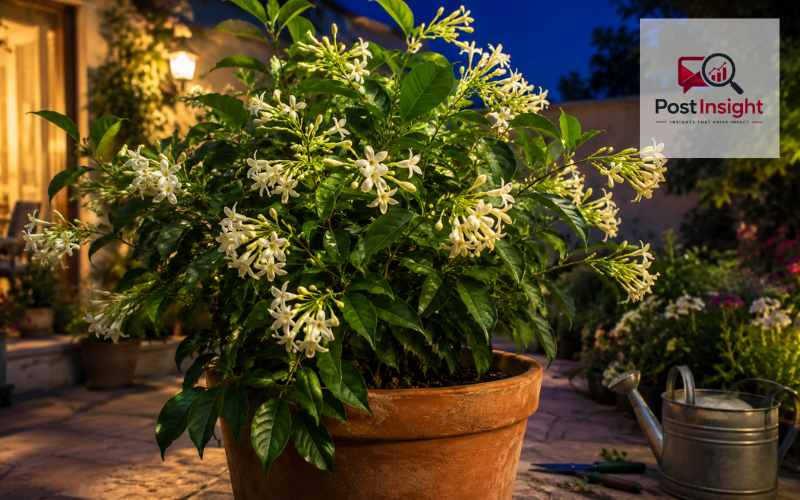
Night blooming jasmine is a fast-growing flowering shrub known for the rich perfume it releases after sunset. Its flowers are small and pale rather than showy, yet their sweet, musky scent can fill a patio or garden on a warm evening. In South Asia, the plant is widely called Raat ki Rani, meaning “Queen of the Night.”
This shrub prefers warmth, bright light, regular moisture, and freely draining soil. It can grow outdoors in suitable climates, in a large pot, or indoors near a very bright window. However, its fragrance may trouble sensitive people, and every part should be treated as unsafe to eat. This guide covers night blooming jasmine care, flowering, pruning, indoor growing, pots, safety, and responsible planting.
| Care Factor | Basic Requirement |
| Botanical name | Cestrum nocturnum |
| Common names | Night-blooming jessamine, Raat ki Rani, lady of the night |
| Sunlight | Full sun to light partial shade |
| Watering | Keep soil evenly moist but not waterlogged |
| Soil | Fertile, loose, and well-draining |
| Temperature | Warm, frost-free conditions |
| Blooming period | Mainly summer through early autumn |
| Pruning | Trim after flowering to encourage bushy growth |
| Container growing | Use a large pot with open drainage holes |
| Indoor care | Place near a bright window with good airflow |
| Safety | Toxic if eaten; scent may irritate sensitive people |
| Invasive risk | May spread aggressively in some warm climates |
The scientific name is Cestrum nocturnum. Other names include night-blooming jessamine, night jessamine, lady of the night, and night-scented cestrum. Despite the word “jasmine,” it is not a true jasmine from the Jasminum genus. It belongs to the Solanaceae family, which also includes potatoes, tomatoes, peppers, and ornamental nightshades.
Kew Science lists its native range from Mexico to Venezuela, and the shrub has been introduced to many warm regions, including South Asia. It usually grows as an upright, spreading, or slightly scrambling evergreen. Depending on climate and pruning, it may reach about 3 to 13 feet tall. Its arching branches carry simple green leaves, clusters of narrow tubular flowers, and small white berries.
Night blooming jasmine produces clusters of greenish-white to creamy flowers. During the day, they may stay partly closed and look unremarkable. In the evening, they open more fully and release a strong sweet and musky perfume. This timing helps night-active pollinators locate the flowers when visual signals are limited.
In tropical and subtropical gardens, a healthy shrub may bloom in repeated flushes during warm weather. In cooler regions, flowering is more likely from summer into early autumn. The timing depends on temperature, sunlight, pruning, maturity, and plant health.
Bright light, warm conditions, steady moisture, and fresh growth support better flowering. Missouri Botanical Garden notes that plants bloom best in full sun and that large temperature swings can reduce fragrance. Deep shade, excess fertilizer, crowded roots, or recent stress may produce leaves instead of flowers.
Choose a warm, sheltered place with full sun or light partial shade. Six or more hours of direct sunlight usually supports stronger flowering, although afternoon shade can protect foliage where summer heat is severe. Introduce indoor plants gradually to outdoor sun because sudden exposure may scorch tender leaves.
The plant suits mainly frost-free or nearly frost-free climates. Missouri Botanical Garden places it in USDA Zones 9 to 11, while the RHS says it can tolerate low temperatures but should not be frozen. In colder areas, pots are safer because they can be moved under cover before frost.
Do not plant a large specimen directly below a bedroom window or beside a small enclosed seating area. A position farther from the house lets the fragrance drift through the garden without becoming overwhelming.
Night blooming jasmine prefers fertile soil that stays evenly moist but drains freely. Loam or sandy loam works well, and the plant accepts a broad pH range when drainage is good. Improve heavy soil before planting, since water sitting around the roots may cause decline and rot.
Water deeply when the upper soil starts to feel dry. New shrubs and container plants need closer attention because their roots cover a smaller area. Check more often during hot or windy weather. In winter, reduce watering as growth slows, but do not let the root ball dry completely. The RHS recommends generous summer watering for containers and lighter winter moisture.
Apply a balanced slow-release fertilizer in spring according to its label. Potted plants may also benefit from a diluted liquid feed during active growth. Avoid heavy nitrogen feeding because it may encourage long leafy stems instead of flowers.
In spring, remove dead or cold-damaged stems, refresh the surface mix in containers, and begin feeding when new growth appears. Repot crowded plants and move overwintered pots outdoors gradually after frost danger has passed.
Summer is often the main growing and flowering season. Water before severe wilting, check drainage holes, and lightly shorten long shoots after a flowering flush. In extreme heat, use afternoon shade and a light mulch over the root area, keeping mulch away from the stem.
During autumn, shape the plant after flowering and remove berries before they mature if spreading is a concern. In winter, protect it from frost and cold wind. Move pots into a bright greenhouse, sunroom, or indoor position, reduce watering, and stop heavy feeding until growth returns.
Growing night blooming jasmine in pots is practical when winters are cold, garden space is limited, or its spread needs control. Start a young shrub in a sturdy container around 14 inches wide or larger, with several open drainage holes. A mature plant will need a wider, heavier pot for root room and stability.
Use a peat-free, loam-based potting mix that holds some moisture without becoming soggy. Compost can add fertility, while perlite, grit, or coarse material can improve drainage. Never leave the container standing in water.
Repot when roots circle tightly, emerge from the drainage holes, or make the mix dry unusually fast. Move up only one pot size at a time. For a plant already in a large container, replace the upper layer of old mix each spring.
Before bringing the plant indoors, inspect both sides of the leaves, clean the pot, and remove obvious pests. Moving it inside while temperatures are still mild reduces shock.
Night blooming jasmine can grow indoors, but it needs strong light. Place it beside the brightest south- or west-facing window available, or provide a suitable grow light. Missouri Botanical Garden recommends a sunny southern exposure for overwintered plants.
Keep good airflow around the leaves and avoid heating vents, cold drafts, and dark corners. Indoor potting mix dries more slowly, so check it before watering. Very dry conditions may cause brown leaf edges and encourage spider mites.
The greatest indoor problem is fragrance. Several open flower clusters can overwhelm a small room. A bright porch, conservatory, greenhouse, or ventilated sunroom is often better than a bedroom. People with asthma, allergies, migraines, or scent sensitivity should be especially cautious.
Pruning keeps the shrub compact and encourages branching. Lightly trim after a flowering flush to produce more side shoots that may later carry blooms. Remove dead, crossing, weak, or damaged stems first, then shorten lanky branches. Avoid repeated hard pruning during the main flowering season because it may remove developing buds.
The plant is commonly propagated from softwood or semi-ripe stem cuttings in summer. Choose a healthy non-flowering shoot, cut below a leaf joint, remove the lower leaves, and place it in a clean, free-draining mix. Keep the cutting warm, bright but out of harsh sun, and slightly moist until roots form. NC State recommends stem cuttings, while the RHS also lists softwood and semi-ripe cuttings.
Seeds can be sown in spring, but seedlings take longer to establish. Cuttings are more practical for many home growers and produce a plant matching the parent.
Too little sunlight is a common reason for poor flowering. A plant in deep shade may stay green while producing long stems and few buds. Gradually move a pot to brighter light or reduce shade from nearby plants.
Feeding can also be the problem. Too much nitrogen encourages leaves, while an exhausted, root-bound plant may lack the resources to bloom. Use balanced fertilizer at the recommended strength instead of repeatedly applying bloom boosters.
Pruning at the wrong time may remove flowering shoots. Allow new branches time to mature after trimming. Young plants may also need a season to develop strong roots before blooming heavily.
Cold nights, sudden temperature changes, dry roots, soggy soil, and crowded containers can interrupt bud growth. Correct the conditions first; extra fertilizer rarely fixes the real cause.
Healthy outdoor plants are often trouble-free, and the RHS describes the species as generally free of major pests and diseases. Still, indoor or potted plants may attract aphids, whiteflies, and spider mites, while caterpillars may chew foliage outdoors.
Check leaf undersides and tender tips. Sticky residue, curled growth, pale spots, fine webbing, or tiny flying insects can signal pests. Isolate an affected indoor plant, wash the foliage, remove badly damaged leaves, and hand-pick larger caterpillars. Use insecticidal soap only when needed and follow the label.
Yellow leaves may come from excess water, poor drainage, cold stress, or natural aging. Brown edges often suggest dry roots, salt buildup, strong sun, or dry indoor air. Soft stems, a sour smell, and constantly wet soil point toward root rot. Improve drainage and remove damaged roots before repotting.
Night blooming jasmine should be treated as a toxic ornamental, not an edible or home-medicine plant. Queensland’s Poisons Information Centre states that all parts are toxic, especially the fruit. Possible symptoms include increased temperature, rapid pulse, excess salivation, and stomach inflammation. NC State also warns that the berries are especially poisonous to humans and animals.
New South Wales WeedWise reports poisoning in cattle, horses, poultry, and cats and says all parts, especially immature berries, contain poisonous alkaloids. Keep berries and cut stems away from children, pets, and livestock. Wear gloves when pruning and wash your hands afterward.
The perfume may cause breathing trouble, nose or throat irritation, sneezing, headaches, nausea, or dizziness in sensitive people. If ingestion or a serious reaction occurs, contact a poison centre, veterinarian, or emergency service promptly.
Night blooming jasmine has naturalized outside its native range and can spread aggressively in warm, moist climates. Birds may move seeds from the white berries, allowing plants to appear beyond gardens and compete with native vegetation.
Check regional rules or local extension guidance before buying. UF/IFAS currently rates Cestrum nocturnum as a “High Invasion Risk” in Florida and does not recommend it for general use there. This assessment is specific to Florida, but it shows why local advice matters.
Where growing is allowed, remove flowers before berries mature, collect fallen fruit, dispose of cuttings responsibly, and watch for seedlings. A pot can limit root spread, although it cannot stop birds from moving seeds. In high-risk regions, choose a locally recommended non-invasive fragrant shrub instead.
The night blooming jasmine meaning is often linked with mystery, hidden beauty, love, memory, and experiences that become stronger after dark. These are cultural interpretations, not fixed botanical meanings, and they vary among communities.
In fragrance products, “night blooming jasmine perfume” usually suggests a rich white-floral scent with sweet, green, musky, or spicy notes. A perfume may create an imagined nighttime floral mood rather than contain an extract of Cestrum nocturnum, so it may smell different from the living plant.
The phrase also has cultural connections. Filmmaker David Lynch’s grave marker at Hollywood Forever Cemetery bears the words “Night Blooming Jasmine.” It was publicly reported in April 2025, with coverage linking the phrase to his memories of Los Angeles and old Hollywood.
It is also the title of fakemink’s track “Night, Blooming Jasmine,” released on April 17, 2026. The song is unrelated to plant care, but it explains why the search phrase “night, blooming jasmine fakemink” leads to music results.
To find night blooming jasmine near me, check established local nurseries, tropical-plant specialists, garden centres, and reputable online sellers that can legally ship to your area. Local staff may also know whether the shrub suits the climate and whether invasive-plant restrictions apply.
Confirm the botanical name Cestrum nocturnum. Common names can be confusing because “queen of the night” and “night-blooming jasmine” are sometimes used for unrelated cacti or true jasmines.
Choose a plant with firm stems, evenly colored leaves, fresh tips, and no sticky residue, webbing, insects, black roots, or sour-smelling soil. Ask about its mature size, winter care, previous growing conditions, and pest treatments. Before buying, make sure you have a safe position away from pets and scent-sensitive household members.
Night blooming jasmine offers an unusual garden experience: modest greenish-white flowers that release a memorable fragrance after dark. It can grow outdoors in warm regions, in pots where winters are cold, or indoors with bright light and good airflow.
Successful night blooming jasmine care depends on warmth, sun, evenly moist but well-drained soil, moderate feeding, and timely pruning. Avoid deep shade, standing water, excess nitrogen, badly timed trimming, and sudden exposure to cold or intense sun.
Its beauty must be balanced with caution. The plant is toxic if eaten, its perfume may irritate sensitive people, and it can become invasive in some climates. Careful placement, local checks, controlled growth, and responsible berry removal help gardeners decide whether the “Queen of the Night” suits their space.
No. Night blooming jasmine belongs to the Solanaceae or nightshade family. True jasmine plants belong to the Jasminum genus, although both are valued for their strong floral fragrance.
Its flowers open after sunset and release fragrant compounds that attract nighttime pollinators. Warm, calm evenings can make the perfume seem stronger and allow it to travel through nearby spaces.
Yes. Use a large, stable container with good drainage and fertile potting soil. Container growing also makes it easier to protect the plant from frost and control its spread.
Common causes include insufficient sunlight, excess nitrogen fertilizer, cold temperatures, incorrect pruning, dry soil, poor drainage, or a root-bound container. Correcting the main care problem usually improves blooming.
Yes. All parts should be treated as toxic if eaten, especially the berries. Keep the plant away from children, pets, and livestock, and wear gloves when pruning or handling fruit.
Disclaimer: This article provides general gardening information. Plant toxicity, invasive status, and growing rules may vary by location. Consult local gardening authorities, a veterinarian, or a poison-control service when necessary.


