 11
11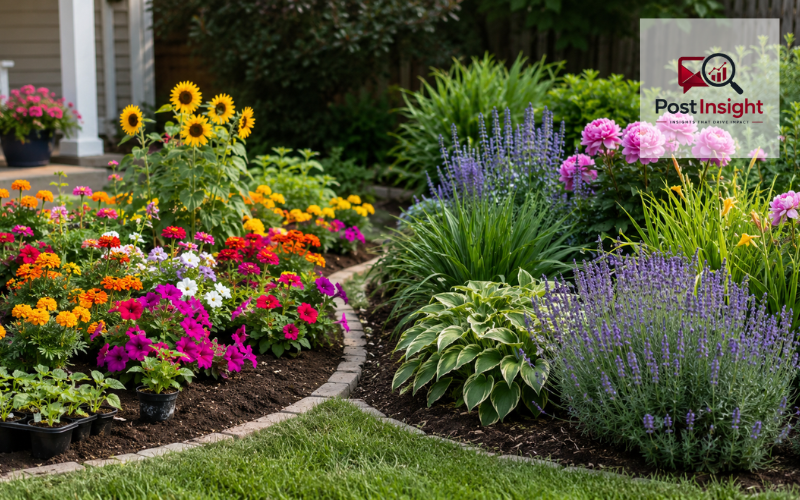
The main difference between annual and perennial plants is how long they live. Annual plants complete their full life cycle in one growing season. They grow from seed, produce flowers or crops, set seed, and then die. Perennial plants live for several years. Their visible growth may disappear during cold or dry weather, but their roots remain alive and produce new growth when suitable conditions return.
Understanding annual vs perennial plants can make garden planning much easier. Plant lifespan affects how often you need to replant, how long flowers remain in bloom, how much maintenance is required, and how much money you may spend over time. Annuals often provide quick color and long-lasting seasonal displays, while perennials create a dependable garden structure that returns year after year.
Climate also affects plant behavior. A plant that survives as a perennial in a warm region may be grown as an annual in a colder area because it cannot tolerate frost. For this reason, it is important to consider local conditions instead of relying only on the plant label.
Annuals live for one growing season. After producing flowers, fruits, or seeds, the whole plant dies, including its roots. Even when annuals drop seeds that grow the following year, the original plant does not return. The new growth comes from a new generation of seeds.
Perennials usually live for at least three years, and many can survive for decades with proper care. In colder climates, their leaves and stems may die back during winter. However, the roots and crown remain alive underground. When temperatures rise in spring, the plant begins growing again.
This is the key difference between death and dormancy. An annual dies permanently at the end of its life cycle. A perennial may look dead during winter, but it is only resting until conditions improve.
| Feature | Annual Plants | Perennial Plants |
| Lifespan | One growing season | Three years or longer |
| Replanting | Usually required every year | Returns naturally when established |
| Bloom period | Often long and continuous | Usually shorter and more seasonal |
| Root system | Generally shallow and temporary | Usually deeper and permanent |
| Initial cost | Often lower | Often higher |
| Long-term value | Must be replaced regularly | Can provide value for many years |
Neither option is automatically better. The right choice depends on the garden, climate, budget, and the effect you want to create.
An annual plant begins as a seed and quickly moves through its entire life cycle. It germinates, develops leaves and stems, flowers, produces seeds, and dies within the same season. Because annuals have a limited amount of time to reproduce, many grow quickly and flower heavily.
Perennial plants follow a slower pattern. During their first year, they may focus more on developing roots than producing a large number of flowers. Once established, they return during their normal growing season and may become larger and stronger each year.
Dormancy helps perennials survive difficult conditions. In cold regions, many perennials go dormant during winter. In hot, dry regions, some may rest during periods of drought. Their above-ground growth may fade, but energy remains stored in the roots.
Temperature and frost play a major role in plant survival. Tender perennials such as tomatoes, peppers, coleus, and geraniums can live for several years in frost-free climates. In colder regions, however, they are commonly treated as annuals because freezing temperatures kill them.
Annuals are popular because they often bloom for a long period. With proper watering, feeding, and removal of faded flowers, many annuals continue producing color from late spring until the first hard frost. Petunias, marigolds, zinnias, and impatiens are commonly used when gardeners want a strong seasonal display.
Perennial flowers often bloom for a shorter window. Some flower for only a few weeks, while others continue for several months. Their advantage is reliability. Once established, they return at roughly the same time each year and help create a predictable garden design.
Bloom timing is important when planning an attractive landscape. A garden filled with only one type of perennial may look colorful for a short period and plain for the rest of the season. Gardeners can avoid this by choosing early-, mid-, and late-season bloomers.
A combination of annual vs perennial flowers usually creates the most balanced result. Perennials provide recurring structure, while annuals fill empty areas and keep the garden colorful between perennial bloom periods.
Annual plants generally have smaller and shallower root systems because they only need to survive for one season. Their roots support fast growth, flowering, and seed production, but they do not need to store energy for future years.
Perennials invest more energy in permanent roots. This is one reason some perennial plants appear slow during their first growing season. While the visible plant may not change much, the roots are spreading and becoming established below the soil.
Once mature, deep-rooted perennials may handle short dry periods better than shallow-rooted annuals. They can reach moisture stored deeper in the ground. This does not mean newly planted perennials can be ignored. They still need regular watering during their first season and sometimes longer, depending on climate and soil.
Perennial roots may also improve soil stability. They hold soil in place, reduce erosion, and create pathways that allow water and air to move through the ground. However, root depth varies by species, so not every perennial is automatically drought-resistant.
Common annual flowers include marigolds, petunias, zinnias, cosmos, impatiens, and many sunflowers. Popular perennial flowers include hostas, peonies, daylilies, lavender, coneflowers, and black-eyed Susans.
In vegetable gardens, beans, cucumbers, lettuce, peas, and sweet corn are usually grown as annuals. Asparagus, rhubarb, Jerusalem artichokes, and some types of globe artichokes can grow as perennials in suitable climates.
Annual crops include wheat, rice, corn, soybeans, and many vegetables. Perennial crops include fruit trees, grapevines, berry bushes, alfalfa, and certain long-lived herbs.
Weeds can also be annual or perennial. Chickweed and crabgrass are common annual weeds, while dandelions, bindweed, and Canada thistle are perennials.
These classifications are not always fixed in every location. For example, a plant may be a true perennial in a warm climate but unable to survive winter in a colder growing zone. Local climate information is therefore essential when choosing plants.
The difference between annual vs perennial flowers involves more than lifespan. Annual flowers are usually selected for fast growth and a long season of color. They are useful in containers, window boxes, hanging baskets, borders, and newly planted garden beds where permanent plants have not yet filled the space.
Perennial flowers are better suited to long-term landscape planning. They create repeating shapes, textures, and colors that return each year. Over time, many become wider and can be divided into smaller plants.
For sunny areas, annual choices may include zinnias, marigolds, petunias, and cosmos. Sun-loving perennials include lavender, coneflowers, salvia, and daylilies. In partial or full shade, begonias and impatiens are widely grown as annuals, while hostas, astilbe, and certain ferns are common perennial options.
The best flower choice depends on more than sunlight. Soil drainage, heat, rainfall, frost, and available space should also influence the decision.
Most familiar garden vegetables are grown as annuals. Tomatoes, beans, cucumbers, squash, peppers, lettuce, and carrots are planted and harvested within one season. Some of these plants are botanically perennials in warm climates, but gardeners in colder areas grow them as annual crops.
Perennial vegetables remain in the garden for several years. Asparagus is one of the best-known examples. It often needs a few seasons to become fully productive, but a healthy bed can continue producing for many years. Rhubarb is another long-lived crop in suitable climates. Globe artichokes may also behave as perennials where winters are mild.
Annual vegetables usually provide a faster harvest and allow gardeners to change crops each season. Perennial vegetables require patience and permanent space. They should be planted where they can remain without interfering with yearly digging or crop rotation.
When comparing annual vs perennial vegetables, gardeners should consider harvest time, winter temperatures, available space, and the amount of long-term care they can provide.
Annual crops are planted and harvested within the same year. Corn, rice, wheat, soybeans, and many vegetable crops fall into this group. Because the field is replanted regularly, the soil is often disturbed through tilling, seeding, and harvesting.
Perennial crops remain productive for several seasons. Examples include fruit trees, grapevines, berry plants, alfalfa, and some forage grasses. These crops usually need more time and money to establish, but they do not require complete replanting every year.
Deep roots are one of the main benefits associated with many perennial crops. They can improve soil structure, reduce erosion, and reach water and nutrients below the surface. Permanent ground cover may also reduce soil loss during heavy rain.
However, perennial crops are not always the easiest option. They require careful planning because they occupy the same space for years. Diseases, pests, market needs, and unsuitable planting locations can be harder to correct after a long-term crop is established.
Understanding annual vs perennial weeds helps gardeners choose the right control method. Annual weeds complete their life cycle in one year and spread mainly through seeds. Crabgrass, chickweed, lamb’s quarters, and purslane are familiar examples.
The most effective way to control annual weeds is to prevent them from producing and dropping seeds. Pulling, hoeing, mowing, or covering them while they are young can reduce future growth. Mulch can also limit the light that weed seeds need to germinate.
Perennial weeds are often more difficult to remove because they can return from underground roots, rhizomes, bulbs, or creeping stems. Dandelions have deep taproots, while bindweed can spread through an extensive underground system. Removing only the visible leaves may not kill the whole plant.
Persistent digging, repeated cutting, smothering, and careful use of suitable control products may be needed. The best method depends on the weed, the location, and whether it is growing near desirable plants.
Biennials form a third plant group between annuals and perennials. They usually need two growing seasons to complete their life cycle.
During the first year, a biennial mainly produces roots, stems, and leaves. It then goes through a cold or resting period. In the second year, it flowers, forms seeds, and dies.
Foxgloves, hollyhocks, parsley, and carrots are common biennial examples. Carrots are usually harvested during their first season, before they have an opportunity to flower. When left in the ground under suitable conditions, they may produce flowers and seeds in the following year.
The annual vs perennial vs biennial difference can sometimes seem unclear. Weather may cause a biennial to flower earlier or later than expected. Some biennials also reseed so freely that they appear to return like perennials, even though each individual plant lives for only two seasons.
Annuals are often less expensive to buy as individual plants or seed packets. However, they usually need to be purchased, planted, and prepared again each year. Costs can add up when large garden beds are filled with annual flowers every season.
Perennials often cost more at the beginning, but established plants may return for many years. Some spread naturally or become large enough to divide. Dividing a mature perennial can improve its growth while also producing additional plants for other areas.
Maintenance needs are different rather than simply higher or lower. Annuals may need frequent watering, feeding, and removal of faded flowers to maintain continuous blooms. They also require seasonal removal and yearly replanting.
Perennials need watering while establishing, along with pruning, cutting back, mulching, dividing, and occasional replacement. Some may also develop bare centers or become crowded after several years.
A realistic budget should include more than the purchase price. Soil preparation, water use, fertilizer, mulch, tools, replacement plants, and the gardener’s available time all affect long-term value.
Start with the local climate. Check the growing zone, average first and last frost dates, summer heat, rainfall, and winter conditions. These factors determine whether a plant can survive as a perennial or must be treated as an annual.
Next, study the planting site. Notice how many hours of sunlight it receives, how quickly the soil drains, and how much space is available. A plant chosen only for its appearance may struggle if its basic needs are not met.
Annuals are useful for containers, small spaces, temporary displays, and areas where the color scheme may change each year. They are also helpful for filling gaps while slower perennials become established.
Perennials work well in permanent flower beds, borders, foundation plantings, and low-disturbance areas. In vegetable gardens, annual crops offer flexibility, while perennial vegetables need a dedicated space where they can remain undisturbed.
For many gardeners, the smartest approach is not choosing one side of the annual vs perennial comparison. It is using both plant types for different purposes.
The annual vs perennial difference begins with lifespan. Annuals complete their growth, flowering, seed production, and death in one season. Perennials survive for several years, often resting during winter and returning when growing conditions improve.
Annuals usually provide fast growth, flexible designs, and long seasonal color. Perennials offer dependable structure, established roots, and long-term value. Biennials follow a two-year cycle and add another useful option to the garden.
Neither plant type is best in every situation. Annuals may suit gardeners who enjoy changing colors and layouts each year, while perennials are better for those who want plants that return with less yearly replanting. Combining both often produces the strongest result: lasting structure from perennials and continuous seasonal interest from annuals.
Before planting, consider climate, sunlight, soil, budget, available space, and maintenance needs. Choosing plants that match the actual conditions of the garden will usually lead to healthier growth and a more attractive landscape.
Annual plants grow, flower, produce seeds, and die within one season. Perennials remain alive for several years and usually return after a period of winter or seasonal dormancy.
Annuals require yearly planting and may need frequent watering and feeding. Perennials need establishment care, pruning, dividing, and seasonal cleanup but do not normally require complete replanting every year.
Most perennial flowers do not bloom throughout the entire year. They usually flower during a specific season, although combining varieties with different bloom times can provide longer-lasting garden color.
Yes. Tender perennials such as tomatoes, peppers, coleus, and geraniums are often grown as annuals in colder climates because they cannot survive freezing winter temperatures.
Neither type is always better. Annuals offer quick, continuous color, while perennials provide lasting structure and long-term value. Many gardens benefit from using both types together.
Disclaimer: Plant growth and lifespan can vary by climate, soil, and local conditions. Always check regional growing guidance before selecting plants for your garden.