
 11
11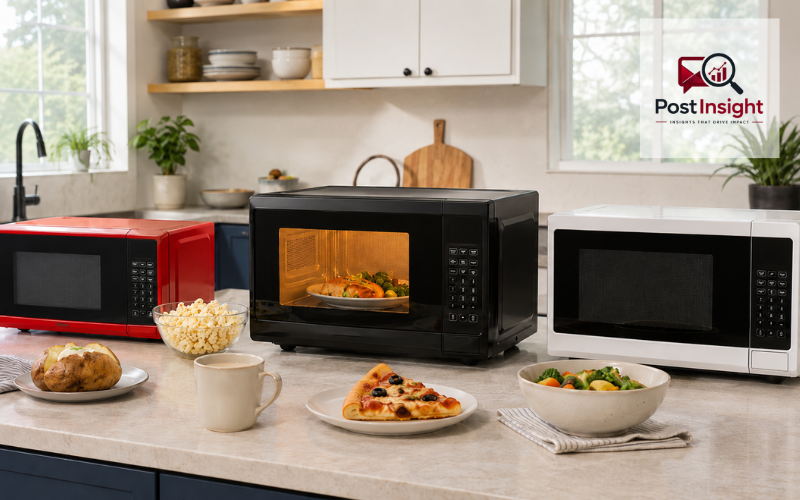
A Hamilton Beach microwave is often considered by shoppers who want simple controls, useful cooking features, and practical performance without paying for advanced functions they may never use. These countertop microwaves are commonly designed for everyday jobs such as reheating leftovers, warming drinks, cooking frozen meals, defrosting ingredients, and preparing quick snacks.
Different models are available with different capacities, power levels, finishes, and control layouts. Popular configurations include compact 0.9-cubic-foot units with 900 watts of cooking power, midsize 1.1-cubic-foot models with 1,000 watts, and larger 1.6-cubic-foot microwaves with 1,100 watts. Availability can change, so buyers should always check the exact model number and specifications before purchasing.
This guide explains Hamilton Beach microwave sizes, wattage, cooking settings, colors, safety features, maintenance, and possible limitations. It can help you choose a model that fits your countertop, cooking habits, household size, and kitchen style.
Current major-retailer listings commonly feature 0.9, 1.1, and 1.6 cubic-foot configurations with outputs ranging from 900 to 1,100 watts. Features and availability may vary by model and color.
| Capacity | Cooking Power | Best For | Main Benefit |
| 0.9 cubic feet | 900 watts | Dorms, offices, and small kitchens | Compact size for basic reheating |
| 1.1 cubic feet | 1,000 watts | Couples and small families | Good balance of power and capacity |
| 1.6 cubic feet | 1,100 watts | Families and shared kitchens | More room and faster cooking |
| Black finish | Varies by model | Modern or dark kitchens | Blends with many appliances |
| White finish | Varies by model | Bright or traditional kitchens | Clean and simple appearance |
| Red finish | Often older 0.9-cu.-ft. models | Colorful kitchen designs | Bold and distinctive style |
Hamilton Beach countertop microwaves are generally designed for people who want an accessible appliance for routine kitchen tasks. Most models use digital touch controls, an LED display, a removable glass turntable, several power levels, automatic cooking menus, and time- or weight-based defrost settings.
The main differences between models are internal capacity, cooking power, physical dimensions, finish, and available presets. Smaller units take up less counter space but usually heat food more slowly and may not hold large dishes. Larger models offer more room and stronger cooking power, but they require a wider and deeper countertop area.
Current retail listings commonly show 0.9-cubic-foot, 1.1-cubic-foot, and 1.6-cubic-foot Hamilton Beach models. Older, discontinued, regional, or resale listings may include other sizes and designs. Because product lines change, the name “Hamilton Beach microwave” does not refer to one standard set of features. The model label remains the most reliable source for confirming capacity and wattage.
Before comparing buttons and presets, measure the location where the microwave will sit. Record the available width, height, and depth, but do not choose a unit that fills the entire space. Countertop microwaves need open space around their vents so heat can escape safely.
Remember that listed dimensions may not include the extra clearance needed behind or beside the appliance. The power cord, door handle, and door movement can also affect placement. Check that the microwave door can open fully without hitting a wall, cabinet, or nearby appliance.
Capacity should match the dishes you use most often. A compact unit may be large enough for mugs, small bowls, and standard dinner plates, while a family-size model may better accommodate serving dishes, large plates, or meal-preparation containers. Do not rely only on the cubic-foot number. Check the turntable diameter and interior measurements when possible.
Individuals and students may find a smaller microwave sufficient. Couples and small families often benefit from a midsize model, while larger households may prefer the speed and interior room of a 1.6-cubic-foot unit.
Compact microwaves are useful in dorm rooms, studio apartments, offices, recreational vehicles, and kitchens with limited counter space. A 0.7-cubic-foot model is usually intended for basic heating rather than large-scale cooking. Units in this size class often provide around 700 watts, so they may need more time than the instructions printed on frozen-food packaging.
Buyers should note that current 0.7-cubic-foot listings may appear under other brands or private labels rather than Hamilton Beach. Product branding and availability can change between retailers and model years. Therefore, verify the brand, stock number, and model label instead of assuming that every compact microwave in a familiar design belongs to the Hamilton Beach range.
A Hamilton Beach microwave 900 watts model is a more practical compact choice for many users. Current 0.9-cubic-foot listings include 900 watts of cooking power, ten adjustable power levels, six automatic cooking menus, an LED display, touch controls, a child lock, and time- and weight-based defrost settings. One listed model measures approximately 19 inches wide, 14.2 inches deep, and 10.6 inches high, although dimensions vary.
A compact unit can handle leftovers, frozen dinners, popcorn, vegetables, and hot drinks. Its limitations may include slower heating, a smaller turntable, and less space for wide bowls or tall containers. It may also require more stirring and rotating to avoid cold areas.
A 1.1-cubic-foot microwave often offers the best balance for everyday household use. It is larger than a dorm-style appliance but normally easier to place than a full family-size microwave. This capacity is commonly suitable for couples, small families, shared apartments, break rooms, and regular home kitchens.
A Hamilton Beach microwave 1000 watts model provides enough power for common reheating and cooking tasks without requiring the space of a larger 1,100-watt unit. Current 1.1-cubic-foot product listings describe 1,000 watts of cooking power, ten power levels, quick-set menus, a digital clock, a cooking timer, and defrosting by time or weight. Common presets may include popcorn, potato, pizza, frozen vegetables, beverages, and dinner plates.
This size works well for reheating full meals, softening ingredients, preparing frozen foods, steaming vegetables, and defrosting smaller portions of meat. The added wattage can reduce cooking time compared with a 700- or 900-watt microwave.
However, midsize does not always mean small on the outside. Control panels, handles, insulation, and ventilation areas add to the appliance’s total dimensions. Measure carefully and compare the external size with the usable interior space.
A 1.6-cubic-foot Hamilton Beach microwave is designed for households that regularly use larger plates, bowls, and food containers. It may be a better choice for families, shared homes, offices, or anyone who uses a microwave as an important part of daily meal preparation.
Current 1.6-cubic-foot models can provide 1,100 watts of cooking power. One listed sensor-cook model includes seven sensor presets, a 30-second one-touch control, a digital clock and timer, and a 12.4-inch glass turntable. Sensor cooking is intended to adjust heating based on conditions inside the microwave, although results can still depend on food type, portion size, moisture, and container shape.
The extra power of a Hamilton Beach microwave 1100 watts model can shorten reheating times and make it easier to prepare larger portions. It may also follow packaged-food instructions more closely because many cooking directions are written for microwaves near the 1,000-watt range.
The trade-off is physical size. One current listing gives dimensions of about 19.8 inches in width and 21.8 inches in depth. Buyers should check the complete measurements, rear vent position, required clearance, and door swing before ordering.
Microwave wattage describes cooking output. In general, a higher-wattage microwave heats the same amount of food more quickly than a lower-wattage model. However, power alone does not guarantee perfectly even results. Food shape, moisture, density, starting temperature, container type, and placement on the turntable also affect heating.
A 700-watt microwave is suitable for basic use but usually needs extra time. A Hamilton Beach microwave 900 watts model offers a useful step up for reheating and frozen meals. A 1,000-watt unit is a flexible everyday choice, while an 1,100-watt microwave provides faster cooking and is often paired with a larger interior.
Packaged-food instructions may be based on a particular wattage. When your microwave is less powerful, add time in small amounts rather than setting one long cooking cycle. Stop to stir, turn, or rearrange the food. When using a higher-powered model, check the food early to avoid drying or overheating it.
Allowing food to stand for a short period after heating can also improve temperature balance. The FDA recommends covering, stirring, and rotating food during microwave cooking and allowing standing time before checking the internal temperature.
One-touch cooking menus are among the most convenient Hamilton Beach microwave features. Depending on the model, presets may be available for popcorn, potatoes, pizza, beverages, frozen vegetables, reheating, or dinner plates. The user selects the food category, and the microwave applies a programmed time or cooking method.
Express controls make short heating tasks faster. Some models allow users to start a cooking cycle immediately by pressing a number button, while others provide a dedicated 30-second control. This is useful for warming coffee, softening butter, reheating a small serving, or adding more time to an active cooking cycle.
Presets should be treated as starting points rather than perfect instructions. Two bowls of food may need different times even when they contain the same meal. Portion size, refrigerator temperature, container material, and food thickness can change the result.
Watch food closely the first few times you use a preset. If the center remains cold, stir the food and heat it in short intervals. When a preset repeatedly overcooks a particular item, use manual time and power controls instead.
Many Hamilton Beach microwave models offer defrosting by weight and by time. Weight defrost asks the user to enter the approximate weight of the frozen food. The microwave then calculates a suitable cycle. Time defrost gives the user direct control over how long the appliance operates.
Defrosting works best when food is turned, separated, or rearranged during the cycle. Thin edges may begin cooking before the center has thawed, so check the food regularly. Lower power settings can also help soften frozen ingredients or warm delicate foods without applying full power continuously.
Some models or older manuals describe multi-stage cooking, which allows one cooking setting to follow another automatically. For example, a defrost cycle may be followed by a lower- or higher-power cooking stage. This feature is model-specific and should be confirmed in the correct Hamilton Beach microwave manual. An older Hamilton Beach manual documents time and weight defrost, several power levels, instant settings, and express-cook controls, but newer models may operate differently.
Food thawed in a microwave should generally be cooked immediately because parts of it may become warm or begin cooking during defrosting.
A child lock or control lock helps prevent the microwave from being started through accidental button presses. It is useful in homes with young children, but it does not replace adult supervision. Locking procedures vary, so users should follow the instructions written for their exact model.
Place the microwave on a stable, level surface. Do not block its vents or place it directly beside another appliance that produces strong heat. Never operate a microwave with a damaged door, broken latch, cracked seal, or badly damaged interior.
Use containers clearly marked as microwave-safe. Glass, ceramic, paper, and suitable plastics are commonly used because microwaves can pass through these materials, but containers can still become hot from the heated food. Metal cookware and ordinary aluminum foil should generally be avoided unless the model’s instructions specifically permit limited use.
Remove food from foam trays, unsuitable plastic wrapping, or packaging that contains metal before defrosting. Also be careful when heating plain water, as overheated water can erupt suddenly when moved or disturbed.
Color does not affect cooking power, but it can influence how well the appliance fits the room. A Hamilton Beach microwave black finish works well with dark cabinets, black appliances, and modern kitchen designs. Black surfaces may hide some stains, although dust and fingerprints can still be visible.
A Hamilton Beach microwave white finish can brighten a small space and match traditional white appliances. Current 1.1-cubic-foot listings include white as an available finish alongside stainless steel and black stainless steel, although stock and color choices vary.
A Hamilton Beach microwave red finish creates a stronger visual feature. Red 0.9-cubic-foot, 900-watt models have been sold with ten power levels, one-touch cooking settings, a digital clock, and a child safety lock. Some red versions may be older, discontinued, or available only through selected sellers, so buyers should check condition and warranty coverage carefully.
Stainless steel and black stainless steel tend to blend easily with modern refrigerators and ranges. Regardless of color, compare the control-panel design, handle style, surface care requirements, and actual availability.
The Hamilton Beach microwave manual is important because controls are not identical across models. The correct manual explains installation clearance, clock settings, power levels, defrosting, lock controls, cleaning, troubleshooting, and safety warnings.
Find the model number on the appliance label, which may be located on the back, side, door frame, or inside edge. Search using the complete model number rather than only the brand and capacity. A manual for another Hamilton Beach microwave may show different button combinations or settings.
Before first use, remove all packaging materials and confirm that the glass turntable, roller ring, and support parts are correctly positioned. Set the clock if required, then test the appliance using the procedure recommended in the manual.
For routine cleaning, unplug the microwave and wipe the interior with a soft cloth, warm water, and mild dish soap. Wash the removable turntable after it cools. Clean spills quickly so they do not harden or create odors. Avoid abrasive pads, harsh chemicals, and excessive water around the control panel or vents.
Never remove internal panels or attempt electrical repairs. Unusual sparking, burning smells, damaged wiring, or door problems should be inspected by a qualified service professional.
A balanced Hamilton Beach microwave review should consider the exact model rather than judging the entire range as one product. Common strengths include straightforward controls, several useful presets, multiple power levels, defrost functions, readable displays, and competitive pricing.
The 0.9-cubic-foot models are attractive for small spaces, while the 1.1-cubic-foot range offers a practical combination of capacity and 1,000-watt performance. The 1.6-cubic-foot sensor models provide more room, stronger output, and additional automatic cooking functions. Current retail listings show high customer-rating volumes for several of these configurations, but ratings should be read carefully because product pages can combine colors, model revisions, or related variants.
Possible drawbacks include operational noise, a large exterior compared with the usable interior, slower cooking in lower-wattage units, visible fingerprints, and differences between models that appear similar. Some users may also prefer physical knobs, inverter heating, convection cooking, or smart controls, which are not standard features across this range.
Before buying, compare capacity, turntable diameter, wattage, external measurements, vent clearance, door type, presets, warranty terms, seller reputation, and return policy. A Hamilton Beach microwave is most suitable for shoppers who value simple daily performance over advanced cooking technology.
Choosing the right Hamilton Beach microwave depends mainly on space, capacity, and cooking power. A compact 900-watt model can be suitable for a small apartment, dorm, or office. A 1.1-cubic-foot, 1,000-watt microwave is a balanced option for everyday household use, while a 1.6-cubic-foot, 1,100-watt model provides more space and faster performance for families and shared kitchens.
Features such as quick-set menus, express controls, multiple power levels, time and weight defrosting, sensor cooking, and child locks can make daily use more convenient. Color choices, including black, white, red, and stainless finishes, allow buyers to match the appliance with their kitchen style.
Because Hamilton Beach microwave features and availability vary by model and retailer, confirm the model number, dimensions, wattage, interior capacity, manual, warranty, and included functions before making a final purchase. The best choice is not necessarily the largest or most powerful model—it is the one that fits your countertop and handles your normal cooking needs comfortably.
A Hamilton Beach microwave can be a practical choice for shoppers who want straightforward controls, useful cooking presets, several power settings, and an affordable countertop appliance for everyday heating.
A 0.9-cubic-foot model suits limited spaces, while a 1.1-cubic-foot microwave works well for most households. Larger families may prefer the extra room of a 1.6-cubic-foot model.
A 900-watt model is generally suitable for reheating meals, warming drinks, cooking snacks, and preparing frozen food. It may need slightly longer cooking times than 1,000- or 1,100-watt models.
Check the model number printed on the microwave’s product label, then search for the matching manual. Controls and lock instructions can differ between models, so use the exact model number.
Depending on current stock and model availability, shoppers may find black, white, stainless steel, black stainless steel, or red finishes. Not every size and wattage is offered in every color.
Disclaimer: Product specifications, colors, prices, and availability may change. Always confirm the model number, wattage, dimensions, features, warranty, and manual before purchasing.


