
 11
11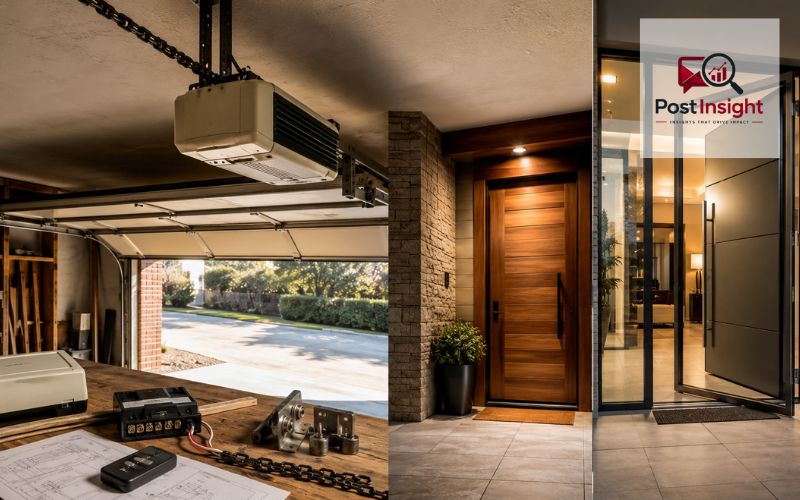
The phrase ambass a door can be confusing because it does not point to one single product. In many searches, it refers to an older Ambass-a-dor residential garage door opener made under the Napoleon/Lynx name. In other cases, people are looking for an Ambassador-branded commercial door operator, a replacement remote, a wiring diagram, or a manual for an older system. The same wording can also lead to architectural door and window companies that are not connected to the garage opener.
This article separates those meanings in plain English. It explains how to identify an older opener, understand its basic operation, check simple faults safely, and decide whether repair or replacement is sensible. It also clarifies the connection between the former British Ambass-A-Door business and Lomax + Wood, as well as the separate South African company called Ambassador Doors & Windows.
| Search Intent | What It May Refer To | What to Check |
| Vintage garage opener | Older Ambass-a-dor or Ambassador operating systems | Model number, serial number and power rating |
| Opener manual | Installation, wiring or operating instructions | Exact opener model and manufacturer name |
| Replacement remote | Original transmitter or compatible receiver kit | Frequency, coding method and receiver model |
| Replacement parts | Motor, sensor, gear, control board or switch | Part number, voltage and connector type |
| Smart upgrade | Bluetooth or Wi-Fi garage controller | Wall-button wiring and safety compatibility |
| Timber windows and doors | Former British Ambass-A-Door business | Product records and Lomax + Wood connection |
| Custom architectural doors | Ambassador Doors & Windows in South Africa | Location, material, measurements and design |
When someone types “ambass a door” into a search engine, the spelling may be a shortened or phonetic version of Ambass-a-dor. That name appears on older residential garage door opener manuals carrying Napoleon/Lynx branding. The Lynx service archive also lists Ambassador residential manuals, an MRE residential opener manual, AMR drawings, and RSL 9000 and 9060 operator drawings.
A different search intent relates to Ambass-A-Door, a British timber window and door business that was rebranded as Lomax + Wood in 2013. Another separate result is Ambassador Doors & Windows in Cape Town, which makes and installs aluminium, timber, and frameless-glass products.
These businesses should not be treated as the same company. Before ordering a part, requesting a quotation, or arranging a repair, confirm whether you have a garage door operator, a timber architectural product, or a door from the South African manufacturer.
Ambass-a-dor garage door openers are older powered systems designed to raise and lower residential garage doors. The surviving manuals show Napoleon/Lynx branding and include installation, operation, troubleshooting, and safety information. The company’s current service page keeps a collection of older manuals and drawings, which is useful for owners and technicians working on equipment that may no longer have paperwork attached to it.
Some Ambassador-branded documents also cover heavier operator systems and commercial-style hardware. This helps explain why one “Ambassador” search may bring up a compact residential ceiling unit while another leads to larger door operators, chains, controls, and wiring diagrams.
The age of a unit matters. An opener that still works may have worn drive parts, old wiring, outdated radio controls, or missing safety equipment. Continued operation should depend on the condition of both the opener and the door itself, not simply on whether the motor still runs.
The Lynx archive includes documents for the Ambassador RSL 9000 and 9060, an Ambassador Model Residential Electronic (MRE) opener, and an Ambassador Residential Door Opener. The 9000 PC and 9060 PC parts information shows differences in motor and internal components, so a part that looks similar may not be correct for both versions.
Begin identification at the opener’s power head, usually mounted above the garage door. Look for a label showing the brand, model number, serial number, voltage, frequency, and motor rating. The MRE manual itself provides spaces for the model number, serial number, purchase date, and installation date, showing how important those details are for service records.
Also inspect the radio receiver and remote. A receiver may have its own model, frequency, code switches, or programming instructions. Record all visible numbers and take clear photographs before contacting a supplier. Do not rely only on the word “Ambassador,” because that name appears across several systems and product families.
A typical residential Ambass-a-dor opener uses an electric motor to move a drive mechanism connected to the garage door. Depending on the model, the moving parts may include a chain, belt, pulley, sprocket, rail, and trolley. The opener guides the door along its tracks, but the door’s springs carry much of its weight.
The wall push button sends a simple command to start, stop, or reverse movement. The MRE instructions describe a sequence in which one press starts the door, another stops it, and the next changes direction. The radio transmitter and key switch perform a similar control function.
Limit controls tell the opener where to stop at the fully open and fully closed positions. Safety features are meant to prevent the door from continuing downward when it meets an obstruction or when a safety beam is interrupted. The MRE manual states that the door should stop and reverse when the safety system is triggered.
Modern openers often provide quieter drive systems, rolling-code security, battery backup, built-in lighting controls, and app access. An older Ambass-a-dor may have simpler controls and may require external equipment for features that are now built in.
One common complaint is that the motor runs but the chain and door do not move. The MRE troubleshooting guide lists this as a specific symptom, which may point to a drive or connection fault rather than a problem with the remote. It also covers doors that reverse after starting to close, controls that work from the wall but not from the transmitter, and doors that stop before reaching the open or closed limit.
A door that closes and immediately reverses may have an obstruction, misaligned safety sensors, incorrect force settings, or a limit problem. A remote-only failure may be caused by a weak battery, lost coding, damaged transmitter, receiver fault, or radio interference. Slow movement, grinding, repeated clicking, overheating, or an electrical smell should be treated as warning signs rather than normal aging.
The opener is not always the true cause. Broken or weak springs, worn rollers, bent tracks, loose hardware, or a poorly balanced door can overload the motor. If the door feels unusually heavy when disconnected from the opener, stop using it and arrange professional service.
Start with checks that do not require dismantling the opener. Confirm that the outlet has power, the circuit breaker has not tripped, and the opener is plugged in firmly. Replace the remote battery, test the wall control, and make sure any manual lock on the garage door is released.
Inspect the doorway and tracks for objects that could block movement. Clean the photoelectric sensor lenses and check whether the sensors face each other. Look for loose low-voltage wires, but do not touch damaged mains wiring. If the door is stuck, crooked, unusually heavy, or hanging from one side, stop testing it.
Disconnect electrical power before opening a cover or going near internal moving parts. Do not adjust torsion springs, extension springs, lifting cables, or bottom brackets. These components can store dangerous force. The manufacturer’s residential instructions warn that an improperly balanced door and broken springs can cause severe injury, and they direct spring, cable, and hardware repairs to qualified service personnel.
The opener’s model number is only one part of remote compatibility. The receiver may have been replaced during the life of the system, which means the correct remote could depend on the receiver rather than the original power head.
Check the receiver label for its operating frequency, brand, model, and coding method. Older systems may use small code switches inside both the remote and receiver. Others may have a learn button or a separate plug-in receiver. The RSL 9000 and 9060 drawings note support for a standard 24-volt, three-terminal radio control, but that does not mean every modern remote will work directly.
When an original remote is unavailable, a technician may be able to install an external receiver and supply matching transmitters. This can be more practical than hunting for an old remote with uncertain condition. A “universal” remote should only be purchased after its supported frequencies and coding systems have been compared with the installed receiver.
Some older openers can be given phone control through a third-party module that acts like the existing wall button. The device normally connects to the low-voltage wall-control terminals and sends a brief signal to operate the door.
BlueMate currently states that its GarageMax controller works with residential openers that use a standard wall switch. That broad description suggests that some Ambass-a-dor units may be suitable, but it is not a guarantee for every model or altered installation. Compatibility must be checked at the actual terminals, especially where the wall control uses unusual electronics rather than a simple contact.
Choose between Bluetooth and Wi-Fi based on how you plan to use the door. Bluetooth usually requires the phone to be nearby, while Wi-Fi may support remote access. Any smart upgrade should preserve working safety sensors and secure account access. It should not be used to hide mechanical faults, unreliable reversing, damaged wiring, or an unsafe door.
The Napoleon/Lynx service archive is the most useful starting point for documented Ambassador equipment. It lists the MRE residential manual, a general residential opener manual, AMR drawings, RSL 9000 and 9060 drawings, wiring information, and several other operator documents.
Search with the full model number rather than only “ambass a door.” Add terms such as “manual,” “wiring diagram,” “parts list,” or “receiver.” When comparing a replacement part, match the printed part number, voltage, dimensions, connector arrangement, and function. A similar-looking capacitor, board, motor, or limit switch is not automatically safe to install.
Availability can be difficult with older equipment. Used parts may have unknown wear, while old electronic boards can fail after installation. For electrical work, a qualified technician should confirm that the part is suitable and that the repair follows local requirements.
A repair may make sense when the door is in good condition and the fault is simple, such as a damaged wall button, failed remote, loose low-voltage wire, or replaceable external receiver. A smart or radio-control upgrade can also extend the useful life of an otherwise safe opener.
Replacement becomes more reasonable when faults keep returning, important parts cannot be sourced, the motor or drive system is badly worn, or the opener lacks reliable safety protection. Excessive noise, poor security, damaged wiring, and an inability to pass a reversal test are strong reasons to consider a modern unit.
Ask a technician to assess the complete door system, not just the opener. Useful questions include whether the door is balanced, whether the springs and cables are safe, whether current safety devices can be fitted, whether the proposed part is new or used, and whether the repair carries a warranty. The best choice is the one that provides dependable and safe operation, not simply the lowest immediate cost.
Not every Ambass-A-Door search concerns a garage. In the United Kingdom, Ambass-A-Door was associated with timber windows and doors. Lomax + Wood stated in 2013 that it had recently rebranded and had formerly traded as Ambass-A-Door. Its announcement described a range that included timber sash and casement windows, entrance doors, bi-fold doors, and sliding doors.
This means a homeowner searching for an old Ambass-A-Door window, entrance door, warranty record, or matching joinery may need information from Lomax + Wood rather than a garage door company. Product photographs, invoices, installation dates, and property records can help establish the correct origin.
The easiest distinction is the product itself. A powered overhead garage mechanism points toward Napoleon/Lynx documentation. A bespoke timber sash window or architectural entrance door in the UK may relate to the former Ambass-A-Door business.
Ambassador Doors & Windows is a Cape Town-based manufacturer and installer. Its current website presents frameless-glass, aluminium, and wooden doors and windows, along with shutters and frames. Its door range includes aluminium and timber hinged doors, pivot doors, sliding doors, folding-sliding doors, barn doors, and Supawood doors.
The company also offers custom pivot doors in timber and aluminium. Its product information notes that designs and sizes can be made to order, while material, finishing, glazing, hardware, installation, and weather-protection details vary by quotation.
This business is separate from the vintage Ambass-a-dor garage opener name and from the former British Ambass-A-Door brand. Before requesting a quote, confirm the project location, opening size, preferred material, glass requirements, finish, installation needs, and exposure to rain or wind.
The term ambass a door can lead to three main areas: older Napoleon/Lynx garage door openers, the former British Ambass-A-Door timber brand now connected with Lomax + Wood, and Ambassador Doors & Windows in South Africa.
For a garage opener, begin with the label on the power head and record the exact model, serial number, voltage, receiver information, and visible symptoms. Use the correct manual, avoid guessing about remote or part compatibility, and leave spring, cable, and electrical repairs to qualified professionals.
For an architectural door or window, confirm the company, country, installation date, and product type before seeking support. Clear identification saves time, reduces the risk of buying the wrong component, and leads to a safer decision about repair, upgrading, or replacement.
Ambass A Door usually refers to an older Ambass-a-dor garage door opener. However, similar names have also been used by companies selling timber windows, entrance doors and custom architectural door systems.
Some remotes, receivers and general electrical parts may still be available from specialist suppliers. Availability depends on the exact model, frequency, voltage and part number, so compatibility must be checked carefully.
Not every universal remote will work. You must compare the receiver frequency, coding system and programming method before buying one. An external receiver kit may be a more practical solution.
Some models may accept a Bluetooth or Wi-Fi controller connected to the wall-button terminals. A technician should first confirm wiring compatibility and ensure that all safety sensors work correctly.
Repair may be worthwhile for a minor fault or receiver problem. Replacement is often safer when parts are unavailable, wiring is damaged, faults keep returning or the opener lacks dependable safety features.
Disclaimer: This article is provided for general informational purposes only. Ambass A Door products may vary by model, age, country and previous modifications. Always verify model numbers, electrical ratings and part compatibility before purchasing or installing components. Garage door springs, cables, motors and electrical systems can cause serious injury if handled incorrectly. Do not perform repairs involving high-tension or powered components unless you have suitable training. Contact a qualified garage door technician or electrician when professional inspection or repair is required.


