
 11
11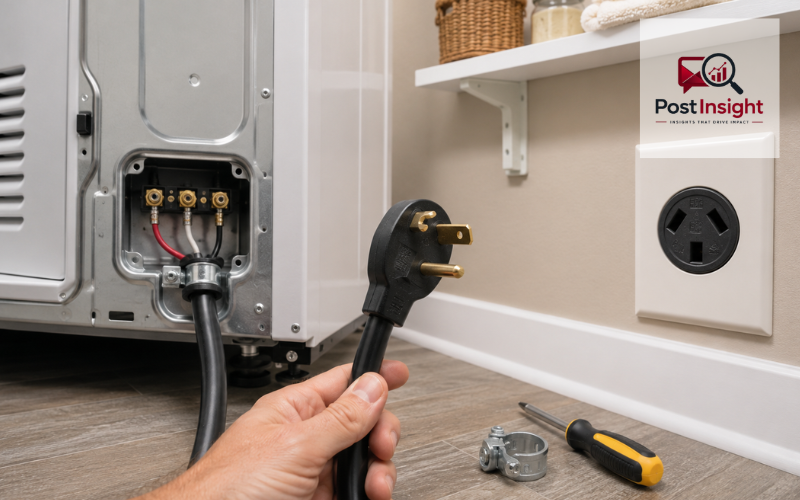
A 3 prong dryer cord connects an electric clothes dryer to an older three-slot wall outlet. It carries the electricity needed to run both the dryer motor and the heating element. Although four-prong connections are now standard for most new dryer circuits, three-prong outlets are still found in many older homes.
Choosing the correct cord is more important than simply finding a plug that fits. The cord must match the wall receptacle, the dryer’s electrical rating, and the instructions supplied by the manufacturer. The terminal connections and neutral bonding arrangement must also be correct. A loose or incorrectly connected wire can cause overheating, equipment damage, electric shock, or fire.
This guide explains the specifications, compatibility, installation, replacement, conversion, and safety concerns associated with a 3 prong dryer cord. Because electrical codes differ by location, the dryer manual and locally adopted rules should always take priority over general instructions.
| Feature | Quick detail |
| Plug configuration | NEMA 10-30P |
| Matching outlet | NEMA 10-30R |
| Electrical rating | 30 amps, 125/250 volts |
| Typical wire size | Three 10-gauge copper conductors |
| Common lengths | 4, 5, and 6 feet |
| Terminal layout | Neutral in the center; hot wires on the outer terminals |
| Grounding arrangement | Dryer cabinet bonded to neutral when permitted |
| Best use | Compatible dryer with an approved existing three-slot outlet |
| Important accessory | Listed strain-relief clamp |
| Safer modern option | Four-wire connection with a separate equipment ground |
Most full-size electric dryers in the United States use a 120/240-volt electrical supply. The heating element generally uses power across the two hot conductors, while components such as the motor, controls, and light may use 120 volts between a hot conductor and the neutral.
A three-prong dryer connection contains two hot conductors and one neutral conductor. It does not include a separate equipment-grounding conductor. In a permitted three-wire installation, the dryer’s metal cabinet is bonded to the neutral through a manufacturer-provided strap or wire.
This arrangement was commonly used with older three-slot laundry receptacles. Modern four-wire connections are safer because the neutral and equipment ground follow separate paths. However, some manufacturers still provide instructions for connecting compatible dryers to existing three-wire systems when local rules allow it.
The common plug configuration for a 3 prong dryer cord is NEMA 10-30P. It fits a NEMA 10-30R wall receptacle. The plug normally has two angled flat blades for the hot conductors and one L-shaped blade for the neutral conductor.
A standard cord is rated for 30 amps and 125/250 volts. Manufacturer installation instructions commonly call for three 10-gauge copper conductors and a cord at least four feet long. Electric dryers also normally require a dedicated 208- or 240-volt branch circuit protected by a 30-amp double-pole breaker or suitable time-delay fuses.
A dryer cord may be labeled as 10/3 SRDT or with similar markings. Buyers should confirm that the cord is specifically approved for electric dryer use. A heavy-looking cable is not automatically suitable. The correct plug shape, conductor size, electrical rating, terminal ends, and product certification all matter.
Both cord types can deliver the power required by a compatible electric dryer, but they handle grounding differently.
| Feature | 3-prong connection | 4-prong connection |
| Common plug | NEMA 10-30P | NEMA 14-30P |
| Conductors | Two hot and one neutral | Two hot, one neutral, and one ground |
| Equipment ground | Shared through the neutral bond | Separate grounding conductor |
| Common location | Existing older installations | Newer and upgraded installations |
| Dryer bonding | Neutral bonded to cabinet | Neutral isolated from cabinet |
The four-prong design provides a dedicated grounding path that normally carries no operating current. This keeps neutral current away from the dryer’s metal cabinet. In a three-wire arrangement, the neutral also performs the bonding function under specific permitted conditions.
The required cord is usually determined by the wall receptacle and the type of branch-circuit wiring behind it, not merely by the age or model of the dryer. Electric dryers are often sold without an attached cord because manufacturers cannot know which approved connection is present in the buyer’s home.
A three-prong plug should never be forced into a four-slot outlet, and the outlet should not be changed simply to fit a different plug without evaluating the circuit wiring.
Four-wire dryer circuits have been the normal requirement for new residential installations for many years. The separate equipment-grounding conductor reduces the chance that neutral current or a neutral fault will energize the dryer cabinet.
The 2026 National Electrical Code, or NEC, is the latest national model code as of 2026. However, the NEC does not automatically become law everywhere on its publication date. States, cities, and other authorities adopt editions on their own schedules and may add local amendments.
An existing three-wire dryer circuit may still be present and may be permitted to remain when it meets the rules adopted in that area. That does not mean every old three-slot outlet is safe. Damaged receptacles, incorrect wiring, missing neutral bonding, aluminum conductor problems, and unapproved alterations may require professional correction.
Do not rely only on a home’s construction year. Renovations and electrical upgrades may have changed the circuit. When the wiring arrangement is uncertain, a licensed electrician should inspect it before a dryer is connected.
Most three-prong cords share the same basic electrical configuration, but they may differ in length, plug angle, terminal design, and included hardware.
Four-foot cords are common, while five-foot and six-foot versions are useful when the outlet is slightly farther from the dryer. GE, for example, lists three-wire dryer cords in several lengths, including four, five, and six feet.
The dryer end may use closed ring terminals or open spade-style terminals. The dryer manufacturer’s instructions should confirm which design is acceptable. Ring terminals stay captured around the screw, while spade terminals may be easier to position on some terminal blocks.
Some plugs extend straight from the outlet, while others have a lower-profile or right-angle design. The best option should fit without being sharply bent or crushed behind the appliance. Look for a cord that is listed by a recognized testing organization and includes, or is compatible with, the required strain-relief fitting. Whirlpool offers a UL-listed four-foot, 30-amp three-wire cord with closed eyelets and an adjustable strain-relief bracket.
Start by examining the wall receptacle without removing its cover. A NEMA 10-30R receptacle has three slots, including an L-shaped neutral opening. A modern NEMA 14-30R receptacle has four openings, including a separate grounding position.
Next, check the dryer’s rating label and installation manual. Confirm that the appliance requires a 30-amp, 120/240-volt or 208/240-volt supply and that the manufacturer permits a three-wire cord connection. Some special or compact dryers have different requirements.
Choose a cord long enough to reach the outlet without tension, but avoid unnecessary extra length behind the dryer. The cord should not be pinched, placed against a sharp metal edge, trapped under the appliance, or stretched across a walkway.
Also check whether the cord includes compatible terminal ends and strain relief. Never choose a dryer cord based only on the number of prongs or its appearance.
A typical electric dryer has a three-position terminal block behind a small access cover. The center terminal is normally the neutral connection. The two outside terminals are the hot connections.
On a three-wire installation, the cord’s center conductor connects to the center neutral terminal. The two remaining conductors connect to the outside terminals. The outer hot wires can usually be placed on either outside terminal because they perform matching supply functions.
The dryer cabinet must also be bonded to the center neutral terminal in the exact manner shown by the manufacturer. This may involve a metal bonding strap, a white wire, or another factory-provided part.
A generic 3 prong dryer cord wiring diagram can help explain the basic layout, but it should never replace the diagram for the specific dryer. Wiring details vary, and the model’s installation manual is the controlling source. GE notes that model-specific wiring diagrams are packaged with its dryers and are often located inside the control area.
Installing a dryer cord involves hazardous voltage. Anyone who is unsure about identifying terminals, checking the circuit, or following the bonding instructions should use a qualified appliance installer or licensed electrician.
Whirlpool’s current support materials continue to provide separate instructions for approved three-wire and four-wire dryer connections, reinforcing the need to use the correct procedure for the appliance and supply system.
A dryer cord should be replaced if it has cracked insulation, melted areas, discolored terminals, bent blades, exposed conductors, or a loose plug body. A plug that feels unusually hot may indicate a worn receptacle, loose terminal, damaged cord, or another electrical fault.
Turn off the breaker and unplug the dryer before removing the access cover. Photographing the existing connections may be useful, but the new cord must still be installed according to the dryer manual rather than relying solely on the previous arrangement.
Inspect the terminal block for heat damage, stripped screws, corrosion, or melted plastic. Check the bonding component and strain relief as well. Replacing only the cable will not correct a damaged receptacle or terminal block.
The replacement should have the same approved NEMA configuration, 30-amp rating, suitable conductor size, and compatible terminal ends. Restore power only after the connections and cover are secure.
A cord change is often needed when a dryer is moved from a home with a three-slot outlet to one with a four-slot outlet. Most compatible dryers can accept either approved cord type, but the internal bonding arrangement must be changed correctly.
In a four-wire installation, the neutral terminal must be isolated from the metal cabinet. The bonding strap or bonding wire is moved or disconnected according to the model instructions. The cord’s white neutral conductor connects to the center terminal, while the green grounding conductor connects directly to the dryer frame. The red and black conductors connect to the outside terminals.
Do not install a four-slot receptacle on an old three-wire circuit unless the required equipment-grounding conductor is actually present or a code-compliant upgrade is completed. Changing the visible receptacle does not change the wiring behind it.
A dryer cord 3 prong adapter may appear to offer a quick way to connect mismatched equipment and outlets. However, an adapter cannot automatically provide a proper grounding conductor where none exists.
Some adapters are marketed with a separate grounding lead. Their safety and legality depend on the complete circuit, the grounding connection, product listing, manufacturer approval, and local rules. Connecting a small ground lead to a random screw, pipe, nearby receptacle, or other convenient object is not a safe substitute for a verified grounding path.
The safer solution is normally to install the correct cord for a compliant existing receptacle or have the circuit professionally upgraded to a four-wire connection. Never use a homemade adapter, modify the plug blades, remove a prong, or connect a full-size electric dryer through an ordinary extension cord.
A “3-prong dryer cord to 4-prong” conversion should occur at the dryer terminal block using the manufacturer’s approved method, or through a proper branch-circuit upgrade—not through improvised wiring.
Loose terminal screws are among the most serious installation mistakes. A loose connection creates electrical resistance, which can generate damaging heat. Missing strain relief is another problem because movement of the cord can pull directly on the terminal connections.
Incorrect neutral bonding is also dangerous. The cabinet must be bonded as directed for an approved three-wire setup, but the neutral must be separated from the cabinet for a four-wire setup.
Stop using the dryer if you notice a burning smell, buzzing at the outlet, sparks, smoke, melted insulation, discoloration, a hot plug, or repeated breaker trips. Turn off the breaker if it can be done safely and keep the appliance disconnected until it has been inspected.
A breaker that continues to trip should not be reset repeatedly. Likewise, a loose or cracked wall receptacle should be replaced only after the circuit has been evaluated. These symptoms can indicate a damaged connection, overloaded component, internal appliance fault, or unsafe branch wiring.
Three-prong dryer cords are commonly available from appliance-parts suppliers, electrical distributors, hardware stores, and major home-improvement retailers. Searching for a 3 prong dryer cord nearby may show local stock, but availability can vary by cord length and terminal style.
When examining a 3 prong dryer cord at Home Depot or another retailer, verify the NEMA 10-30 plug configuration, 30-amp rating, cord length, conductor size, terminal design, listing marks, and strain-relief hardware. Also compare the product details with the dryer manual.
Do not assume that every three-prong appliance cord is interchangeable. Range cords, dryer cords, welding plugs, and other high-voltage products can have different ratings and configurations even when they look similar.
A 3 prong dryer cord can be suitable for a compatible dryer connected to a permitted existing NEMA 10-30 outlet. It normally uses two hot conductors and one neutral conductor, with the dryer cabinet bonded to the neutral according to the manufacturer’s three-wire instructions.
Before installing or replacing the cord, confirm the outlet configuration, dryer rating, conductor size, terminal arrangement, strain relief, and local electrical requirements. Never use an adapter or altered receptacle merely to make mismatched connections fit.
Four-wire circuits provide a separate equipment-grounding path and are the standard choice for new or properly upgraded installations. When the condition of the outlet, grounding arrangement, or branch wiring is uncertain, professional inspection is the safest next step.
Yes, if the dryer supports a three-wire connection, the existing outlet is suitable, local rules permit it, and the manufacturer’s model-specific installation instructions are followed.
Usually, yes. On compatible dryers, the neutral must be separated from the metal cabinet, and the dedicated grounding wire must be connected according to the appliance manual.
An adapter does not automatically create a proper equipment-grounding path. Installing the correct approved cord or having the electrical circuit professionally upgraded is generally the safer option.
A standard 30-amp three-prong dryer cord commonly uses three 10-gauge copper conductors and is designed to match a NEMA 10-30 wall receptacle.
Replace it if the plug is loose, blades are damaged, insulation is cracked, terminals are discolored, or any part of the cord shows melting, burning, or overheating.
Disclaimer: This article provides general information only. Dryer wiring can cause shock, fire, or serious injury. Always follow the appliance manual and local electrical rules, or hire a licensed electrician when uncertain.


