
 11
11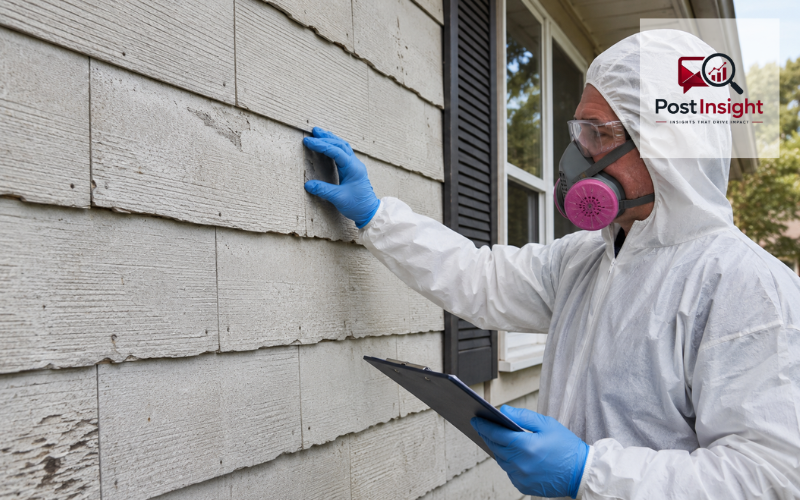
Asbestos siding is an exterior building material made by mixing cement with asbestos fibers. The cement created a hard, weather-resistant surface, while asbestos added strength and fire resistance. Because it was durable, affordable, and required less maintenance than many wood products, asbestos-cement siding appeared on many homes built or renovated during the twentieth century.
A house with asbestos siding is not automatically unsafe. The risk is usually lower when the shingles are firm, intact, painted, and left undisturbed. Problems begin when the material is damaged or when someone drills, cuts, sands, grinds, breaks, or removes it. These activities can release tiny asbestos fibers into the air. The U.S. Environmental Protection Agency advises that asbestos-containing material in good condition is often best managed in place rather than disturbed unnecessarily.
Many older homes still have asbestos siding because the material can remain serviceable for decades. Homeowners may discover it during an inspection, an exterior repair, or a siding replacement project. Understanding its condition is the first step toward deciding whether to maintain, cover, repair, or remove it.
This guide explains what asbestos siding looks like, how it is tested, when it may become dangerous, and what homeowners should consider before painting, replacing, or removing it.
| Situation | Risk Level | Recommended Action |
| Firm, painted, and undamaged siding | Lower | Inspect regularly and leave it undisturbed |
| Small cracks or isolated chips | Moderate | Avoid touching the area and arrange a professional assessment |
| Siding needs painting | Depends on condition | Use gentle preparation without sanding, scraping, or pressure washing |
| Renovation requires drilling or cutting | High | Test the material and hire a qualified asbestos professional |
| Loose, broken, or crumbling shingles | High | Restrict access and seek professional repair or removal |
| Complete siding replacement | Depends on project | Compare safe overlay, repair, and professional removal options |
Asbestos siding often appears as hard, thin cement shingles installed in overlapping horizontal rows. Many shingles have a rectangular shape and may measure around 12 by 24 inches, although sizes vary by manufacturer and installation period. The material usually feels much harder and more brittle than wood.
Some asbestos-cement shingles have an embossed wood-grain surface designed to imitate traditional wood siding. Others have a smooth face, straight bottom edge, scalloped design, or distinctive wavy lower edge. Historic building guidance also shows that wood-grain patterns and wavy edges were common visual features.
You may also notice two or three exposed nail heads near the lower part of each shingle. The edges can look sharp and cement-like, especially where a piece has already been chipped.
However, appearance alone cannot confirm that siding contains asbestos. Older fiber-cement products and some modern replacement shingles can look very similar. The age, size, pattern, and texture may provide clues, but laboratory testing is the only reliable way to know.
Start by reviewing any available building records, old inspection reports, renovation documents, permits, or product receipts. A previous owner may have recorded when the siding was installed. Manufacturer names or codes may occasionally appear on the back of loose shingles, but homeowners should not remove a piece simply to search for markings.
Do not break off a sample yourself. Incorrect sampling can release fibers and create a risk that did not previously exist. EPA guidance recommends that samples be collected by a trained and accredited asbestos inspector, especially when the material is damaged or a renovation may disturb it.
The inspector can select a suitable sampling location, reduce damage, and arrange analysis through a qualified laboratory. EPA resources also point homeowners toward accredited laboratories that test building materials for asbestos content.
Testing may not be necessary when the siding is in good condition and no work will disturb it. It becomes more important before drilling, window replacement, demolition, major repair, or installation of a new exterior system.
The answer depends mainly on the siding’s condition and what happens to it.
Asbestos-cement siding is normally considered non-friable. This means the fibers are tightly bound within a hard cement mixture and the material cannot easily be reduced to powder by hand. EPA guidance classifies cement wall and roof shingles as non-friable asbestos-containing materials.
Intact siding generally presents a lower exposure risk than soft or crumbling asbestos insulation. However, non-friable does not mean harmless under every condition. Cutting, sanding, drilling, grinding, sawing, or breaking the shingles can free fibers from the cement. OSHA therefore restricts cutting, abrading, and breaking asbestos-containing siding during regulated construction work unless safer methods cannot be used.
When asbestos fibers become airborne, they can be inhaled deep into the lungs. Asbestos exposure is linked to asbestosis, lung cancer, and mesothelioma. These illnesses may take many years to appear, and mesothelioma is strongly associated with asbestos exposure.
The safest approach is to avoid disturbing suspected siding until it has been properly assessed.
An occasional small chip does not always mean the entire exterior has failed, but visible damage should not be ignored. Look for shingles that are cracked, badly chipped, loose, missing, deeply weathered, or breaking apart around fasteners.
Damage can result from falling branches, ladders, lawn equipment, storms, moisture, freeze-and-thaw cycles, or earlier repairs. Improper pressure washing can also harm an aging surface. Repeated drilling for lights, cables, vents, shutters, or replacement windows may leave additional breaks around the attachment points.
Pay special attention to areas near the roofline, corners, doors, windows, utility connections, and the bottom of walls. These locations are more likely to experience impact, water exposure, or previous construction work.
Do not scrape a damaged area to test its strength. Instead, photograph it from a safe position and prevent children, pets, workers, and visitors from touching it. If several shingles are loose or crumbling, contact a qualified asbestos professional. Federal consumer guidance recommends professional repair or removal when asbestos material is more than slightly damaged or will be disturbed by planned work.
One common myth is that every house with asbestos siding needs immediate removal. In reality, removing intact material without a clear reason can create more exposure than leaving it undisturbed. EPA and CPSC guidance both support managing sound asbestos-containing material in place when it is unlikely to be damaged.
Another myth is that a regular dust mask makes DIY cutting or removal safe. Asbestos work requires more than simple face covering. Professional procedures may involve controlled wetting, protective clothing, suitable respiratory protection, careful packaging, restricted access, and regulated disposal.
Homeowners often search asbestos siding Reddit discussions for personal experiences. These conversations may help reveal questions to ask, but they should not replace local regulatory guidance or a professional inspection. Advice from one region may be illegal or unsafe in another.
Pressure washing is also commonly recommended online, yet strong water pressure may chip or erode old cement shingles. Painting is not automatically unsafe, but preparation must not involve sanding, grinding, aggressive scraping, or other dust-producing work.
The phrase “asbestos siding vs asbestos” usually reflects confusion between a specific building product and asbestos as a general material.
Asbestos is a group of naturally occurring mineral fibers. It was used in many products, including insulation, floor materials, roofing, cement products, fireproofing, and vehicle parts. Asbestos siding is simply one type of product that may contain those fibers.
The risk is not identical across all asbestos materials. Soft pipe insulation, sprayed coatings, and badly damaged insulation may release fibers more easily because they can be friable. Cement siding normally binds the fibers in a rigid material, making release less likely while it remains intact.
Still, mechanical force can change the risk. A hard shingle can become dust and fragments when it is drilled, sawed, crushed, or aggressively removed. The correct decision should therefore consider both the type of material and its present condition, not merely whether the word “asbestos” appears in its name.
Asbestos siding and modern fiber-cement siding can look similar because both use cement-based material and may imitate wood grain. Their main difference is the reinforcing fiber.
Historic asbestos-cement siding used asbestos fibers. Modern fiber-cement products generally use cellulose, which is a wood-based fiber, along with Portland cement, sand or silica, and water. A major fiber-cement manufacturer identifies cellulose fiber, silica, Portland cement, and water as its principal raw materials.
Modern fiber-cement siding should not be assumed to contain asbestos simply because it is cement-based. At the same time, an older cement shingle should not be declared asbestos-free based only on appearance.
Installation date can provide useful context, but records are not always accurate, and materials may have been stored or installed years after manufacturing. Replacement shingles may also have been mixed with original siding during past repairs. When old siding will be disturbed, professional testing is more dependable than visual comparison.
Routine inspection should be visual and gentle. Walk around the home and look for changes in condition without touching, scraping, or flexing the shingles. Keep notes or photographs so you can compare the same areas over time.
Avoid using a pressure washer, wire brush, power sander, grinder, or abrasive cleaning product. These methods can damage the cement surface and may release contaminated dust. Dry sweeping or ordinary household vacuuming should also be avoided where suspected asbestos debris is present, because they may spread fibers rather than contain them. EPA maintenance guidance favors controlled wet-cleaning methods and specialized equipment for asbestos-related work.
For ordinary dirt on sound siding, seek advice from an asbestos-aware exterior contractor before cleaning. A gentle, low-pressure method may be suitable, but the correct approach depends on the coating, siding condition, and local rules.
Inform electricians, cable installers, window contractors, painters, and other workers that the siding may contain asbestos. This helps prevent accidental drilling or cutting.
Painting may improve the appearance of intact asbestos siding and help protect its surface from weather. Encapsulation is a related method in which a coating or sealant binds or covers the material so fibers are less likely to escape.
The important issue is surface preparation. Normal painting work often includes scraping, sanding, pressure washing, or replacing damaged sections. Those activities can be unsafe on asbestos-containing siding. A professional familiar with asbestos should first decide whether the shingles are stable enough to coat and what preparation method can be used without creating dust.
EPA describes sealing and covering as forms of asbestos repair, but it recommends that this work be performed by professionals trained to handle asbestos safely. The asbestos remains in place after encapsulation, so future owners and contractors must still be told about it.
Encapsulation is not a cure for badly broken, loose, or crumbling shingles. Applying paint over unstable material may hide the damage without correcting the underlying problem.
Asbestos siding replacement does not always require immediate removal of every original shingle. In some situations, a contractor may install a new exterior system over sound asbestos-cement siding. This is commonly called an overlay or enclosure.
The contractor may use an appropriate underlayment or other system to provide a suitable surface for the new siding. The design must account for moisture control, wall thickness, windows, doors, flashing, ventilation, and attachment points. Most importantly, installation should avoid unnecessary breaking or drilling of the asbestos material.
Some government guidance recognizes painting or siding over intact asbestos-cement shingles as possible alternatives to removal, provided the work is performed without damaging the original material.
Selective repair may be possible when only a few shingles are damaged, but matching replacement pieces can be difficult. Complete removal offers access to the wall beneath and avoids leaving asbestos for future projects, yet it creates higher short-term cost and requires careful handling.
A qualified contractor should compare all three options—repair, overlay, and removal—based on the siding’s condition and the planned renovation.
Removal becomes more reasonable when the siding is extensively damaged, cannot be repaired, or must be disturbed during major remodeling. Examples include demolition, structural wall changes, large additions, widespread water damage, or replacement of many windows and doors.
Removal may also be selected when a homeowner wants full access to the wall sheathing or does not want asbestos-containing material left under a new exterior. However, removal should not be treated as a casual demolition project.
Improper removal can break hundreds of shingles, spread debris across the property, contaminate clothing, and expose workers or neighbors. EPA warns that poor removal may increase a family’s exposure rather than reduce it.
A trained asbestos contractor understands how to restrict the work area, keep material controlled, remove shingles as intact as possible, package waste, clean the site, and follow local disposal rules. OSHA’s construction requirements also emphasize wetting asbestos-cement panels, avoiding breakage, and lowering or wrapping material carefully.
Asbestos siding removal cost varies widely, so a single national figure can be misleading. Recent U.S. consumer cost data places many removal estimates around $5 to $15 per square foot, but the final amount may be higher for difficult, heavily regulated, or badly damaged projects. Replacement siding is generally a separate expense.
The total cost depends on the size and height of the house, the amount of siding, its condition, site access, local labor rates, and the distance to an approved waste facility. Setup, testing, permits, notifications, protective measures, packaging, transport, disposal fees, and final cleanup may all appear in the quote.
A low estimate may cover only removal, while another may include testing, waste handling, and preparation for new siding. This difference in scope explains why online figures often disagree.
Ask for a written estimate that identifies exactly what will be removed, who will handle the waste, whether permits and disposal are included, and how unexpected damage will be priced. Comparing several properly licensed contractors is more useful than relying on one online average.
Asbestos requirements vary by state, county, municipality, type of property, and size of project. Federal NESHAP rules cover many renovation and demolition activities, although certain small residential buildings may be excluded from parts of the federal rule. State and local agencies can impose additional requirements, including inspection, notification, licensing, transport, and disposal rules.
Never assume asbestos siding can be placed in normal household trash. Contact the relevant environmental or air-quality agency before work begins. Approved waste facilities may require specific wrapping, labeling, paperwork, and delivery arrangements.
When choosing a contractor, ask for proof of asbestos training, current licensing where required, liability insurance, worker protection procedures, and experience with cement siding. Request references and a clear explanation of containment, cleanup, waste transport, and documentation.
EPA notes that most states require licensing for asbestos professionals in addition to approved training.
The contractor should also explain who is responsible for testing, permits, notifications, and final inspection. Avoid anyone who suggests dry breaking, open dumping, ordinary vacuuming, or removing the material without checking local rules.
Asbestos siding does not always need to be removed. When it is confirmed, intact, and unlikely to be disturbed, maintaining it in place may be the safest and most practical choice. Painting, professional encapsulation, or a carefully designed siding overlay may also be suitable in some cases.
The situation changes when shingles are loose, badly cracked, crumbling, or located where renovation work will cut through them. In those cases, professional assessment and controlled asbestos siding removal may be necessary.
Do not base the decision only on the age or appearance of the house. Confirm the material through qualified testing when work may disturb it, evaluate its current condition, and check the rules that apply in your location.
The best solution is not automatically the cheapest or most aggressive option. It is the approach that limits fiber release, protects occupants and workers, follows disposal requirements, and supports the long-term condition of the home. By leaving sound material alone and obtaining professional help before major work, homeowners can manage asbestos siding without creating an avoidable hazard.
Intact asbestos siding usually presents a lower risk because the fibers remain bound in cement. The main danger begins when shingles are damaged, cut, drilled, sanded, or broken.
Painting may be possible when the siding is firm and undamaged. Avoid sanding, scraping, or pressure washing, and ask an asbestos-aware professional to recommend safe preparation and coating methods.
Age, shape, texture, and nail patterns can provide clues, but appearance cannot confirm asbestos. A trained inspector can collect a sample and arrange testing through a qualified laboratory.
In some cases, contractors can install new siding over intact asbestos-cement shingles. The system must control moisture and avoid unnecessary drilling, breaking, or disturbance of the original material.
Removal cost depends on the home’s size, siding condition, access, local labor, testing, permits, packaging, transport, and disposal fees. Request detailed written estimates from qualified contractors.
Disclaimer: This article is for general information only. Asbestos rules vary by location. Do not disturb suspected asbestos siding; consult a qualified inspector, licensed contractor, and local authority before starting work.


