
 11
11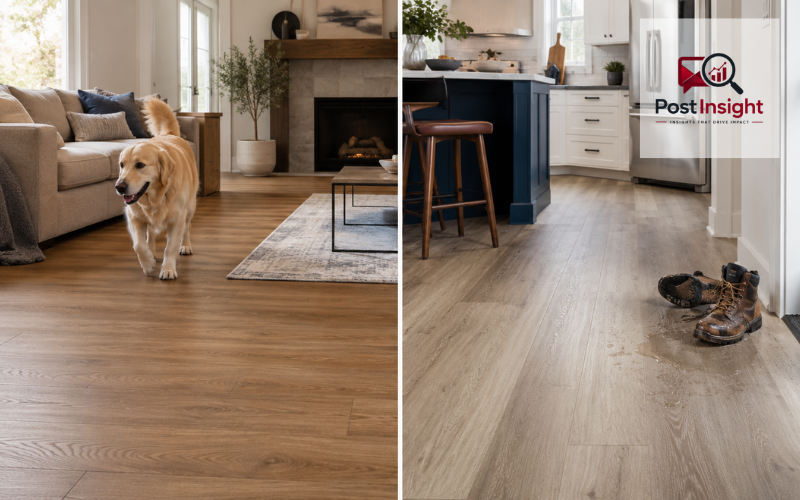
Choosing between Pergo flooring and vinyl can be confusing because Pergo is not one single type of floor. Pergo is a flooring brand that currently sells laminate, luxury vinyl, and other flooring products. Therefore, a fair Pergo flooring vs vinyl comparison usually means comparing Pergo laminate with luxury vinyl plank, often called LVP.
Both can create a wood look without the cost and upkeep of solid hardwood. Laminate is usually firmer, while vinyl is valued for waterproof construction and a softer feel. Cost, durability, installation, and room conditions also matter.
There is no perfect option for every house. A busy kitchen, damp basement, quiet bedroom, and pet-friendly living room may each need a different solution. The best choice comes from matching the exact product specifications to the room, household, and budget.
| Feature | Pergo Laminate | Luxury Vinyl Plank |
| Main material | High-density fiberboard with a printed design and protective top layer | Synthetic vinyl layers with a rigid or flexible core |
| Water performance | Varies by collection; some modern Pergo lines offer waterproof surface-and-subfloor protection | The planks are waterproof, but seams and subfloor conditions still matter |
| Scratch resistance | Usually very good, especially on quality wear surfaces | Good on quality products, but softer vinyl can gouge or dent |
| Underfoot feel | Firm and more wood-like | Softer, quieter, and slightly warmer |
| Typical material cost | Often about $1–$5 per square foot | Commonly about $2–$10 per square foot |
| Best rooms | Bedrooms, living rooms, dining rooms, and dry hallways | Kitchens, bathrooms, laundry rooms, basements, and entry areas |
| Main limitation | The fiberboard core may be vulnerable if moisture gets beyond the protected system | Heavy items and sharp objects may leave dents or gouges |
This is a general guide. Pergo collections vary in thickness, padding, waterproof systems, warranties, and surface treatments, so the model specifications matter more than the brand name alone.
Pergo is a brand, while laminate and vinyl are flooring materials. This answers the common question, “Is Pergo laminate or vinyl?” It can be either. Pergo’s current product range includes both laminate and resilient vinyl flooring, so shoppers must check the product type before comparing prices or features.
Pergo laminate normally has a wood-fiber core, a printed image layer, and a clear protective surface. Pergo vinyl uses synthetic materials and is sold in plank designs that copy wood or stone. General LVP from other manufacturers follows a similar basic design, but its thickness, core, wear layer, locking system, and warranty may be different.
A clearer comparison is Pergo laminate versus Pergo vinyl or another LVP product. Checking the exact collection prevents an entry-level floor from being compared with a premium model.
Pergo laminate is built in layers. The center is commonly made from high-density fiberboard, which gives the plank a stiff and solid feel. Above that core is a printed wood image and a hard protective layer.
Some Pergo laminate products also include an attached pad for cushioning, sound control, and easier installation. One current Elements Ultra product, for example, lists high-density fiberboard construction and a 12-millimeter plank with a 2-millimeter attached pad.
Luxury vinyl plank is also layered, but it does not use a traditional wood-fiber core. It usually contains a backing, a vinyl or rigid composite core, a printed design, and a clear wear layer. That synthetic construction is why the plank itself does not swell like ordinary fiberboard when exposed to water.
Quality varies within both categories. Thickness, locking strength, core stability, print quality, and surface protection determine whether a floor is basic or premium.
Laminate often has an advantage when the goal is a firm floor that looks and feels close to wood. Its rigid core creates a solid step, while modern surface pressing can place texture over the printed grain. Knots, cracks, and color changes may therefore appear more natural.
LVP can also look highly realistic, especially when it uses wide planks, detailed printing, beveled edges, and deeper surface texture. Pergo describes enhanced visual systems in both laminate and vinyl collections, so the difference is not always obvious from a photograph. Seeing a full plank sample is more useful than judging a small online image.
Very thin vinyl may look flatter, while premium rigid vinyl can appear convincing. Strong side lighting may reveal repeated patterns or uneven joints, and poor installation can make any product look artificial.
The color should also be checked inside the room where the floor will be installed. Natural light, artificial lighting, wall colors, and furniture can make the same plank look warmer, cooler, lighter, or darker.
Water performance is one of the biggest differences in a vinyl vs laminate flooring comparison. Vinyl planks are made from waterproof materials, so the plank itself will not absorb water and swell. This makes LVP a practical choice for kitchens, laundry areas, bathrooms, mudrooms, and many basements.
Vinyl is not protection against every water problem. Moisture can travel through edges or become trapped below the floor, so sealing, vapor control, and subfloor preparation remain important.
Modern Pergo laminate also deserves a more careful explanation than older laminate. Pergo currently sells laminate lines with SpillProtect or WetProtect systems, and some collections advertise full-coverage waterproofing from the surface to the subfloor with product-specific warranties. Other products may provide a different level of protection.
For that reason, do not assume all Pergo laminate has the same water limits. Check whether the exact product is approved for a bathroom, basement, or other moisture-prone area.
Installation instructions may require special treatment around walls, toilets, tubs, cabinets, transitions, and expansion gaps. Pergo advises buyers to check product-specific directions before installing its flooring in wet rooms.
Scratch resistance and dent resistance are not the same. A hard laminate surface may resist pet claws, shoe grit, and light dragging better than softer vinyl. Pergo markets several laminate collections as resistant to scratches, scuffs, dents, stains, and everyday family use.
Vinyl can also be durable, but its performance depends heavily on the wear layer and core. A strong wear layer helps protect the printed design from surface wear. Pergo DuraCraft, for example, is currently advertised with a 22-mil wear layer, while other vinyl products may use different specifications.
Because vinyl is softer, heavy furniture may leave dents and sharp objects may cause gouges. Laminate is harder, but a dropped object can chip an edge or surface.
For homes with pets and children, either floor can work well when the right grade is selected. Entrance mats can catch grit before it reaches the floor, while felt pads and wide furniture protectors reduce pressure and scratching.
Pet nails should also be kept trimmed. Sand and small stones carried inside on shoes can act like sandpaper when repeatedly walked across any type of flooring.
Current flooring prices vary by region, retailer, thickness, collection, and installation method. As a broad guide, laminate materials often cost around $1 to $5 per square foot, while LVP may range from about $2 to $10 per square foot.
Installed project costs can be much higher. Recent estimates place laminate at approximately $4 to $14 per square foot installed and luxury vinyl plank at around $4 to $16 per square foot installed. These are planning ranges rather than guaranteed Pergo prices.
The box price is only one part of the Pergo flooring vs vinyl cost. Budget for underlayment, moisture barriers, trim, delivery, waste, removal, leveling, and labor. Subfloor repairs can greatly increase the final price.
A homeowner should normally order extra material to allow for cuts, damaged pieces, and future repairs. Complicated room layouts and diagonal plank patterns usually create more waste than simple rectangular rooms.
DIY installation can reduce labor costs, but mistakes may waste material or affect warranty coverage. It is wise to calculate the complete project price rather than choosing flooring only by its advertised cost per square foot.
Many Pergo laminate and vinyl products use a click-lock floating system. The planks connect to one another and rest above the subfloor rather than being nailed down. Pergo states that its Uniclic system is designed for DIY installation, although the exact instructions vary by product.
Laminate usually requires a saw. Some LVP can be scored and snapped, while glue-down vinyl needs the correct adhesive and careful surface preparation.
Both floors need a clean, dry, flat, and stable base. High spots or dips can cause movement, noise, or broken joints. Use only the attached pad or underlayment approved for the product.
Expansion space must usually be left around the room so the floor can respond to changes in temperature and humidity. Planks should not be tightly trapped beneath fixed cabinets or heavy built-in features unless the manufacturer specifically permits it.
An experienced DIY homeowner may find click-lock LVP slightly easier to handle, but a simple room with quality laminate can also be manageable. Complicated doorways, stairs, damaged subfloors, and moisture concerns are good reasons to consider professional installation.
Laminate generally feels firm because of its wood-fiber core. That firmness can make it feel closer to hardwood, but it may also create a louder or more hollow sound if the subfloor or underlayment is poor.
Vinyl is usually softer and quieter. It can feel slightly warmer under bare feet and may absorb the sound of steps better. These qualities can be useful in apartments, upper-floor rooms, playrooms, and busy family spaces.
Attached pads can improve comfort and sound control in either material, but they do not repair an uneven subfloor. Adding thick, unapproved padding may allow the floor to move too much and damage its locking system.
Some laminate and vinyl floors can be installed over approved radiant heating systems. Compatibility, maximum surface temperature, moisture testing, and heating procedures differ by model. The exact installation guide should control the decision rather than a general claim about laminate or vinyl.
Care is simple for both floors. Remove grit with a soft broom, dust mop, or hard-floor vacuum, then use a lightly damp microfiber mop and an approved cleaner. Pergo recommends regular dry cleaning followed by suitable damp-cleaning methods for its floors.
Avoid flooding the floor, leaving spills around plank edges, or using rough pads that can dull the finish. Harsh chemicals may damage the surface or leave a sticky residue that attracts more dirt.
Steam cleaning should never be assumed safe for every laminate or vinyl floor. Some current Pergo WetProtect laminate products specifically allow steam mopping, but that permission is product-specific.
Always follow the care guide for the exact collection. A cleaning method approved for one Pergo floor may not be suitable for another.
Damaged floating planks can sometimes be replaced by taking the floor apart from the nearest wall. Repairs in the middle of a room may be more difficult, while glue-down vinyl can require cutting and bonding a replacement piece.
Keeping an unopened spare carton from the same production batch makes future repairs easier because colors and patterns may change between manufacturing runs.
Pergo laminate offers a firm, wood-like feel, realistic surface detail, and strong resistance to many everyday scratches and scuffs. It can provide good value in living rooms, bedrooms, dining rooms, and hallways.
Its main concern is that water performance depends on the complete product system and correct installation. If moisture reaches an unprotected fiberboard core, the resulting swelling may be difficult to reverse.
Luxury vinyl plank offers waterproof plank construction, a quieter step, easier handling, and strong suitability for rooms where spills are likely. It can be particularly useful in basements, bathrooms, kitchens, laundry rooms, and entrances.
Its main weaknesses are possible dents from concentrated weight and gouges from sharp objects. Lower-cost vinyl may also repeat printed patterns more often or feel less solid than thicker premium products.
Neither category wins every part of the vinyl vs laminate flooring pros and cons comparison. Laminate often performs well for firmness, visual texture, and scratch resistance, while LVP usually leads in moisture tolerance and softness.
For bedrooms and formal living rooms, Pergo laminate can be an appealing choice because it looks close to wood and feels solid. In a dry dining room or hallway, its hard surface may also handle chairs, shoes, and pet movement well when furniture pads and regular cleaning are used.
For kitchens, laundry rooms, entryways, and basements, LVP is often the safer general choice because its core does not absorb water. It also suits rental homes and active households where simple cleaning and fast spill response are priorities.
In bathrooms, use only a product approved for that setting and follow all sealing instructions. A waterproof plank does not remove the need to protect the subfloor around tubs, showers, toilets, and walls.
Pet owners should consider the animal as well as the floor. Large dogs may make surface scratches more important, favoring a hard laminate wear surface. Older pets may benefit from the slightly softer and quieter feel of vinyl.
Families with young children may place greater value on waterproofing and easy cleaning. Quiet households may be more interested in appearance, natural texture, and the firm feel of laminate.
Pergo flooring reviews can reveal repeated experiences with color, texture, click-lock installation, noise, scratches, cleaning, and water performance. They may also show whether the installed floor looks similar to the manufacturer’s photographs.
However, reviews for one Pergo collection do not automatically describe another. Different collections can use different cores, wear surfaces, locking systems, attached pads, and waterproof technologies.
A poor review may result from an uneven subfloor, incorrect expansion space, moisture below the floor, weak installation, or an unsuitable cleaning method. A positive review written immediately after installation may not show how the floor performs after several years.
Look for reviews that name the exact collection, product code, room, household conditions, and length of use. These details make the review more useful than a simple star rating.
Before buying, compare reviews with the official specification sheet, installation guide, and warranty. Pay attention to exclusions, approved rooms, water requirements, residential versus commercial coverage, and any installation conditions connected to the warranty.
The answer to “vinyl vs laminate flooring, which is better?” depends on where the floor will be installed.
Pergo laminate is a strong option when the priority is a firm, realistic wood feel and good resistance to everyday scratching in a mostly dry room. Current waterproof Pergo laminate collections may also work in more demanding spaces when every installation requirement is followed.
LVP flooring is usually the simpler choice for kitchens, bathrooms, laundry rooms, basements, and other areas where leaks or repeated spills are realistic concerns. It is softer and quieter, but buyers should consider dent resistance, wear-layer quality, plank thickness, and subfloor condition.
The most useful Pergo flooring vs vinyl decision is not based on one material being universally better. Compare two exact products, read their warranties, calculate the full installed cost, and choose the floor whose strengths match the room and the way your household lives.
Pergo is a brand, not a single flooring material. It sells both laminate and vinyl flooring, so check the collection name and product specifications before comparing options.
Luxury vinyl plank is generally safer for wet areas because its core is waterproof. Some Pergo laminate collections also provide strong water protection when installed exactly as directed.
Pergo laminate often handles light scratches and pet claws better because of its hard surface. Vinyl is durable, but sharp objects and heavy furniture may cause gouges or dents.
Prices depend on the collection and installation requirements. Entry-level laminate is often cheaper, while premium waterproof laminate and high-quality LVP may have similar total project costs.
Choose Pergo laminate for a firm, wood-like feel in dry rooms. Choose vinyl for kitchens, bathrooms, basements, and spaces where moisture protection and softer comfort matter.
Disclaimer: This article provides general educational information about Pergo laminate and luxury vinyl flooring. Product features, prices, warranties, water-resistance claims, and installation requirements vary by collection, retailer, region, and subfloor condition. Always review the current manufacturer instructions and warranty for the exact product, inspect samples in your home, and consult a qualified flooring professional when necessary.