
 11
11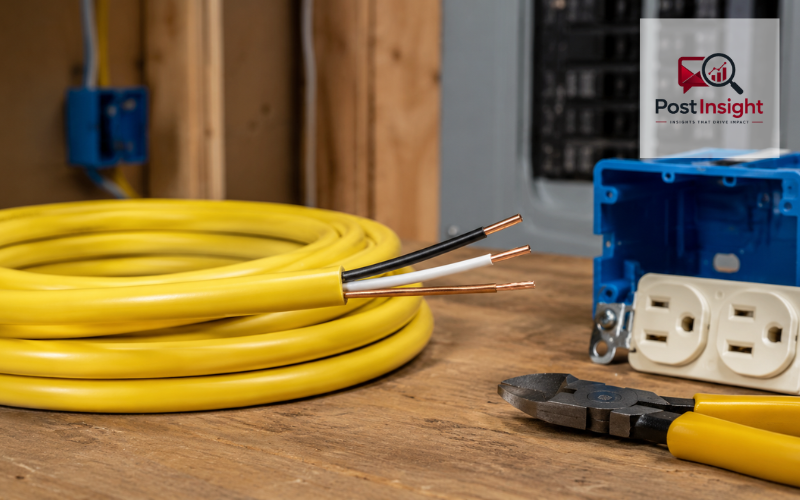
12/2 Romex is one of the most common electrical cables used in homes. If you are adding an outlet, planning a small remodel, or trying to understand what wire your electrician mentioned, this cable name may come up often. In simple terms, 12/2 Romex is a non-metallic sheathed cable with two insulated 12-gauge copper wires and one bare copper ground wire.
The “12” refers to the wire size, also called 12 AWG. The “2” means there are two insulated conductors inside the cable, usually one black wire and one white wire. Along with those two wires, there is also a bare ground wire for safety. Most modern 12/2 Romex has a yellow outer jacket, which helps people quickly identify it as 12-gauge NM-B cable.
Homeowners and electricians commonly use 12/2 Romex for indoor 20-amp branch circuits. These are the circuits that power many outlets, switches, and certain appliance areas in a home. This article explains what 12/2 Romex handles, where it works best, how to choose the right length, what affects 12/2 Romex price, and what safety rules to keep in mind before buying or using it.
| Feature | Quick Details |
| Cable Type | NM-B non-metallic sheathed cable |
| Wire Size | 12 AWG copper conductors |
| Wire Count | Two insulated wires plus one bare ground |
| Common Jacket Color | Yellow outer jacket |
| Common Circuit Use | 20-amp indoor branch circuits |
| Typical Areas | Kitchens, bathrooms, garages, laundry rooms, and outlets |
| Not For | Direct burial, wet locations, or exposed outdoor runs |
| Common Lengths | 15 ft, 25 ft, 50 ft, 100 ft, 250 ft, and 1000 ft |
| Buying Tip | Match the cable to the breaker, location, and local code |
12/2 Romex is a type of residential electrical cable. Romex is a well-known brand name, but many people use the word “Romex” to describe NM-B cable in general. NM-B stands for non-metallic sheathed cable. That means the wires are wrapped inside a plastic outer jacket instead of metal armor.
In 12/2 Romex, the two insulated wires have different jobs. The black wire is usually the hot wire, which carries power from the panel to the outlet, switch, or device. The white wire is usually the neutral wire, which completes the circuit. The bare copper wire is the ground wire. It does not normally carry power during regular use, but it helps protect people and equipment if something goes wrong.
This cable is mainly used for household branch circuits. A branch circuit is the wiring path that starts at the electrical panel and runs to outlets, lights, switches, or appliances. Because 12/2 Romex uses 12-gauge copper conductors, it is commonly chosen when a circuit needs to handle more load than standard 14-gauge wiring.
The most important thing to know about 12/2 Romex is that it uses 12 AWG copper conductors. A lower AWG number means a thicker wire, so 12-gauge wire is thicker than 14-gauge wire. This is why 12/2 Romex is commonly used for 20-amp circuits in homes.
A standard 12/2 Romex cable includes two insulated conductors and one bare ground wire. The insulated wires are usually black and white. The ground wire is bare copper. The outer jacket is commonly yellow, which makes it easier to tell apart from white 14-gauge cable and orange 10-gauge cable.
Most 12/2 NM-B cable is rated up to 600 volts, but in homes it is most often used on common 120-volt branch circuits. It is designed for indoor residential wiring in normally dry locations. It can be installed through walls, ceilings, floors, attics, and other protected indoor spaces when local code allows.
It is important to understand that the cable rating does not mean you can use it anywhere or with any breaker. The wire size, breaker size, location, device rating, and local electrical code all matter.
12/2 Romex is often used in areas where a 20-amp circuit makes sense. One common place is the kitchen. Kitchen countertop receptacles often serve appliances such as toasters, coffee makers, microwaves, blenders, and air fryers. These appliances can draw a lot of power, so 20-amp circuits are common in kitchen areas.
Bathrooms are another common area where 12/2 Romex may be used. Hair dryers, curling irons, and other bathroom devices can use a high amount of power for a short time. A properly installed 20-amp bathroom receptacle circuit can help handle these loads safely.
Garages and work areas also often use 12-gauge wiring. Power tools, shop vacuums, battery chargers, and small air compressors can place heavier demand on a circuit. Laundry rooms and utility rooms may also use 12/2 Romex for receptacle circuits, depending on the layout and code requirements.
In some cases, 12/2 Romex may be used for lighting runs, especially when the run is long or when the circuit may carry more load. However, not every light circuit needs 12-gauge cable. The correct choice depends on the breaker size, distance, expected load, and local requirements.
12/2 Romex is commonly paired with a 20-amp breaker because 12-gauge copper wire is generally used for 20-amp branch circuits. This pairing is one of the main reasons people buy 12/2 Romex instead of 14/2 cable.
Breaker size matters because the breaker protects the wire from overheating. If a breaker is too large for the wire, the wire may carry more current than it should before the breaker trips. That can create a serious fire risk. For example, 12-gauge copper wire should not be placed on a 30-amp breaker for a normal household branch circuit.
A 20-amp circuit is useful in areas where several devices may be used, or where one device may draw a stronger load. Kitchens, bathrooms, garages, and utility areas are common examples. Still, the breaker, cable, receptacles, and circuit layout must all be correct.
It is also worth noting that using 12/2 Romex on a smaller 15-amp breaker is not usually a safety problem, but it may be unnecessary and harder to work with. The main danger is going the other way: using wire that is too small for the breaker.
The closest comparison to 12/2 Romex is 14/2 wire. A 14/2 cable is commonly used for 15-amp circuits, often for general lighting and lighter outlet circuits. It is easier to bend, easier to pull, and usually costs less than 12/2 Romex. However, it is not suitable for a 20-amp breaker.
Compared with 14/2 wire, 12/2 Romex is thicker and can handle more current. That makes it a better choice for many receptacle circuits where 20 amps are needed. The tradeoff is that it costs more and can be slightly harder to install in tight boxes or long runs.
Another common cable is 10/2 wire. This is thicker than 12/2 Romex and is commonly used for certain 30-amp circuits, depending on the appliance and code requirements. It is not a replacement for 12/2 Romex in regular outlet circuits. It is larger, more expensive, and used for different electrical needs.
The key rule is simple: wire size should match the circuit load and breaker. Do not choose wire only because it is available or cheaper. The correct wire keeps the circuit safer and helps it perform properly.
12/2 Romex is made for indoor use in normally dry locations. It is commonly installed inside walls, ceilings, floors, and other protected spaces. It may also be used in some exposed indoor areas when allowed by code and protected from physical damage.
This cable should not be buried directly in the ground. It is not designed for direct burial and is not made to handle constant moisture. If wiring needs to go underground, a different type of cable or wiring method is required.
12/2 Romex is also not the right choice for exposed outdoor runs. Outdoor areas are often considered wet or damp locations, even when the cable is inside conduit. Moisture can still be a problem, and standard NM-B cable is not designed for those conditions.
Some areas may require conduit, armored cable, UF-B cable, individual conductors in conduit, or another approved wiring method. This depends on the location, moisture level, physical protection, and local electrical code. If there is any doubt, it is better to ask a licensed electrician before installing the wrong cable.
12/2 Romex is sold in several common lengths, and choosing the right one can save money and reduce waste. A short 12/2 Romex 15 ft length may be enough for a very small repair, a short outlet extension, or a simple replacement where the distance is already known.
A 12/2 Romex 25 ft roll is useful for small repairs and short indoor runs. It gives a little extra room without buying more cable than needed. For many simple home projects, 12/2 Romex 50 ft is a practical middle option. It can cover a small room, a short garage run, or a few nearby outlets depending on the path.
A 12/2 Romex 100ft roll is often better for medium projects. If you are wiring several outlets or running cable from the panel to another area of the home, 100 feet may provide enough flexibility. Larger jobs may call for 12 2 Romex 250 ft because the price per foot is often better than buying several small rolls.
For major remodels, new construction, or full-home projects, 12/2 Romex 1000 ft may be used by electricians or serious renovators. However, buying more cable than needed is not always smart. Measure the path carefully, include extra length for turns and connections, and avoid making unnecessary splices.
12/2 Romex price can change often. One reason is the amount of copper inside the cable. Copper is a major part of the cost, and copper prices can move up or down over time. This is why the same roll of cable may cost more at one time of year than another.
Length also affects price. A 12/2 Romex 15 ft or 25 ft package usually costs less overall, but the price per foot may be higher. Larger rolls like 100 ft, 250 ft, or 1000 ft often give a better price per foot, but they cost more upfront.
Brand, store, location, and availability can also change the final price. A 12/2 Romex 250 ft price may vary between home improvement stores, electrical supply houses, and online sellers. Shipping costs may also matter because copper cable is heavy.
When comparing prices, do not look at the total price only. Check the cable type, wire gauge, conductor count, ground wire, jacket marking, and length. Make sure you are buying 12/2 NM-B with ground if that is what your project requires. A cheaper roll is not a good deal if it is the wrong cable.
Before buying 12/2 Romex, first confirm that the cable type matches the location. If the project is indoors and in a dry, protected area, NM-B may be correct. If the project is outside, underground, in a wet area, or exposed to damage, another wiring method may be required.
Next, check the length carefully. Measure the actual route the cable will take, not just the straight-line distance. Cable often has to travel around framing, through holes, down walls, and into boxes. Add extra length for safe connections, but do not buy far more than needed unless you expect future use.
Also confirm the circuit requirement. If the circuit is 20 amps, 12-gauge copper cable is commonly used. If the circuit is 15 amps, 14-gauge may be enough in many cases, though 12-gauge may still be used when allowed. The breaker, wire, and devices should all fit the design of the circuit.
Finally, inspect the packaging and cable jacket. Look for clear markings showing the gauge, conductor count, cable type, and rating. Avoid damaged cable, cut jackets, crushed rolls, or cable with unclear labeling.
Electrical work should always be treated seriously. Before touching any wiring, turn off power at the breaker and verify that the power is off. Never assume a wire is safe just because a switch is off.
Use the correct breaker size for the wire and circuit. For typical household use, 12/2 Romex is commonly used with a 20-amp breaker. Do not place it on a larger breaker to stop nuisance tripping. If a breaker keeps tripping, the problem needs to be found and fixed.
All wire connections should be made inside approved electrical boxes. Wires should not be spliced loose inside a wall, ceiling, attic, or crawl space. Boxes protect connections and make them accessible for future inspection or repair.
Avoid overloading circuits. Even a correctly wired 20-amp circuit has limits. If several high-draw appliances run at the same time, the breaker may trip. That is a sign the circuit is being asked to do too much.
Local electrical code matters. Some projects require permits, inspections, GFCI protection, AFCI protection, or special wiring methods. When unsure, hire a licensed electrician.
One common mistake is using 12/2 Romex with the wrong breaker size. A 30-amp breaker is not appropriate for a normal 12-gauge household branch circuit. The breaker must protect the wire, not just the device being powered.
Another mistake is running NM-B cable outdoors or underground without proper protection and approval. Standard 12/2 Romex is not direct-burial cable and is not made for wet locations.
Some people also mix wire sizes incorrectly. For example, adding 14-gauge wire to a 20-amp circuit can create a safety problem because the smaller wire is not rated for that breaker size. A circuit is only as safe as its weakest section.
Leaving cable exposed where it can be damaged is another issue. Cable that runs through unfinished spaces, garages, or storage areas may need protection depending on the location. Damaged cable jackets can expose wires and create hazards.
Buying the wrong length can also cause problems. Too little cable may lead to unnecessary splices, while too much can waste money. Planning the run before buying helps avoid both problems.
Some projects are simple to understand but still risky to perform without experience. Running a new circuit from the electrical panel is one example. The panel contains serious electrical hazards, even when some breakers are off.
Kitchen, bathroom, and garage wiring can also involve extra code requirements. These areas often need GFCI protection, AFCI protection, dedicated circuits, or special placement rules. A licensed electrician can help make sure the work is safe and code-compliant.
Dedicated appliance circuits are another reason to call a professional. Microwaves, dishwashers, disposals, air conditioners, and laundry equipment may have specific circuit needs. The wrong wire or breaker can create performance and safety issues.
Permits and inspections are also important. Many areas require permits for new circuits or major wiring changes. An electrician will know what is required locally and can help prevent expensive corrections later.
If you are unsure about the wire size, breaker, box fill, grounding, protection, or code rules, it is better to get help before the work begins.
12/2 Romex is a useful and common cable for many indoor residential wiring projects. It has two 12-gauge insulated copper conductors and a bare ground wire, and it is widely used for 20-amp branch circuits in kitchens, bathrooms, garages, laundry areas, and other parts of the home.
It is a good choice when the project calls for 12-gauge NM-B cable in a dry indoor location. It is not the right choice for direct burial, exposed outdoor runs, or wet locations. Before buying, check the needed length, compare 12/2 Romex price by cost per foot, and make sure the cable type matches the job.
The safest approach is to plan the circuit before buying wire. Match the cable to the breaker, the location, and the electrical load. When the project involves a new circuit, a panel connection, or any uncertainty, a licensed electrician is the best person to handle the work. Used correctly, 12/2 Romex can be a reliable wiring choice for many home electrical projects.
12/2 Romex is commonly used for indoor 20-amp household circuits, including kitchen outlets, bathroom receptacles, garage outlets, laundry areas, and some dedicated appliance circuits.
Yes, 12/2 Romex can usually be used on a 15-amp breaker, but it is often more than needed. Never use smaller wire on a breaker that is too large.
No, standard 12/2 Romex is not made for outdoor exposed runs, wet areas, or direct burial. Outdoor wiring usually needs approved cable or conduit methods.
The yellow jacket helps identify it as 12-gauge NM-B cable. This color makes it easier to tell apart from common 14-gauge and 10-gauge residential wiring.
12/2 Romex is commonly used with a 20-amp breaker for normal household branch circuits. The breaker should always match the wire size and local electrical code.
Disclaimer: This article is for general educational purposes only and should not replace professional electrical advice. Electrical codes vary by location, and wiring mistakes can be dangerous. Always follow local code and hire a licensed electrician when unsure.


