
 11
11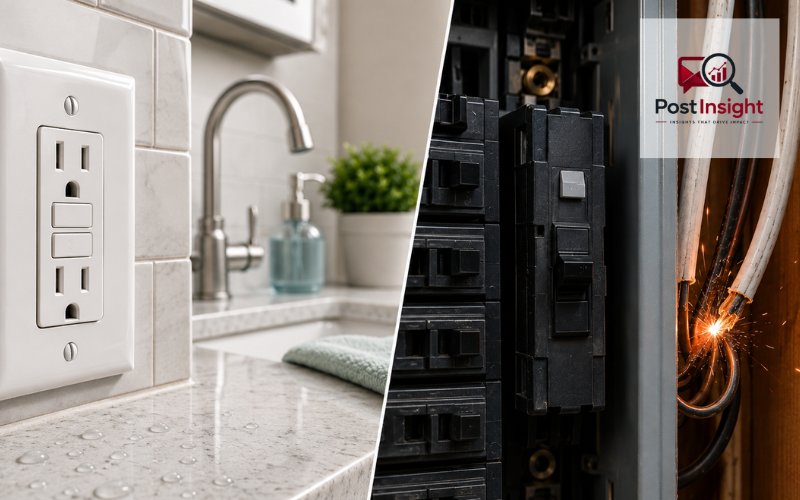
When people compare AFCI vs GFCI, they are really comparing two different types of electrical safety protection. Both are designed to shut off power when something unsafe happens, but they do not watch for the same problem. A GFCI, or ground fault circuit interrupter, helps protect people from electric shock. An AFCI, or arc fault circuit interrupter, helps protect the home from electrical fires caused by dangerous sparking or arcing.
This difference matters because a home can have more than one type of electrical risk. A bathroom outlet near water has a different safety concern than a damaged wire hidden behind a bedroom wall. One danger is shock. The other danger is fire. That is why modern electrical safety often uses both types of protection in different places, and sometimes on the same circuit.
The 2026 edition of the National Electrical Code has been released, but local rules can still depend on which code version your city or state has adopted. The safest approach is to understand the purpose of each device and then confirm the exact requirement with a licensed electrician or local authority.
| Feature | AFCI | GFCI |
| Main Purpose | Helps prevent electrical fires | Helps prevent electric shock |
| Detects | Dangerous arcing or sparking | Current leaking from the circuit |
| Best For | Bedrooms, living rooms, hallways, closets | Bathrooms, kitchens, garages, outdoors |
| Common Form | Breaker or outlet | Outlet or breaker |
| Protects | Home and wiring from fire risk | People from shock risk |
| Needed Together? | Yes, in some modern circuits | Yes, in some modern circuits |
The simplest way to understand AFCI vs GFCI is this: GFCI protection is mainly about people, while AFCI protection is mainly about preventing electrical fires. A GFCI looks for electricity leaking away from its normal path. If electricity starts flowing through water, a metal surface, or a person, the GFCI can shut off power very quickly.
An AFCI looks for a different warning sign. It watches for unsafe arcing, which is a type of sparking that can happen when wires are damaged, loose, pinched, or overheated. That spark may not always be strong enough to trip a normal breaker, but it can create enough heat to start a fire.
Homeowners often confuse the two because both devices can be found as breakers, both may have test buttons, and both shut off power when they detect danger. But they are not interchangeable. ESFI explains that AFCIs and GFCIs both improve electrical safety, but they protect against different hazards.
A GFCI protects against a ground fault. In plain English, a ground fault happens when electricity leaves the path it is supposed to follow and finds another way to the ground. That “other way” could be water, a damp surface, a tool, an appliance, or even a person.
This is why GFCI protection is common in places where water and electricity may be close together. Bathrooms, kitchens, garages, basements, laundry areas, outdoor outlets, pool areas, and similar damp locations are typical examples. If someone touches a faulty appliance while standing on a wet floor, a GFCI may detect the leakage and shut the circuit off before the shock becomes deadly.
The topic of afci vs gfci in bathroom is a common example. In most bathroom discussions, GFCI protection gets the most attention because the main danger is shock near water. AFCI protection may also apply depending on how the circuit is wired and what local code requires, but the GFCI’s main job is personal shock protection. ESFI describes GFCIs as devices used where outlets can be exposed to water, including bathrooms, kitchens, garages, and outdoors.
An AFCI protects against arc faults. An arc fault can happen when electricity jumps across a gap or damaged connection. This may occur inside a wall, in an old wire, behind a loose outlet, in a cord damaged by furniture, or where a nail or screw has harmed wiring.
The reason AFCI protection is important is that a standard breaker may not always notice this type of problem. A standard breaker is good at responding to overloads and short circuits, but some dangerous arcs can create heat without pulling enough current to trip the breaker. That heat can damage insulation, nearby wood, or other materials inside the home.
AFCI devices are designed to recognize dangerous arcing patterns and shut off power before the problem grows into a fire. An afci outlet may be used in some situations, while many homes use AFCI breakers at the panel. ESFI notes that damaged wiring, loose connections, nails through wires, and overheated cords can create risks that AFCIs are designed to detect.
A helpful way to compare afci vs gfci vs standard protection is to look at what each one is watching for. A standard breaker mainly protects the electrical circuit from overloads and short circuits. For example, if too many devices pull more power than the circuit can safely handle, the breaker trips.
A GFCI is different because it is not mainly looking for overload. It is watching for current leakage that could shock someone. That is why it is so important near sinks, tubs, garages, basements, and outdoor spaces.
An AFCI is also different from a standard breaker because it watches for fire-causing arcs. It is not mainly designed to protect someone standing near water. Instead, it helps protect against hidden sparks from damaged or loose wiring. So, while all three devices can shut off power, they do it for different reasons. A standard breaker protects the circuit from too much current, a GFCI helps protect people from shock, and an AFCI helps protect the home from electrical fire risks.
A safety device can be installed as an outlet or as a breaker, depending on the type of protection needed and the design of the circuit. A GFCI outlet is the familiar wall receptacle with “test” and “reset” buttons. It may protect only that outlet, or it may protect other outlets connected downstream if wired that way.
A breaker is installed in the electrical panel. Because it starts at the panel, it can often protect more of the circuit than a single outlet device. This is why the afci vs gfci breaker comparison matters. A breaker may protect wiring, outlets, and connected devices along the branch circuit, while an outlet-style device may protect a more limited area depending on its placement.
An afci/gfci outlet may be useful in some specific applications, especially where outlet-level protection is allowed and practical. However, the correct choice depends on the circuit, the panel, local code, and the type of protection required. Eaton notes that AFCI receptacles can monitor circuits for dangerous arcing, while GFCI breakers and receptacles help protect against shock where electricity may contact water.
An afci/gfci combo breaker is often called a dual-function breaker. It provides both arc-fault protection and ground-fault protection from the electrical panel. In simple words, it can watch for both dangerous sparking and unsafe current leakage.
This type of breaker can be useful in areas where both risks may exist. A kitchen, laundry area, or certain appliance circuit may involve water-related shock concerns and electrical fire concerns at the same time. Instead of using separate devices in different places, a dual-function breaker can provide both forms of protection on the circuit when properly selected and installed.
This does not mean every circuit automatically needs a combo breaker. It means combo protection is a practical option where both AFCI and GFCI protection are required or recommended. The device still has to match the panel, circuit, and local code rules.
Bathrooms are one of the clearest places where GFCI protection matters. Water, steam, damp floors, metal fixtures, and electrical devices can all exist in the same small space. Hair dryers, electric razors, curling irons, chargers, bathroom fans, and lighting can create real safety concerns if something goes wrong.
In most bathroom situations, GFCI protection is the first thing homeowners should think about because it is designed to reduce the risk of electric shock. If a bathroom outlet does not have GFCI protection, or if the test and reset buttons do not work, it should be checked.
AFCI protection in bathroom areas depends more on the circuit design and the rules adopted locally. Some bathroom circuits may require only GFCI protection, while others may need additional protection depending on how the branch circuit is arranged. Because code requirements can vary by location and project type, a licensed electrician should confirm what applies before replacing outlets or breakers.
The afci vs gfci outdoor comparison also starts with the main risk. Outdoor outlets are exposed to rain, snow, humidity, sprinklers, extension cords, holiday lights, power tools, lawn equipment, and outdoor appliances. These conditions make shock protection especially important.
That is why outdoor receptacles commonly need GFCI protection. If moisture enters a cord connection or a tool develops a fault while someone is standing on damp ground, a GFCI can shut off power quickly. Weather-resistant covers and proper outdoor-rated equipment also matter, but they do not replace GFCI protection.
AFCI protection may still be part of the picture depending on the circuit. For example, if an outdoor outlet is supplied by a circuit that also falls under arc-fault requirements, AFCI protection may be included through the breaker or another approved method. The key point is that outdoor electrical safety is not only about the outlet itself. It also depends on the full circuit, the environment, and local code.
Many homeowners ask, where are arc fault gfci breakers required, but the answer is not always the same in every home. Requirements depend on the current electrical code, the room, the circuit type, the project, and which code edition has been adopted by the local area.
In general, AFCI protection is commonly associated with living areas such as bedrooms, family rooms, dining rooms, living rooms, hallways, closets, kitchens, laundry areas, and similar spaces. GFCI protection is commonly associated with areas where shock risk is higher, such as bathrooms, kitchens, garages, basements, laundry areas, outdoor locations, pools, spas, and other damp or wet spaces.
The National Electrical Code is updated on a three-year cycle, and local jurisdictions may adopt it with changes or delays. Eaton’s NEC 2023 summary notes expanded GFCI protection for all kitchen receptacles and additional appliances, while NFPA states that the 2026 NEC superseded the 2023 edition.
There are several signs that your home’s electrical protection may need attention. A breaker or outlet that trips repeatedly should not be ignored. Sometimes a trip means the safety device is doing its job. Resetting it over and over without finding the cause can leave a real problem unresolved.
Outlets near water that do not have visible test and reset buttons may also deserve a closer look, especially in older homes. Some GFCI protection may be provided at the breaker instead of the outlet, so the absence of buttons does not always mean there is no protection. Still, it is worth confirming.
Older homes may also have circuits that were installed before today’s AFCI and GFCI standards became common. Damaged cords, buzzing outlets, flickering lights, warm switch plates, burning smells, or sparks are warning signs that should be taken seriously. These problems are not good DIY experiments. They should be checked by a qualified electrician.
Choosing between AFCI, GFCI, and combo protection depends on the type of risk. If the main concern is electric shock near water or damp areas, GFCI protection is usually the focus. If the main concern is fire risk from damaged wiring, loose connections, or arcing inside the circuit, AFCI protection is the focus.
For many modern circuits, the answer may not be either-or. Some rooms and circuits can need both protections. In those cases, a dual-function breaker or another code-approved setup may be used. The goal is not to add devices randomly. The goal is to match the right protection to the right risk.
Homeowners should avoid replacing breakers or outlets without understanding the circuit. Electrical panels must use compatible breakers, and outlets must be wired correctly to protect the intended parts of the circuit. A licensed electrician can confirm whether an AFCI breaker, GFCI outlet, GFCI breaker, AFCI outlet, or combo breaker is the right solution.
One common mistake is thinking AFCI and GFCI devices do the same job. They may look similar from the outside, but their purpose is different. A GFCI does not replace AFCI fire protection, and an AFCI does not replace GFCI shock protection.
Another mistake is ignoring frequent trips. A tripping device can be annoying, but it may be warning you about moisture, damaged wiring, a faulty appliance, overloaded equipment, or another unsafe condition. The right response is to find the cause, not simply remove the protection.
Some homeowners also assume that one protected outlet means the whole room or home is protected. That may or may not be true. A GFCI outlet can protect downstream outlets only if it is wired correctly. A breaker can protect a larger part of the circuit, but only the circuit it controls. This is why labeling, testing, and professional inspection are important.
When comparing AFCI vs GFCI, one is not simply “better” than the other. They protect against different dangers. A GFCI helps protect people from electric shock, especially in wet or damp areas. An AFCI helps protect the home from electrical fires caused by dangerous arcing.
In many homes, both protections matter. Bathrooms, kitchens, outdoor spaces, laundry areas, bedrooms, living rooms, and older circuits can all have different safety needs. A standard breaker alone may not provide the same level of protection as AFCI or GFCI technology.
The best choice depends on the room, the circuit, the age of the home, and the code rules in your area. For upgrades, repairs, or repeated tripping problems, follow local electrical code and have the work checked by a qualified electrician. That way, your home is protected in the way each space actually needs.
AFCI protects against electrical fires caused by dangerous arcing, while GFCI protects people from electric shock caused by current leakage, especially around water or damp areas.
Bathrooms commonly need GFCI protection because water increases shock risk. AFCI protection may also apply depending on the circuit design and local electrical code requirements.
An AFCI/GFCI combo breaker is useful when a circuit needs both fire protection and shock protection. It can protect the circuit from arcing and ground-fault hazards at the same time.
No. A standard breaker mainly protects against overloads and short circuits. It does not provide the same shock protection as GFCI or arc-fault protection as AFCI.
AFCI protection is often used in living areas, while GFCI protection is common in bathrooms, kitchens, garages, basements, laundry areas, and outdoor spaces. Local code should always be checked.
Disclaimer: This article is for general information only and should not be taken as electrical advice or code approval. Electrical requirements can vary by location, so always consult a licensed electrician before installing, replacing, or troubleshooting AFCI or GFCI devices.


