
 11
11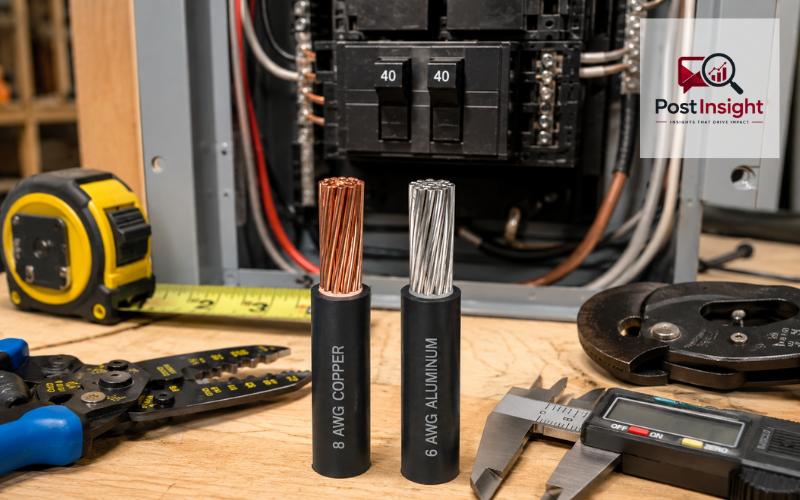
Choosing the right 40 amp wire size is important because wire is not just a connection between a breaker and an appliance. It is the part of the electrical system that carries the current safely. If the wire is too small for the circuit, it can overheat, damage insulation, trip breakers, or create a fire risk.
A 40 amp circuit is a circuit designed to carry up to 40 amps of electrical current under the right conditions. These circuits are often used for larger appliances and equipment, such as electric stoves, ovens, some HVAC units, workshop tools, and certain 240 volt appliances.
For most common installations, the standard 40 amp wire size is 8 AWG copper or 6 AWG aluminum. However, this is only a starting point. The correct wire size can also depend on the conductor material, voltage, cable type, distance, temperature rating, load type, and local electrical code. That is why it is always smart to check the appliance instructions and local rules before making a final decision.
| Situation | Common Wire Size | Best Use |
| Standard 40 amp circuit | 8 AWG copper | Common residential 40 amp circuits |
| Aluminum 40 amp circuit | 6 AWG aluminum | When aluminum conductors are allowed |
| 40 amp 240V circuit | 8 AWG copper or 6 AWG aluminum | Stoves, ovens, HVAC, tools |
| Long run around 100 ft | 6 AWG copper may be better | Helps reduce voltage drop |
| Continuous heavy load | May need larger wire/circuit | EV chargers or long-running equipment |
| Metric sizing | 10 mm² copper / 16 mm² aluminum commonly referenced | Depends on local electrical rules |
For many residential 40 amp circuits, 8 AWG copper wire is commonly used. Copper carries electricity well, handles heat efficiently, and is widely accepted for household wiring. In simple terms, 8 AWG copper is thick enough for many standard 40 amp circuits when the installation conditions allow it.
For aluminum wire, the common size is usually larger. A typical 40 amp aluminum wire size is 6 AWG. Aluminum does not carry current as efficiently as copper in the same size, so it usually needs to be upsized.
This does not mean every 40 amp circuit is exactly the same. A short indoor appliance circuit may not have the same requirements as a long outdoor run, a continuous load, or equipment installed in a hot location. Local electrical code and the manufacturer’s instructions should always guide the final choice.
A quick chart can help you understand the common starting points for a 40 amp circuit. This chart is for general understanding only, not a replacement for electrical code or professional installation.
| Circuit / Use Case | Common Copper Size | Common Aluminum Size | Metric Reference | Notes |
| Standard 40 amp circuit | 8 AWG copper | 6 AWG aluminum | Around 10 mm² copper / 16 mm² aluminum | Common starting point |
| 40 amp 240 volt circuit | 8 AWG copper | 6 AWG aluminum | Depends on local code | Used for larger appliances |
| Long run near 100 ft | 6 AWG copper may be considered | Larger aluminum may be needed | Depends on voltage drop | Distance matters |
| Continuous heavy load | Larger wire may be required | Larger wire may be required | Check local rules | 80% rule may apply |
| Stove or range circuit | 8 AWG or 6 AWG copper depending on rating | 6 AWG or larger aluminum | Check appliance manual | Some ranges need 50 amps |
The safest way to use this chart is to treat it as a guide, not a final answer. The right wire size depends on the full installation.
Copper is the most common choice for many 40 amp circuits because it has strong conductivity and is easier to work with than aluminum in many residential settings. For a typical 40 amp circuit, 8 AWG copper wire is often the standard choice.
One important detail is the wire’s temperature rating. Some cables are limited by the temperature rating of the insulation or the terminals they connect to. For example, common non-metallic cable used in homes may be limited to the 60°C ampacity rating, even if the individual conductors have a higher insulation rating.
This is why 8 AWG copper is a common match for a 40 amp breaker in many situations. But if the wire run is long, the load is continuous, or the installation has special heat conditions, a larger wire may be needed. Upsizing is not about making the circuit “more powerful.” It is about helping the circuit run safely and efficiently.
Aluminum wire must usually be larger than copper wire for the same amp rating. For a 40 amp circuit, 6 AWG aluminum is commonly used as a general reference size. The reason is simple: aluminum has more resistance than copper, so a larger conductor is needed to carry the same current safely.
Aluminum wiring also needs extra care at connections. The terminals must be rated for aluminum, and the installation must follow the correct method. In some cases, anti-oxidation compound may be used where required or recommended. Loose or incorrect aluminum connections can create heat, which is one of the biggest safety concerns.
If you are using aluminum for a 40 amp circuit, do not guess. Make sure the breaker, lugs, connectors, and appliance terminals are approved for aluminum wire. This is one area where a licensed electrician is strongly recommended.
In countries that use metric wire sizing, the answer is not always a direct conversion from AWG. Wire ampacity depends on the electrical rules used in that country, the cable type, installation method, insulation rating, ambient temperature, and whether the conductor is copper or aluminum.
For copper, 6 mm² or 10 mm² may appear in discussions about 40 amp circuits, but 10 mm² is often closer to 8 AWG copper by cross-sectional area. For aluminum, 16 mm² is a common metric reference because aluminum normally needs a larger conductor than copper.
The important point is that metric wire size should not be chosen by conversion alone. A 40 amp wire size in mm must be checked against the local electrical code and the actual installation conditions. What is acceptable in one country or cable type may not be acceptable in another.
Many 40 amp circuits are 240 volt circuits. These are common for larger appliances because 240 volts can deliver more power efficiently than a standard 120 volt circuit. Electric ranges, ovens, water heaters, HVAC equipment, welders, and some workshop tools may use 240 volt circuits.
For a 40 amp 240 volt circuit, 8 AWG copper or 6 AWG aluminum is often used as the common starting point. However, the voltage does not remove the need for the wire to be rated for the amperage. A 240 volt circuit still needs wire that can safely carry 40 amps.
The appliance nameplate and installation manual are very important here. If the manual calls for a 40 amp circuit, follow that requirement. If it calls for a 50 amp circuit, then the wire and breaker must be sized for 50 amps, not 40 amps.
A stove or electric range is one of the most common reasons people search for 40 amp wire size. Some stoves can be installed on a 40 amp circuit, while others require a 50 amp circuit. The correct answer depends on the appliance rating.
For many stove circuits, 8 AWG copper may be used when the appliance and local code allow a 40 amp breaker. If aluminum wire is used, 6 AWG aluminum is a common reference point. But kitchen appliance wiring can vary because ranges may have ovens, cooktops, warming drawers, and other heating elements built into one unit.
Never choose stove wire size by looking only at the breaker already in the panel. The appliance manual should be checked first. If the stove requires a different circuit size, the breaker and wire may need to be changed together. A larger breaker should never be installed on wire that is too small.
A continuous load is a load expected to run for three hours or more. This matters because electrical equipment that runs for a long time creates more sustained heat than equipment that cycles on and off.
For continuous loads, a circuit is usually sized so the continuous load does not exceed 80% of the breaker rating. In simple terms, a 40 amp breaker is generally not used for a full 40 amp continuous load. A 40 amp circuit is usually treated as suitable for about 32 amps of continuous load.
This is common with equipment such as EV chargers, some heating equipment, or machinery that may run for long periods. If the equipment needs a true continuous 40 amp load, the circuit may need to be sized larger, often using a 50 amp circuit with properly matched wire. The exact wire size depends on the conductor material, temperature rating, cable type, and code rules.
Distance can change the wire size decision. When electricity travels through a long wire, some voltage is lost along the way. This is called voltage drop. A little voltage drop is normal, but too much can make equipment run poorly, reduce efficiency, and create extra heat.
For a 40 amp wire size at 100 ft, many electricians may consider upsizing from 8 AWG copper to 6 AWG copper, especially if the circuit will carry a heavy load. Aluminum may also need to be upsized depending on the distance and load.
The exact answer depends on the voltage, amperage, conductor material, one-way distance, and acceptable voltage drop. A 40 amp 240 volt circuit may handle distance differently than a 40 amp 120 volt circuit. This is why voltage drop calculators are useful for long runs, but the result should still be checked against code.
People searching for 40 amp wire size often also see information about 50 amp wire size. This happens because some appliances and continuous loads that seem close to 40 amps may actually require a 50 amp circuit.
For example, some electric ranges, EV chargers, and workshop equipment may call for a 50 amp breaker. In that case, the wire must be sized for 50 amps, not 40 amps. A common 50 amp copper wire size is 6 AWG copper in many residential situations, while aluminum usually needs to be larger depending on the insulation and terminal ratings.
The breaker and wire must always match correctly. It is unsafe to place a 50 amp breaker on wire that is only rated for 40 amps. The breaker is there to protect the wire from overheating. If the breaker is too large for the wire, that protection may not work as intended.
A 40 amp wire size calculator can be helpful when you want a quick estimate, especially for longer runs. However, a calculator is only as good as the information entered into it.
A good calculator should consider the amperage, voltage, conductor material, distance, temperature rating, and whether the load is continuous or non-continuous. It should also consider voltage drop, because distance can make a big difference in wire performance.
Still, a calculator should not be treated as final approval. It may not know your local code, the exact cable type, the panel conditions, the number of current-carrying conductors, or the appliance manufacturer’s requirements. Use it as a planning tool, then confirm the final wire size with code guidance or a qualified electrician.
One common mistake is using wire that is too small because it looks similar to another size. Wire gauge can be confusing because smaller AWG numbers mean larger wire. For example, 8 AWG is larger than 10 AWG.
Another mistake is treating copper and aluminum as the same. They are not the same for ampacity. Aluminum usually needs a larger size, and it also needs proper terminals and connection methods.
Many people also forget about distance. A wire size that works for a short run may not be the best choice for a 100 ft run. Voltage drop can become a real issue when the circuit is long and the load is heavy.
Another common problem is ignoring cable type and temperature rating. The same gauge wire can have different ampacity depending on insulation, terminals, and installation conditions. Finally, never assume every 40 amp circuit uses the exact same wire. The correct size depends on the full situation.
The safest general answer is that the standard 40 amp wire size is usually 8 AWG copper or 6 AWG aluminum. These are common starting points for many residential and light-duty 40 amp circuits.
However, wire sizing is not based on amperage alone. Distance, conductor material, voltage, insulation type, temperature rating, continuous load rules, appliance requirements, and local electrical code all matter. A stove, EV charger, HVAC unit, or long 100 ft run may need a different approach than a short standard circuit.
If you are planning a 40 amp circuit, use the standard sizes as a guide, read the appliance manual carefully, and check local rules before installation. When there is any doubt, it is safer to ask a licensed electrician than to guess. Correct wire sizing protects the appliance, the circuit, and most importantly, the people using the home.
A 40 amp circuit usually needs 8 AWG copper wire or 6 AWG aluminum wire. The final size can change based on distance, cable type, load, and local code.
No, 10 gauge wire is generally too small for a 40 amp circuit. It is commonly used for 30 amp circuits, not standard 40 amp wiring.
A 40 amp 240 volt circuit commonly uses 8 AWG copper or 6 AWG aluminum wire. Always check the appliance manual because some equipment may require a 50 amp circuit.
For a 100 ft run, 6 AWG copper may be a better choice to reduce voltage drop. The correct size depends on voltage, material, load, and local code.
Yes, 6 AWG copper is larger than normally needed for many 40 amp circuits and is often used for longer runs or higher-demand situations. Aluminum sizing must be checked separately.
Disclaimer: This article is for general educational information only. Electrical work can be dangerous and must follow local code, appliance instructions, and proper safety standards. Always consult a licensed electrician before installing, replacing, or upgrading any electrical wiring.


